ADC Condemns Tinubu and National Assembly Over Minimal Army Budget Allocation
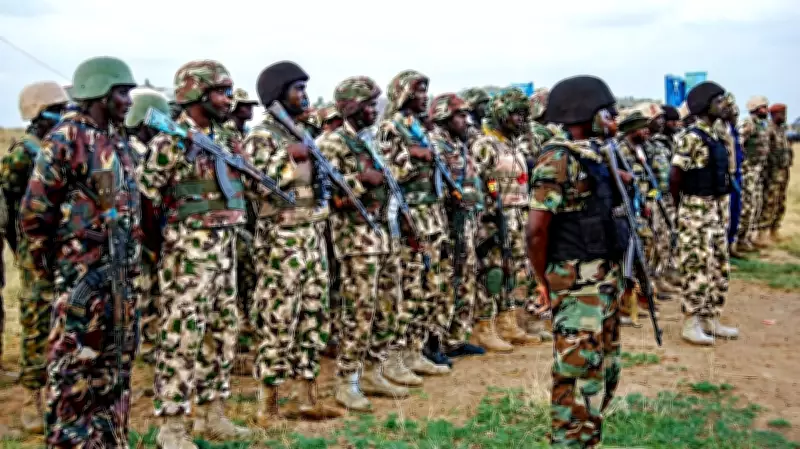
The African Democratic Congress (ADC) has launched a sharp critique against President Bola Tinubu and the National Assembly, highlighting what it describes as a gross misplacement of priorities in budgetary allocations. The party expressed outrage over reports indicating that only about seven per cent of the Nigerian Army's security equipment budget was released in 2025, while the presidential fleet received full funding. This development, according to the ADC, represents a failure to adequately address the nation's escalating security challenges.
Details of the Budgetary Shortfall
In a statement issued by National Publicity Secretary Bolaji Abdullahi, the ADC revealed that out of an approved N336.76 billion for security equipment in 2025, a mere N16.71 billion was actually disbursed. Furthermore, no funds were released for critical logistics such as transport, aircraft fuel, and military barracks maintenance. The party argued that this underfunding directly contributes to the deteriorating security situation, emboldening insurgents and terrorists across the country.
The ADC pointed to recent events in Borno State, where over 400 women and children were abducted by Boko Haram, as evidence of the government's loss of control. The terrorist group has issued a N5 billion ransom demand and a 72-hour ultimatum, underscoring the urgency of the crisis. The party described the budgetary allocation as an unpardonable neglect of national security, especially at a time when military aircraft are languishing due to financial constraints.
Tinubu's Critique of Electricity Privatisation
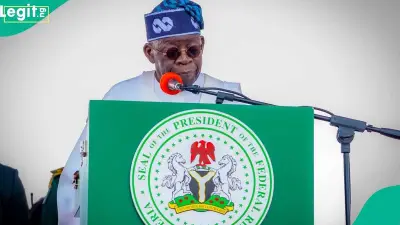
Separately, President Tinubu delivered a scathing assessment of the 2013 privatisation of Nigeria's electricity sector, blaming the previous Peoples Democratic Party (PDP) administration for the ongoing power crisis. He labeled the privatisation effort a failure, noting that a decade later, 90 million Nigerians still lack access to electricity, and grid capacity remains stagnant.
"We have leaders who have privatised electricity that is not working. They gave us darkness, and we are trying to get ourselves through that to build a nation of bright hope and joyful people," Tinubu stated. He specifically targeted former Vice President Atiku Abubakar, who chaired the National Council on Privatisation, questioning the outcomes of past economic reforms, including the sale of the Delta Steel Company and Ajaokuta Steel Complex.
The President called for a reorganisation and recapitalisation of Electricity Distribution Companies (DisCos), highlighting that only 60 per cent of electricity sent to the grid is paid for. He emphasised that the objectives of improving efficiency and attracting investment have largely not been met.
Defections Rock House of Representatives Ahead of 2027 Elections
A fresh wave of defections has swept through the House of Representatives, with lawmakers switching party allegiances in what observers view as early positioning for the 2027 general elections. Deputy Speaker Benjamin Kalu read multiple defection letters on the floor, downplaying concerns that this trend signals a drift toward a one-party state. Instead, he described it as evidence of democratic choice within Nigeria's multiparty system.
Key defections include:
- Thaddeus Attah (Eti-Osa, Lagos) moved from the Labour Party to the ADC, citing leadership crises in his former party.
- The PDP suffered significant losses, with five members exiting, including Abubakar Abdul (Niger) to the APC, Yakubu Noma (Kebbi) to the ADC, and Ibrahim Mohammed (Kebbi) to the APC.
- In Osun State, Mudashiru Alani and Adetunji Olusoji defected from the PDP to the Accord Party.
- The APC also lost ground, with David Fuoh (Taraba) joining the PDP and Bashir Zubair (Kaduna) moving to the ADC.
These shifts highlight a continuing two-way realignment in the House, with defections driven by internal party crises, electoral calculations, and evolving alliances. The House adjourned plenary until Wednesday in honour of Kano lawmaker Hassan Danjuma, who passed away on April 10, 2026, at age 66.