APC's National Convention: Unity or Controlled Consensus Amidst Automatic Ticket Debate?
Emerging from its recent convention, the ruling All Progressives Congress (APC) faces critical questions about how it manages growing concerns over consensus arrangements and proposed automatic tickets for incumbents. This may significantly impact the party's internal cohesion and electoral prospects ahead of next year's general polls, as reported by Adamu Abuh.
The Surface Calm and Underlying Tensions
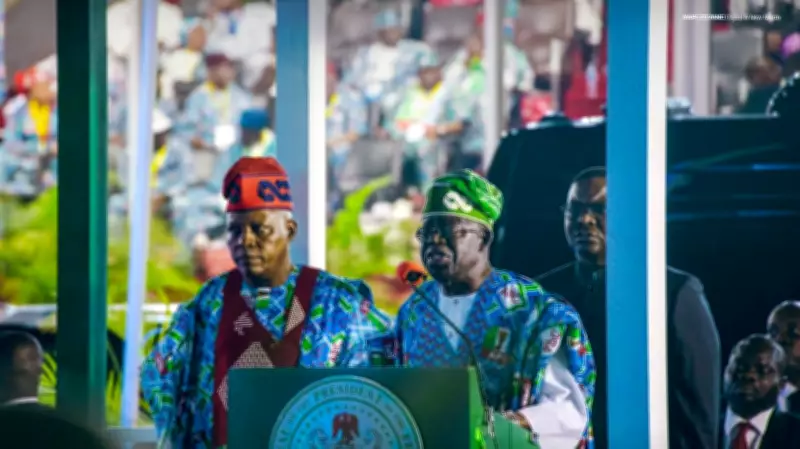
The air of competition was noticeably absent at the recently concluded 4th Elective National Convention of the APC, held at Eagle Square in Abuja. Apart from the colourful uniforms worn by delegates, the celebratory mood that typically characterises such periodic gatherings was largely missing. Yet, to casual observers, the event projected unity, order, and organisational discipline.
However, as proceedings unfolded, culminating in President Bola Ahmed Tinubu's address, signs emerged that all was not entirely seamless within the party despite elaborate planning. The entire event appeared carefully orchestrated to convey the impression that the party had mastered the management of competing interests. Yet, after the 8,453 delegates representing the 36 states and the Federal Capital Territory, alongside governors and party leaders, exchanged pleasantries, subtle discontent became noticeable among some participants.
As the election of national officers progressed without visible rancour, underlying tensions gradually surfaced. Beneath the carefully choreographed calm lay a deeper and more consequential story shaped by consensus deals and elite negotiations. It was the growing push for automatic tickets, evoking memories of the Peoples Democratic Party (PDP) era, that could fundamentally reshape the ruling party's internal dynamics ahead of the 2027 elections.
Consensus Arrangements and Power Dynamics
Central to the convention's outcome was the adoption of a consensus arrangement that secured the return of virtually all members of the National Working Committee (NWC). The re-election of National Chairman Nentawe Yilwatda, National Secretary Surajudeen Basiru, and others underscored a deliberate strategy: preserve institutional memory, avoid internal upheaval, and maintain alignment with the presidency of Bola Ahmed Tinubu.
Even the few changes recorded were measured rather than disruptive. The replacement of Emma Eneukwu with Ben Nwoye as Deputy National Chairman (South), and Emeka Okafor with Nze Duru as Deputy National Organising Secretary, reflected calibrated adjustments aimed at balancing internal interests rather than wholesale restructuring.
Party insiders say the outcome was far from spontaneous. Weeks of consultations reportedly took place among governors, lawmakers, and key power brokers to produce a no-surprises convention. The objective was clear: avoid divisive contests that could expose internal fault lines at a time the party is implementing far-reaching economic and political reforms. Consensus, in this context, was not merely a unifying mechanism; it also functioned as an instrument of control.
The Push for Automatic Tickets and Its Implications
While consensus defined the convention's structure, the push for automatic tickets emerged as its most contentious undercurrent. At the centre of the debate is the proposal to grant automatic tickets to incumbent officeholders. While party leaders justify the idea as a reward for loyalty and a means of ensuring stability, critics argue that it undermines internal democracy.
Some party members, who spoke anonymously, warned that the essence of party politics, competition, participation, and the right to aspire, risks being eroded when candidacies are effectively predetermined. For grassroots politicians and long-standing loyalists, the message appears unmistakable: ambition may increasingly give way to hierarchy.
Concern is particularly strong among party aborigines, founding members who helped build the APC during its merger years. Many endured electoral defeats, financial strain, and political risks to establish party structures, but now feel sidelined. The influx of defectors from opposition parties, especially sitting governors and lawmakers, has significantly altered internal power balances.
In states such as Delta, Akwa Ibom, Enugu, Rivers, Kano, Adamawa, Zamfara, and Plateau, where governors recently defected to the APC, new entrants are widely perceived to enjoy preferential treatment in ticket allocation, party leadership positions, and strategic influence. A similar perception exists regarding federal lawmakers who defected from opposition parties into the ruling party. These developments have fuelled quiet resentment.
Lawmakers' Advocacy and Governors' Influence
Led by Senate President Godswill Akpabio and Speaker of the House of Representatives Tajudeen Abbas, APC lawmakers strongly advocated automatic return tickets for serving legislators. Their argument centres on continuity. Shielding lawmakers from the uncertainties of party primaries, they argue, would allow them to focus on legislation and sustain the Tinubu administration's reform agenda.
Framing governance as a long-term process, Abbas said: This is not a sprint; it is a journey, stressing that reforms require continuity. He argued that such continuity must extend beyond the executive arm. As we commit to continuity at the executive level, we must also secure stability within the legislature, Abbas said. The high turnover of Senators and members has come at a cost, experience is lost, institutional memory weakened, and momentum broken.
Warning against cyclical disruption, he added: We cannot continue to start every cycle afresh and expect consistent progress. The legislature is not separate from this journey; it is a partner in it. He therefore urged deliberate support for committed and performing legislators, describing continuity as the discipline of progress.
Within the party, however, many view the proposal as only an opening move. There is growing expectation that APC governors, arguably the party's most powerful bloc, may seek similar concessions, either for themselves where constitutionally permissible or for preferred successors and loyal political structures. Such a development would further entrench incumbency power across party levels.
Governors already wield significant influence over state party structures, including control of delegates and local executives. Combined with automatic tickets, that influence could become overwhelming, narrowing democratic space and limiting opportunities for prospective aspirants. For many ambitious APC politicians, this prospect is unsettling.
Broader Concerns and Party Identity
At its core, the automatic ticket debate concerns access and participation. Party primaries, despite their imperfections, remain one of the few channels through which emerging leaders contest power and internal dissent finds expression. Extending automatic tickets, particularly to reflect governors' interests, risks closing that channel. Aspirants who have spent years building grassroots networks could be excluded not by electoral defeat but by administrative decisions.
The implications are far-reaching. Resentment within party ranks could deepen, as blocked ambition rarely disappears; it simply adapts. Disgruntled aspirants may defect, align with opposition forces, or quietly undermine official candidates. Limiting competition could also weaken the APC's capacity for renewal, leaving it dominated by a narrow circle of incumbents and power brokers.
Questions of legitimacy may also arise. Candidates who emerge unopposed may struggle to generate the grassroots enthusiasm typically produced by competitive primaries. The situation also raises broader questions about ideological coherence and party identity. Like many Nigerian political parties, the APC has functioned largely as a coalition of interests rather than an ideologically driven platform. Continuous absorption of politicians from rival parties without structured integration risks deepening that fluidity.
Reactions from Party Figures and Analysts
In his acceptance speech, National Chairman Nentawe Yilwatda pledged to unite, strengthen, and expand the party ahead of the 2027 polls, thanking members for entrusting him with leadership at a critical moment. The Plateau-born politician promised to work with stakeholders to foster unity, describing members as the mechanics needed to reposition the party while emphasising inclusive leadership, cohesion, and grassroots expansion.
Reacting to the development, a founding member of the party, Chief Osita Okechukwu, dismissed agitation for automatic tickets by lawmakers, saying the proposal will ultimately fall flat under internal rivalries, zoning realities, and grassroots political dynamics. Describing the demand as predictable, he said: The agitation is normal. If you are in the Senate or House of Representatives, politics is about self-interest, that is what you will advocate.
According to him, competing ambitions across states make a blanket arrangement unrealistic. On a quid pro quo, it will fall flat because of the internal dynamics that are peculiar, from Oyo to Akwa Ibom, from Jigawa to Katsina. What applies in one place cannot work in another. He noted that micro-zoning and local expectations of fairness remain decisive. In some areas, people will tell you: you have had your turn, let another group try. These are realities you cannot ignore.
Defending consensus, Okechukwu said the mechanism is lawful and embedded in party rules. When we designed the party constitution, we included consensus, direct, and indirect primaries. The Electoral Act retained consensus, and it is within the legal framework of both the country and the party. He added that direct primaries are impractical. Direct primaries would mean over 20 million members voting. Can we afford that? We don't have the apparatus of the Independent National Electoral Commission to conduct such an exercise.
Dismissing critics, he said: Anybody that disputes consensus is not being realistic. Politics is about like-minded people coming together to pursue common objectives. If you don't agree, there are other parties. He warned that abandoning zoning and consensus could destabilise the party, recalling similar challenges that affected the Peoples Democratic Party, and maintained that agitation for automatic tickets lacks structural backing within the party.
Benue State APC chieftain, Dominic Alancha, also faulted the growing push for consensus arrangements and automatic tickets, warning that it could undermine democratic principles. He argued that democracy thrives on open contestation rather than closed-door decisions, saying consensus often reflects fear of competition and risks creating a boardroom democracy where preferred candidates are handpicked.
Alancha warned that such practices could sideline more competent aspirants and weaken public trust, urging parties to allow fair competition. Chief Peter Ameh, National Secretary of the Coalition of United Political Parties (CUPP), said consensus remains a recognised democratic option but cautioned against its use as a tool of exclusion.
For consensus to command confidence, he said it must involve transparent and wide consultations across aspirants and party leaders at all levels, warning that anything less could turn a legitimate process into an instrument of exclusion. On automatic tickets, Ameh said parties may adopt lawful selection methods but must ensure transparency and inclusiveness.
It must guarantee proper and broader inclusive participation by all eligible party members so as not to result in the disenfranchisement of the very people the party seeks to serve, he noted. The strength of our democracy lies in the active involvement of all members, not in decisions that sideline the majority in favour of a few. The APC, as a ruling party, has a responsibility to lead by example in deepening internal democracy rather than weakening it.
He urged APC leaders to ensure transparency, fairness, and inclusivity in handling both consensus arrangements and automatic tickets. Only then can the party emerge stronger, more united, and truly representative of the aspirations of its members. Such decisions without transparency will lead to the erosion of democratic values in this country, he added.
President Tinubu's Unifying Message
Amid these dynamics, President Bola Ahmed Tinubu struck a unifying tone, emphasising cohesion, discipline, and shared purpose. Our greatest strength has never been our size, but our unity, he told delegates. He warned that political parties often falter not because of external pressure but internal discord. We must guard against ego overriding ideology and ambition replacing discipline.
Tinubu also reassured Nigerians of the party's democratic commitment: We do not seek a one-party state. Democracy thrives on vibrant and credible opposition that can challenge and refine policies. His message was clear: unity must endure even as the party navigates complex internal adjustments.
Conclusion: A Critical Juncture for the APC
The APC's fourth national convention has opened a new chapter in the party's evolving power structure, prioritising continuity while raising critical questions about inclusion, competition, and internal democracy. The consensus-driven event, while orderly, masked deeper tensions over automatic tickets and the influence of governors and defectors.
As the party prepares for the 2027 elections, how it balances these competing interests will be crucial. The push for automatic tickets, if implemented broadly, could reshape internal dynamics, potentially sidelining grassroots members and undermining democratic principles. Conversely, maintaining consensus may ensure stability but at the cost of genuine competition.
The coming months will test the APC's ability to navigate these challenges while preserving its unity and electoral viability. The outcome will not only determine the party's future but also set a precedent for political practices in Nigeria's evolving democracy.