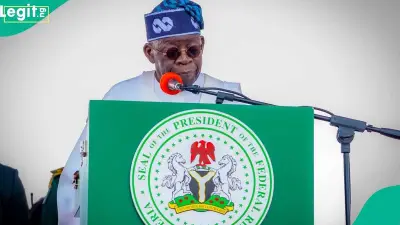
Atiku Abubakar Delivers Scathing Critique of APC Government
In a powerful address that has sent shockwaves through Nigeria's political landscape, former Vice President Atiku Abubakar has delivered a blistering assessment of the current administration. Speaking at the launch of The Loyalist, a book authored by ADC National Publicity Secretary Mallam Bolaji Abdullahi, Atiku made historical comparisons that placed the All Progressives Congress in an unfavorable light.
Historical Context and Harsh Comparisons
Atiku Abubakar declared that the APC represents the worst administration he has witnessed throughout his nearly four decades of political involvement. What makes this statement particularly striking is his assertion that "not even the military dictatorships before 1999 damaged our national life and consciousness in the way this administration has done." This comparison to military regimes represents one of the most severe criticisms leveled against a civilian government in recent Nigerian political discourse.
The former Vice President expressed deep disappointment with the APC's performance, noting that "many of us here were part of the formation of the APC. Unfortunately, what we believed would rescue the country has not happened." This admission from someone who was instrumental in the party's formation adds significant weight to his critique and suggests a profound sense of disillusionment among some of the party's original architects.
The Path Forward: Political Unity and Alternative Platforms
Despite his harsh assessment of the current administration, Atiku identified a silver lining in Nigeria's political development. He emphasized that "if there is anything positive in our recent political development, it is this coming together to rescue the country." This statement reflects his belief in the power of political unity to address national challenges.
The former presidential candidate specifically highlighted the African Democratic Congress as a vehicle for political change, stating that he was "happy that various politicians were able to come together to form the African Democratic Congress." He called for renewed political collaboration, arguing that "just as we once took responsibility to come together and form a political alternative, we must again come together to ensure the emergence of a new political organisation capable of salvaging this country for the benefit of its people."
Broader Political Context and Reactions
This development occurs against a backdrop of significant political realignment as Nigeria approaches the 2027 elections. Comrade Usman Okai has previously endorsed Atiku as vital for Nigeria's democratic future, highlighting the ADC coalition's formation as crucial amid internal crises within opposition parties. Okai has commended Atiku's extensive political experience and commitment to grassroots concerns in strengthening opposition voices.
Interestingly, the political landscape presents family divisions, as Atiku's son Abba Atiku has joined the APC and endorsed President Bola Ahmed Tinubu's potential re-election bid. Abba claimed that no political party can challenge Tinubu's return to power, citing merit-based appointments as a key strength of the current administration. This family political split has generated considerable discussion among Nigerians, who have compared Abba's political loyalty to that of other political figures' children.
The convergence of these developments suggests that Nigeria's political arena is entering a period of significant realignment and potential transformation as various factions position themselves for the coming electoral cycle.