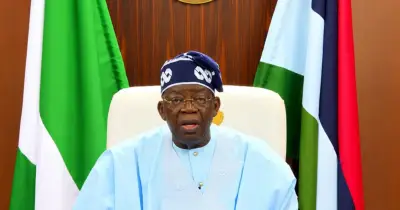
Former Vice President Atiku Abubakar has accused President Bola Tinubu's administration of running an economy that is shutting ordinary Nigerians out of home ownership, car ownership, and basic consumer goods. Citing the Central Bank of Nigeria's (CBN) own Household Expectations Survey, Atiku argued that the data reveals a sharp decline in household purchasing power under the current government.
The statement, dated Saturday, August 8, was released through Atiku's Senior Special Assistant on Public Communication, Phrank Shaibu. Atiku, who is the presidential candidate of the African Democratic Congress (ADC) for the 2027 elections, said the CBN figures are a clear indictment of Tinubu's economic policies.
What the CBN Survey Shows
According to Atiku, the CBN data reveals that buying conditions for major assets have plummeted. The index for motor vehicles stands at just 28.7 points, consumer durables at 28.9, and buildings and landed property at 30.0. Willingness to purchase vehicles dropped even further to 18.7 points, while buildings and landed property registered only 19.2 points.
"These are not figures manufactured by the opposition. They are the verdict of Nigerian households captured by the Central Bank under President Tinubu's own government," Atiku said in the statement.
He added that families are spending everything they earn on food, transport, electricity, and school fees, leaving nothing for savings or asset acquisition. The former vice president described the situation as a direct consequence of the administration's economic mismanagement.
The Jollof Rice Comparison
Atiku also pointed to the latest SBM Jollof Index, which he said puts the cost of ingredients for a single pot of jollof rice for a family of five at an average of ₦29,578. He argued that for a worker on the ₦70,000 minimum wage, that one meal absorbs more than 40 per cent of a full month's salary before rent or any other expense is considered.
"Tinubu first stole jollof rice from the family dining table. Now, his economy is taking away the house in which the table should stand and the car with which the breadwinner should get to work," he said.
Atiku criticised government officials for celebrating headline figures such as GDP growth and foreign reserves while household conditions worsen. He said ordinary Nigerians have become "unwilling economists" rationing every cup of rice and litre of fuel.
Broader Economic Risks
He also warned that the collapse in household purchasing power poses a broader economic risk. When consumers cannot spend, businesses cannot sell, production falls, and jobs disappear, he argued.
"Before there is GDP, there must be dinner. Before there is prosperity, there must be purchasing power," Atiku said.
He called on Tinubu to stop what he described as "PowerPoint economics" and to focus on the conditions inside Nigerian family homes. The president has not merely raised the cost of living but has raised "the cost of dreaming," Atiku added.
Atiku Dismisses Oyedele's Defence of Tinubu's Economic Policies
Earlier, Legit.ng reported that Atiku rejected the defence of President Tinubu's economic policies made by finance minister Taiwo Oyedele. Atiku said the claims do not hold up against publicly available data, taking aim at several key arguments Oyedele had advanced, including assertions around debt reduction, workers' welfare, education funding, and debt servicing costs.
The ADC presidential candidate has consistently criticised the Tinubu administration's handling of the economy, which has seen the naira depreciate significantly and inflation soar to record levels. The latest CBN survey and SBM Jollof Index provide concrete evidence of the hardship faced by Nigerian households.
As the 2027 election campaign heats up, Atiku is positioning himself as the candidate who understands the economic struggles of ordinary Nigerians. His message resonates with many who have seen their standard of living decline sharply under the current government.
The CBN Household Expectations Survey is a key indicator of consumer confidence and spending intentions. The low scores for buying conditions and willingness to purchase major assets suggest that Nigerian families are not only struggling today but also losing hope for the future.
Atiku's statement underscores the deepening economic crisis and the urgent need for policy changes that prioritise the welfare of ordinary citizens over macroeconomic indicators. Whether the government will heed these warnings remains to be seen, but the data speaks for itself.