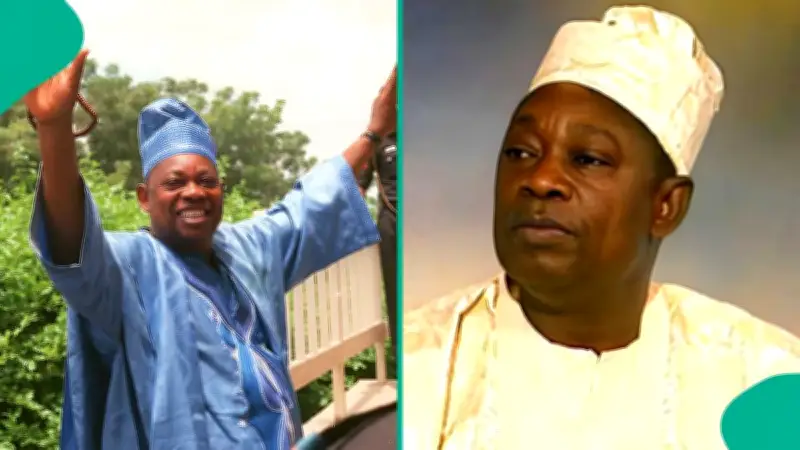
Fresh details from a new autobiography by former Head of State Abdulsalami Abubakar have reignited public interest in the final hours of Chief Moshood Kashimawo Olawale (MKO) Abiola, nearly three decades after his sudden death shook Nigeria and fuelled enduring claims of foul play.
Abiola's Death and Initial Reactions
Abiola, widely regarded as the winner of the annulled June 12, 1993 presidential election, died on July 7, 1998 during a meeting with a visiting United States delegation in Abuja. His death triggered unrest in parts of the country, particularly in Lagos, where many supporters suspected he had been poisoned.
Autopsy Findings
According to excerpts from Abdulsalami's autobiography as cited by TheCable, scheduled for public presentation in Abuja on Saturday, the former military leader maintained that an extensive international autopsy found no evidence of poisoning and concluded that Abiola died from severe, long-standing heart disease.
International Investigation
The book recounts how American officials, including senior diplomat Susan Rice and former US Ambassador Tom Pickering, had travelled to Nigeria shortly after the death of General Sani Abacha to assess the country's political situation and seek a meeting with Abiola. Abdulsalami said he was surprised to learn the delegation had initially been denied access to the detained politician and immediately ordered arrangements for the meeting to take place.
What followed remains one of the most dramatic moments in Nigeria's political history.
“Aliyu, my CSO, called me. As soon as I picked, he said, in a shaky voice, that there was a problem. I asked: ‘What problem again?’ He said Abiola was dead. My head went blank.”
The former leader described the news as devastating. He recalled fears that the fragile efforts to steer Nigeria away from political turmoil could collapse after the unexpected tragedy.
Informing the Family
The emotional toll extended beyond government circles. Abdulsalami recounted the painful moment he informed Abiola's family of the death.
“When I did, one of his daughters started crying profusely and was shaking uncontrollably. I held her and placed her head over my shoulders. She was inconsolable.”
Medical Conclusions
As rumours spread across the country, Abiola's family requested an autopsy. A team comprising Nigerian, American, British and Canadian pathologists was assembled to examine the circumstances surrounding his death.
Abdulsalami wrote that the findings were made public on July 11, 1998 by Canadian coroner Dr James G. Young. The report concluded that Abiola suffered from advanced cardiovascular disease marked by severe narrowing of the coronary arteries and enlargement of the heart caused by long-term hypertension. According to the findings, either condition could have resulted in sudden death.
The report also ruled out poisoning. Toxicology tests found no evidence of toxic substances, while investigators concluded that witness accounts and medical evidence did not support claims that Abiola had been deliberately killed.
Persistent Speculation
Despite the medical conclusions, speculation has refused to disappear from public discourse. Abdulsalami dismissed suggestions of a conspiracy and said he had no reason to believe anyone within government orchestrated Abiola's death. He argued that many of the allegations gained traction years later through rumour and political narratives rather than evidence.
Questions nevertheless remain in some quarters. Former presidential aide Hamza Al-Mustapha claimed before the Oputa Panel in 2000 that he possessed video evidence showing Abiola was poisoned. The footage, however, has never been made public.
Previous Apology by Babangida
Previously, Legit.ng reported that Lekan Abiola, one of the sons of the late Moshood Abiola, confirmed that former military president, General Ibrahim Babangida (retd.), had apologised for annulling the historic June 12, 1993, presidential election. Speaking on Thursday, June 12, 2025, at the MKO Abiola Memorial Symposium in Lagos, Lekan revealed that Babangida had previously extended a private apology to the Abiola family, but had now made his admission public.