Burkina Faso's Military Government Dissolves All Political Parties in Sweeping Decree
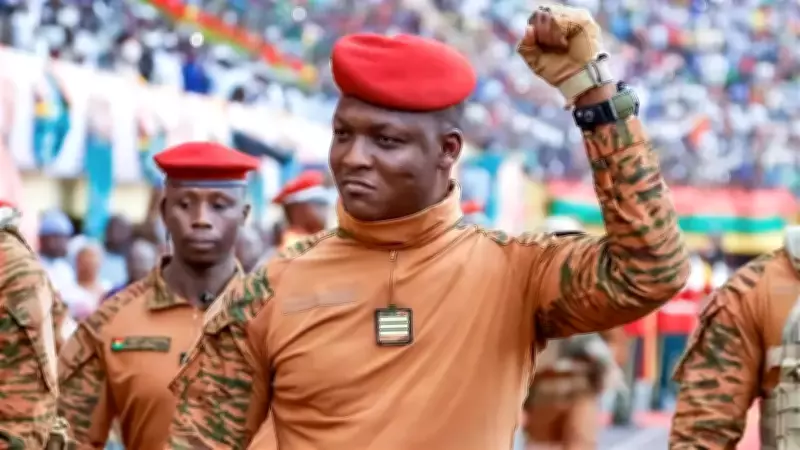
In a dramatic move that signals a profound shift in the nation's political landscape, Burkina Faso's military junta has officially dissolved all political parties and political formations within the country. This decisive action was announced through a formal statement issued by the presidency's communications directorate, following a crucial meeting of the council of ministers presided over by junta leader Captain Ibrahim Traoré.
Official Justification for the Dissolution
The Minister of Territorial Administration and Mobility, Émile Zerbo, characterized the decision as both deliberate and far-reaching in its implications. He emphasized that this "great and important decision is part of the re-founding of the state," suggesting a fundamental restructuring of Burkina Faso's political framework. According to the presidency's official statement, the proliferation of political parties had led to significant political drift, encouraged divisions among citizens, and ultimately weakened the nation's social fabric.
Objectives and Immediate Consequences
The dissolution aims to achieve several key objectives:
- Preserving national unity and social cohesion
- Strengthening the coherence of government action
- Creating necessary space for comprehensive political governance reforms
Under the adopted decree, all assets belonging to the dissolved political parties must be handed over to the state. Minister Zerbo confirmed that "the draft laws will be passed to the Transitional Legislative Assembly as soon as possible," indicating that legal formalities will follow swiftly.
Historical Context and Political Landscape
Before the military takeover, Burkina Faso maintained a vibrant multiparty system with more than 100 registered political parties. Following the 2020 general election, fifteen of these parties held representation in parliament. However, this political diversity came to an abrupt halt after Captain Ibrahim Traoré seized power in a September 2022 coup, which compelled political parties to suspend their activities indefinitely.
Parallel Development Initiatives
During the same council of ministers meeting that approved the political party dissolution, the government also adopted an ambitious state development roadmap known as the "Reliance plan." This comprehensive development strategy, valued at FCFA 36 trillion (approximately $65 billion), is scheduled to run from 2026 to 2030, representing a significant investment in the nation's future infrastructure and economic development.
The simultaneous announcement of both the political dissolution and the development plan suggests a coordinated approach by the junta to reshape Burkina Faso's political and economic trajectory simultaneously. This move represents one of the most significant political developments in West Africa in recent years and will undoubtedly have regional implications for democratic governance and political stability.