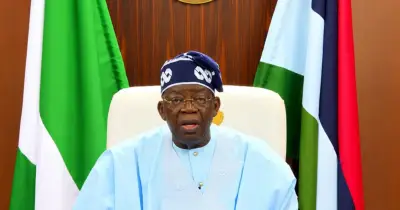
The recent meeting between Catholic bishops and President Bola Tinubu has ignited a national conversation, with the overwhelming majority of social media commentators siding with Cardinal John Olorunfemi Onaiyekan. This outpouring of support suggests that the cardinal was indeed doing his country a good turn by speaking truth to power. The interaction, which took place at the Presidential Villa, has become a touchstone for debates about the proper relationship between religious leaders and political authority in Nigeria.
The Meeting That Sparked Controversy
A delegation from the Catholic Bishops' Conference of Nigeria (CBCN) met privately with President Tinubu, presenting a document detailing widespread economic hardship, security challenges, and social distress. The clerics urged the president to address these pressing issues. Shortly after, Cardinal Onaiyekan discussed the meeting's details on Arise TV, stating that President Tinubu insisted the economy was improving and appeared displeased with the bishops' stance. Onaiyekan suggested that aides around the president might not be giving him an accurate picture of what ordinary Nigerians experience in their daily struggles.
This brutally frank assessment was not disrespectful, but it struck a nerve. The clips of President Tinubu's response showed him manning his corner gamely, drawing attention to macroeconomic gains while downplaying microeconomic challenges. As a seasoned politician, Tinubu reminded the clerics that politics and morality are worlds apart.
A Salutary Exchange Between Pulpit and Power
Many observers view this engagement as one of the more salutary interactions between the pulpit and power in the current democratic dispensation. It was as robust as you could have in any other democratic country. Nigerians ought to be proud that Catholic bishops could enter the palace and tell the king he wasn't exactly regally robed, while the king responded with his side of the story, explaining why a pulpit wasn't required furniture in the palace where the buck stops.
Comparing Tinubu's response to Donald Trump's diatribe against Pope Leo XIV when the pontiff spoke against endless wars, Olaoye argues that Nigeria has something to teach the rest of the world. Instead of beating ourselves up, we should recognize the maturity of this exchange.
Aides' Attacks Backfire
Unfortunately, instead of playing up the positive side of the visit, some presidential aides went berserk with puerile attacks against the bishops. Temitope Ajayi said Onaiyekan's interview was an "abuse of clerical privilege," a phrase that left many puzzled. More odious were comments attributed to Dr. Daniel Bwala, Special Adviser on Policy, who claimed the cardinal spoke strictly from a Catholic perspective rather than for the entire Nigerian Christian community, labeling him "more political than spiritual." Bwala also accused sections of Catholic leadership of partisan alignment with opposition figures, especially Peter Obi of the Labour Party.
Bwala's remarks proved Onaiyekan's point that the president's aides might not be giving him an accurate picture of ordinary Nigerians' struggles. The characterisation of the cardinal drew pushback from political figures, civil rights bodies, and interfaith leaders. Reverend Joseph John Hayab cautioned against dividing the Christian community along denominational lines. The Human Rights Writers Association of Nigeria (HURIWA) maintained that high-ranking clerics have a civic and moral responsibility to highlight grassroots realities. The Anglican Archbishop of Enugu North, Most Reverend Sosthenes Eze, said Onaiyekan was speaking on behalf of all Christians, indeed all Nigerians. "The Catholic Church has spoken the mind of all Nigerians," he said, describing Bwala as the type of aide who misleads his principal to appear loyal.
The Political Cost of Alienating Millions
The attack dog model deployed by presidential aides is counterproductive, especially on the eve of a presidential election. With about 38 million Catholics in Nigeria, you don't alienate such a constituency thoughtlessly. The damage control done by the Secretary to the Government of the Federation, Senator George Akume, was wise and timely, but the initial backlash highlights a deeper issue.
There is a rich history of interactions between the Catholic Bishops' Conference of Nigeria and various leaders, sometimes tepid, other times spirited. Patriots who want the best for their country must always support their leaders with candid advice. Cardinal Onaiyekan, at 82, has been known as temperate, sagacious, and even-handed, and attempts to cast him as a rabble-rouser are in vain.
Lessons from Sophocles' Antigone
Ancient history teaches this lesson in Sophocles' Antigone (441 BCE), a classic Greek tragedy chronicling a fierce battle of wills between a young woman and her uncle, King Creon, over the burial of her brother. Both of Antigone's brothers are killed in a civil war; one is granted a hero's burial, while Creon decrees the other's body must rot, with anyone mourning him executed by stoning. Creon views his decree as essential to state power, but Antigone refuses to obey, believing the laws of the state cannot overrule the unwritten, eternal laws of justice and human dignity.
When captured, Antigone defiantly declares: "I did not think your edicts had such force that they, given by a mere mortal, could override the unwritten and unfailing laws of heaven. These are not of today or yesterday but live forever…" Enraged, Creon sentences her to be sealed alive in a stone tomb. Her fearless speech sets off a tragic chain: the prophet Tiresias warns Creon of divine fury, and when Creon relents, it's too late—Antigone has hanged herself. Her fiancé Haemon kills himself, followed by his mother Queen Eurydice. In one fell swoop, Creon loses his cousin, son, and wife.
From that mythical time, every king has prayed for the humility to listen to the Antigone fate sends him, no matter the guise. Why? Because power without feedback is dangerous. The Nigerian bishops, like Antigone, have spoken truth to power, and the nation watches to see if President Tinubu will heed the lesson or suffer the consequences of ignoring the voices of the people.