This anniversary musing is a continuation of my serial on 'Team Tinubu and Danger of Assumption', which began three weeks ago. It is also for lessons for all of us concerned Nigerians who can recall the profile of the power elites who signed away instead of insisting on the majesty of June 12 mandate in 1993.
June 11, 2000 — When The Sunday Guardian Listed Names
On June 11, 2000, seven years after the annulled election, I, then as Abuja Bureau Chief of The Guardian, wrote a lead story that reframed June 12. The headline: 'Exposed: Men Who Signed Away June 12'. Remember, it was not an opinion piece. It was a list in a scoop that revealed the names of the 'G-34 members who signed the tripartite agreement, which nailed the coffin of June 12 presidential election result'. The agreement was between the Federal Military Government and the two government-created parties, the National Republican Convention (NRC) and the Social Democratic Party (SDP). The strange agreement set up the Interim National Government (ING).
Specifically, the story contained the names of the power elite who signed away Nigeria's democracy and subverted Nigeria's sovereignty expressed on June 12, 1993. Professor Olatunji Dare later cited my scoop in The Guardian as a reference point in his 2010 book 'Diary of a Debacle: Tacking Nigeria's Failed Democratic Transition (1989-1994)'. This piece will use my June 11, 2000 revelation as a lens to examine two assumptions: that the 1993 assumption that the military could be trusted to midwife democracy, and the 2026 assumption that democracy has arrived. Both are dangerous. Both ignore that the battle for actualisation is still about internal democracy.
What June 12, 1993 Actually Was
The Vote
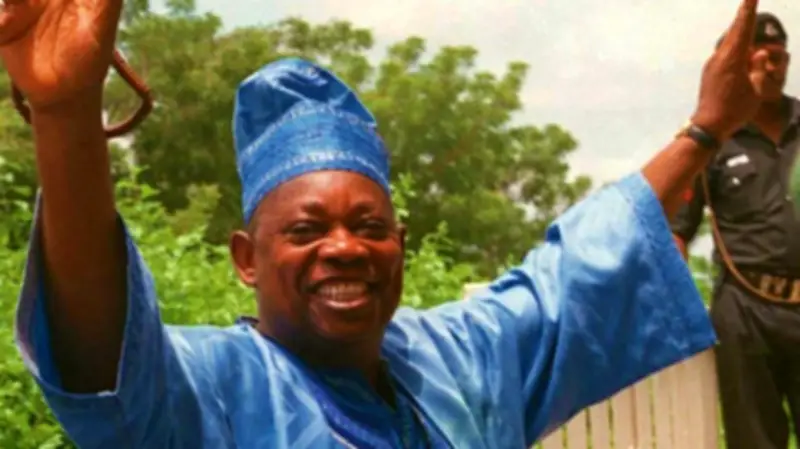
On June 12, 1993, an estimated 14 million Nigerians voted. MKO Abiola of the SDP defeated Bashir Tofa of the NRC. Abiola won 19 of 30 states, including Tofa's Kano. It was a Muslim-Muslim ticket. A Yoruba candidate winning in the North. It was Nigeria rejecting military rule and ethnic division in one day.
The Annulment
On June 23, 1993, the Babangida regime annulled the election. No court asked for it. No law required it. It was done by decree.
The Immediate Question
Would the political class insist on the mandate or negotiate it? That is where my June 11, 2000 story begins.
The G-34 and the Tripartite Agreement: Who Signed What Away?
I had then reported that after General Ibrahim Babangida addressed 'what was constituted as a National Assembly operating then at the International Conference Centre, Abuja', a tripartite committee of the military and the two parties signed a document 'purporting to be setting up the Interim National Government (ING)'. The Guardian exclusive story listed 'military officers and political leaders who signed on behalf of the Federal Government and their parties'.
Military Signatories
- Admiral Augustus Aikhomu, Vice President under the military presidency of General Ibrahim Babangida
- Lt. Gen. Joshua Dogonyaro, Commandant, Command & Staff College, Jaji
- Lt. Gen. Aliyu Mohammed Gusau, then National Security Adviser
- Brigadier-General Anthony Ukpo, former Federal Commissioner for Information and later assigned to Nigeria Defence Academy, Kaduna
- Brigadier-General David Mark, then serving with the National War College (now National Defence College), once served as Senate President
- Brigadier-General John Shagaya, then serving as General Officer Commanding 1 Division Kaduna (died 2018)
- Alhaji Abdulrahman Okene, then serving as Secretary for Internal Affairs in the Transitional Council, signed on behalf of the Federal Military Government (died 1999)
SDP Signatories
- Maj. General Shehu Musa Yar'Adua, former presidential aspirant who had won the SDP presidential ticket in the primaries that were also annulled before Abiola came in. He died in Abakaliki prison where he was being detained by General Abacha
- Chief Tony Anenih, then SDP National Chairman, called Mr. Fix-it, who declared that the day the ING document was signed was his happiest day. He later became Works Minister under President Obasanjo (1999-2003). He died in 2018
- Alhaji Sule Lamido, then Secretary of the SDP, later Foreign Affairs Minister under Obasanjo and served as Governor of Jigawa State
- Chief Jim Nwobodo, former governor of old Anambra State and later Senator in this dispensation
- Chief Dapo Sarumi, former Governorship aspirant, Lagos State, served the ING as Minister of Communications
- Alhaji Abubakar Rimi, former Kano State Governor and a regular face in Abiola's residence in Lagos, but later said, 'I am not in politics because of Abiola'. He later served as Communications Minister under Sani Abacha. He died in 2010
- Dr. Patrick Dele Cole, former Daily Times Managing Director, Political Strategist to Abiola, former Envoy to Brazil, later served Obasanjo as Special Adviser
- Okechukwu Odunze, then National Treasurer of the SDP
NRC Signatories
- Dr. Hammed Kusamotu, then Chairman of NRC (died 2005)
- Arc. Tom Ikimi, former NRC Chairman and later Abacha's Minister of Foreign Affairs
- Alhaji Adamu Ciroma, earlier declared 'Abiola won fair and square', earlier secured party ticket as presidential aspirant but was annulled by IBB; later served as Agriculture Minister under Abacha and as Finance Minister under Obasanjo (died 2018)
- Okey Uzoho, then National Publicity Secretary, NRC (deceased)
- Joe Nwodo, who signed with unstated 'reservations'
- Theo Nkire
- Professor Eyo Ita
- Dr. Bawa Salka
- Prince Bola Afonja
- Alhaji Y. Anka
- Mr. Alba Muritala
- Alhaji Halilu Maina
- Alhaji Muktari A. Mohammed
- Alhaji Ramalan, later a traditional ruler in Nassarawa State
- Joseph Toba, and four others signed that infamous document that sealed the June 12 death sentence then before General IBB was forced out of power on August 26, 1993
In the table-shaking story, I referred to the full group as 'G-34 members who signed the tripartite agreement'. The document effectively 'nailed the coffin of June 12 presidential election result'.
What This Backstory Meant
The then SDP and NRC, through their representatives, sat with the military and signed on to the ING under Ernest Shonekan. They did not walk out. They did not insist on Abiola. They accepted a process that bypassed the winner. That is what I reported then as 'signing away June 12'. More important, the 2000 piece did not allege that every SDP or NRC member agreed. It documented the 'power elite' who signed the tripartite agreement. While some courageous journalists then were fighting in the trenches even as guerilla journalists, many party members, the leadership structure of both parties was implicated in the agreement that legitimised the ING.
The Assumption of 1993: 'Abacha Will Organise Elections'
Why did G-34 members sign? The thinking of the period as documented was that Babangida was exiting, the ING was temporary, and confrontation would bring chaos. The second assumption was worse. When General Sani Abacha sacked the ING on November 17, 1993, many politicians assumed he would be different. Behold, naïve politicians and even scholars hailed Abacha as a 'professional soldier'. They believed Abacha would organise elections and leave. Instead, Abacha banned parties, jailed Abiola, and his five parties adopted him as sole candidate.
From 1993 to 1999: The Cost of Assuming
Lives
Abiola, Kudirat Abiola, Bagauda Kaltho, and a host of unnamed others died. Journalists were jailed. The Guardian, Punch and Concord were proscribed for many months under Abacha. The Guardian was closed for 11 months and the publisher was shut by Abacha's hitmen.
Institutions
Courts issued injunctions that were used to justify annulment. The National Assembly that Babangida addressed at the International Conference Centre had no power. The judiciary could not restore the mandate.
Trust
By 1999, voter turnout was 52.3%. By 2023, it was 27%. Nigerians learned from June 12 that 'votes do not count' if the elite can sign them away.
1999–2026: The New Assumption — 'We Have Uhuru'
We dangerously assume that because elections hold, democracy is safe. But the June 11, 2000 list forces a question: have the parties that signed away June 12 learnt anything about internal democracy?
Evidence That They Haven't Learnt
- Candidate selection: Parties signed agreement that bypassed their own winner, Abiola in 1993. In 2026, Governors impose 'consensus' candidates. N100m forms exclude citizens.
- Negotiating mandates: Tripartite committee negotiated with military instead of insisting on result in 1993. In 2026, parties budget for post-election litigation, instead of pre-election mobilisation.
- Trust in strongmen: In 1993, politicians assumed that Abacha would midwife democracy. In 2026, politicians assume every election is a 'done deal' for incumbents.
Here is the thing, internal democracy is still a bridge too far. The 2022 Electoral Act tried direct primaries, but parties chose delegates. The same elite bargaining that produced the ING in 1993 now produces 'consensus' in 2026. The names change. The behavior does not.
The Lesson
Some democrats in the then SDP and NRC assumed they were being strategic. They assumed Babangida and Abacha were rational actors. They assumed the ING was a shortcut to power. The political party signatories to the 1993 agreement were part of the G-34. By signing, they gave military annulment a civilian stamp. Did they learn? Look at 2023: parties still tell supporters 'go to court' instead of protecting votes at polling units. They still assume INEC, not voters, determines outcomes. They still assume 'the people will move on.' That is 1993 thinking.
Assumptions About Abacha vs Assumptions About 2027
1993 Assumption: Abacha will not stay. He will organise elections. Reality: He stayed for 5 years, buried Abiola's mandate, and ran as sole candidate of 5 parties described by the late Cicero of Esa Oke, Chief Bola Ige as 'five fingers on one leprous hand'.
2026 Assumption: 2027 is a formality for incumbents. The judiciary will sort it, after all. Risk: Low turnout, judicial delays, and the belief that 'votes don't count' is how democracy dies without a coup.
The Battle Not Yet Won: Three Things June 12 Demands Today
Name the G-34 Logic and Reject It
The 'power elite' who signed away June 12 believed they were avoiding chaos. They created five years of it. Any party that chooses consensus over primaries in 2026 is using the obnoxious G-34 logic.
Make Internal Democracy the New June 12
Abiola won a party primary before he won June 12. If a party cannot conduct a free primary, it cannot demand a free general election. Direct primaries, electronic transmission of delegate votes, and open primaries are the 2026 version of 'actualise June 12'.
Kill the Abacha Assumption
Abacha was assumed to be a transition man. Today we assume 'the military won't return.' Coups in Mali, Burkina Faso, Niger since 2020 killed that assumption. Democracy is defended by delivery, not by hope deferred. If 60% of Nigerians under 25 see no future, the barracks will always have an audience.
Not Yet Uhuru Until Assumptions Die!
The democrats in SDP and NRC who signed that tripartite agreement assumed they were buying time. They bought Abacha. They bought five years of dictatorship. They bought Abiola's death. They smeared the majesty of democracy. Today we assume 1999 was Uhuru. It was not. Uhuru is when parties cannot sign away candidates. Uhuru is when 27% turnout is treated as a national emergency. Uhuru is when the lesson of G-34 list is taught in civics classes: democracy dies when elected leaders negotiate mandates instead of defending them. June 12 was about actualisation. 2027 will be about preservation. The battle is not yet won. Internal democracy is still a bridge too far. And until it isn't, every June 12 anniversary lecture is a reminder of assumptions we cannot afford to make again.