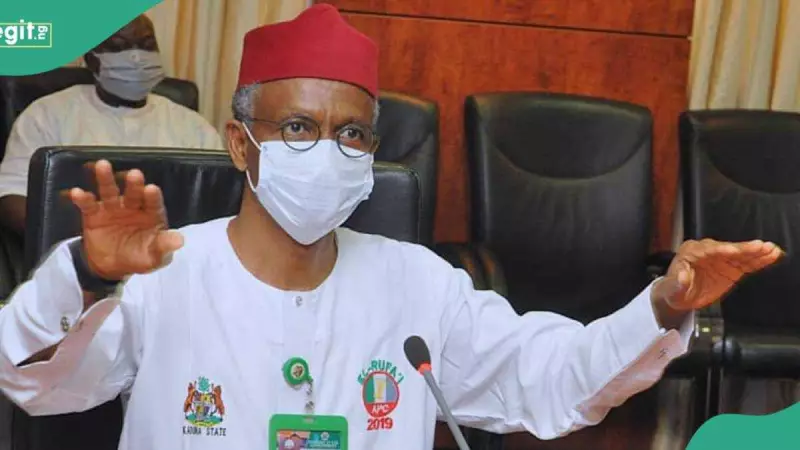
El-Rufai Alleges APC Members Evade Corruption Accusations, Demands Institutional Reforms
Nasir El-Rufai, the immediate past governor of Kaduna State, has made a striking claim that members of the ruling All Progressives Congress (APC) are the only politicians in Nigeria who are not being accused of corruption. The former governor delivered this statement during his address at the 23rd Daily Trust Dialogue, which was held in Abuja on Thursday, January 22, 2026. The event focused on the theme "Nigeria's Fourth Republic: What is Working and What is Not?"
Selective Accountability and Governance Concerns
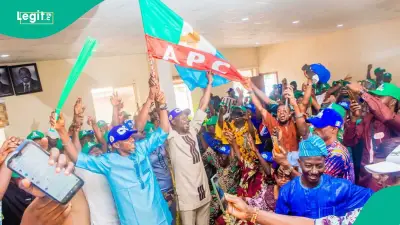
El-Rufai emphasized that corruption has become a dangerous issue for those in opposition, negotiable for politicians sitting on the fence who wish to join the APC, and virtually invisible for those aligned with power. He stated, "APC members are never accused of corruption." This observation highlights what he described as selective accountability, which he argues undermines effective governance in Nigeria.
The former governor stressed that to achieve true progress, fairness, justice, and good governance must be firmly entrenched within the system. He called for an end to this selective approach, advocating for a more transparent and equitable political environment where all individuals are held to the same standards regardless of their party affiliation.
Call for Judicial Reforms and Electoral Integrity
Beyond his comments on corruption, El-Rufai further urged for the strengthening of Nigeria's institutions, with a particular focus on judicial reforms. He argued that credible elections and a truly independent electoral commission are essential for the nation's democratic health. These reforms, he believes, would help ensure that electoral processes are free from manipulation and reflect the genuine will of the people.
His advocacy for judicial improvements comes at a critical time, as Nigeria prepares for the 2027 general elections. El-Rufai's remarks underscore the need for robust institutions that can withstand political pressures and uphold the rule of law, thereby fostering public trust in the democratic system.
Political Realignments and the 2027 Election Landscape
El-Rufai's statements are set against the backdrop of ongoing political realignments and strategic consultations among key actors ahead of the 2027 polls. Having previously been a member of the APC, El-Rufai switched to a coalition movement after losing influence with President Bola Tinubu. He has since emerged as a prominent figure in the coalition campaigns against Tinubu's administration.
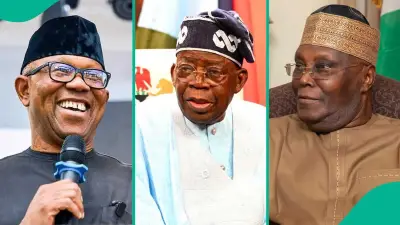
This coalition, initiated by former Vice President Atiku Abubakar, has attracted other opposition leaders, including Peter Obi, the 2023 Labour Party presidential candidate, and Rotimi Amaechi, who lost the APC presidential ticket to Tinubu during the party's primary. Both Amaechi and Obi have expressed interest in contesting the 2027 presidential election, with promises to rule for a single term to address concerns from northerners—a pledge El-Rufai recently dismissed as unconvincing.
Additionally, there are rumors about former President Goodluck Jonathan potentially joining the African Democratic Congress (ADC) as part of this coalition, following meetings with the party's national chairman, David Mark. The Peoples Democratic Party (PDP) is also considering fielding Jonathan or bringing back Obi for the 2027 race, adding further complexity to the political landscape.
Broader Criticisms and Historical Context
El-Rufai's recent comments are not isolated; he has previously criticized other aspects of Nigerian politics. For instance, he recently questioned the loyalty of attendees at the launch of a biography of former President Muhammadu Buhari, held at the presidential villa. He called for allowing the late president to respond to claims and allegations posthumously, highlighting his ongoing engagement with contentious political issues.
As Nigeria approaches the 2027 elections, El-Rufai's allegations and calls for reform are likely to fuel debates on corruption, governance, and electoral integrity. His position as a key player in the opposition coalition underscores the significance of his voice in shaping the political discourse and challenging the status quo.