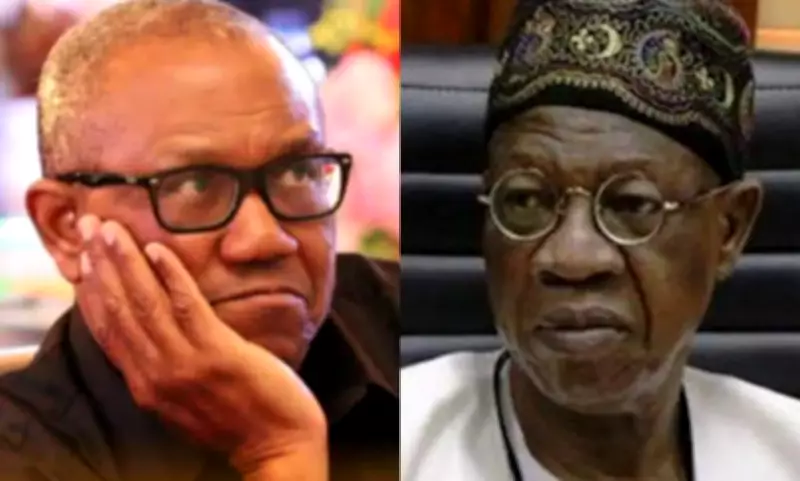
Former Minister of Information and Culture, Lai Mohammed, has made a striking declaration regarding the 2023 presidential election, asserting that Labour Party candidate Peter Obi would have been unable to secure victory even if he had garnered an impressive 10 million votes nationwide.
Constitutional Hurdles Proved Insurmountable
During a recent podcast appearance, Mohammed, who served in the Buhari administration, explained that Obi's campaign failed to meet critical constitutional requirements for presidential success. The fundamental obstacle, according to the former minister, was Obi's inability to secure "one-quarter of votes cast in 25 states" - a mandatory threshold established by Nigeria's constitution for any presidential candidate to be declared winner.
Logistical Shortcomings in the Election Process
Mohammed further highlighted significant operational deficiencies in Obi's campaign structure. "It is even on record that he could not provide agents at about 40,000 polling units," the ex-minister revealed, suggesting that this logistical gap undermined the Labour Party's ability to properly monitor the electoral process across numerous voting locations.
Unprecedented Role of Identity Politics
Reflecting on the broader political landscape that shaped the 2023 elections, Mohammed identified what he described as a historic shift in Nigerian politics. "For the first time in the history of politics in Nigeria, ethnicity and religion played a very frontal role," he observed, pointing to how these identity factors became unusually prominent in voter behavior and campaign dynamics.
The EndSARS Legacy in Lagos Politics
Particularly in Lagos State, Mohammed noted that the aftermath of the #EndSARS protests created a unique political environment. He suggested that many young voters in the commercial capital "wanted a pound of flesh" following the protest movement, creating electoral headwinds that did not benefit the ruling All Progressives Congress or its presidential candidate Bola Tinubu in certain constituencies.
The former minister's analysis provides a retrospective examination of the complex factors that influenced Nigeria's 2023 presidential contest, emphasizing both constitutional requirements and shifting sociopolitical currents that reshaped traditional voting patterns across the nation.