Former Minister Accuses Tinubu Government of Cartel-Style Operations
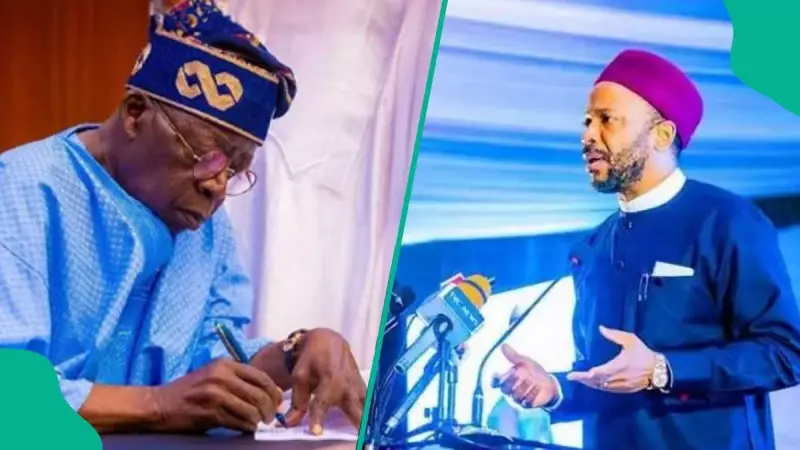
Chukwuemeka Nwajiuba, who previously served as Minister of State for Education under President Muhammadu Buhari, has delivered a sharp critique of the current administration led by President Bola Ahmed Tinubu. In a recent television appearance, Nwajiuba characterized the government's operations as resembling those of a cartel, marked by what he described as incompetence and a consolidation of political power to control national resources.
Policy Decisions and Spending Priorities Under Fire
During his interview on Arise TV, Nwajiuba specifically targeted key policy moves by the Tinubu administration. He expressed strong disapproval of the removal of fuel subsidy, questioning the timing and subsequent government expenditures. "Who removes subsidy today and the next morning takes a loan to buy a yacht, renovate a vice-presidential house that is not lived in, travel abroad? This is not government. This is cartel behavior," he stated emphatically.
Nwajiuba clarified that his criticism was not centered on allegations of corruption but rather on a perceived breakdown in governance capacity. "I'm not talking about thievery. I'm talking about gross incompetence," he added, suggesting that the country is being poorly managed following significant economic and policy shifts.
Announcement of 2027 Presidential Ambition
In the same broadcast, the former minister revealed his intention to contest the 2027 presidential election under the banner of the African Democratic Congress (ADC). He explained that his decision stems from the party's readiness and the formation of a coalition poised to challenge the ruling All Progressives Congress (APC). "I declared to run because we've come into 2026, the ADC is ready, the coalition has come into the ADC and the party is now set," Nwajiuba declared.
He outlined the ADC's strategy to build grassroots structures and mobilize Nigerians who are dissatisfied with the current state of governance. "This is the time to remind all of our supporters and people who want a change in this madness called governance to come with their entire team," he urged.
Addressing Political Recycling and Party Composition
Responding to concerns about the opposition recycling familiar political figures, Nwajiuba emphasized that the ADC aims to balance experience, education, and youthful energy. While acknowledging the presence of prominent politicians like Atiku Abubakar, Rotimi Amaechi, Peter Obi, and Nasir El-Rufai within the broader political landscape, he stressed his focus on bringing in younger individuals. "I don't want to break through the field. I want to bring in more substance, more younger persons. The future belongs to us," he noted.
Clarifying His Political Identity and Goals
Nwajiuba distinguished himself from political activists, asserting his identity as a politician driven by a desire to improve governance outcomes. "I'm not a political activist. I'm a politician. We do this to run a government and make people's lives work better," he explained, framing his presidential ambition as a practical effort to enhance public welfare rather than mere activism.
This critique comes amid broader political discourse, as earlier reports highlighted similar concerns from figures like former Kaduna State Governor Nasir El-Rufai, who warned about practices undermining democracy. Nwajiuba's comments add to the growing scrutiny of the Tinubu administration's governance style and policy directions as the political landscape evolves toward the 2027 elections.