Brigadier Godwin Ally: A Warrior Remembered
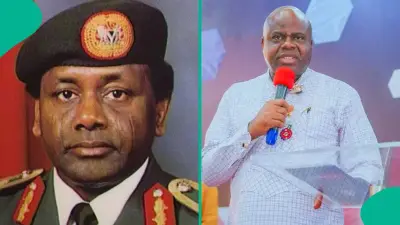
While serving as Minister of Defence in 2002, General (rtd.) Yakubu Theophilus Danjuma renamed four barracks in the South South: Adaka Boro Barracks – Elele; Emmanuel Ekpo Barracks – Ikom; Godwin Ally Barracks – Ogoja; and Patrick Dan Archibong Barracks – Calabar. The late Brigadier Godwin Ally, who hailed from Ogoja province, was among the first set of young boy soldiers to attend the Nigerian Military School in Zaria (then called “Boys Company”) in 1954. He trained at the ROSTS in Ghana, MONS OCS in the UK, and the Royal Military Academy in Sandhurst from March 1959 until August 1962, when he was commissioned as a regular combatant alongside Ibrahim Haruna, Musa Usman, Emmanuel Ikwue, and Okpo Isong.
In August 1967, following the Biafran invasion of the Midwest, then Lt. Col. Godwin Ally took command of the newly created 7 Brigade between Ore and Okitipupa. He was responsible for pushing Biafran troops toward Benin along the Ore-Benin Road as the main 2DIV force descended from the north to cut them off. After the federal recapture of Benin, he was tasked with the central axis in the advance to Abudu en route to Asaba. Because of the destruction of the bridge over the Ossiomo (Orhionmwon) river, he executed a single envelopment via a detour through Owa Elero, emerging behind Biafran troops at Agbor. He exploited toward Umunede, then drove toward Asaba via Isele-Ukwu, taking Asaba after bloody fighting at St. Patrick’s College, along with elements of the 6 Brigade under Lt. Col. Alani Akinrinade. Colonel Ally’s 7 Brigade was tasked with rear stability operations in the Asaba area. In September 1968, he was transferred to the 3 Marine Commando, becoming 1 Sector Commander with responsibility for the 15 and 16 Brigades. Subsequently, he was appointed Chief of Staff of the 3 Marine Commando Division, initially under Colonel Benjamin Adekunle, but later under Colonel Olusegun Obasanjo. It was with then Lt. Col. Godwin Ally that the beleaguered 16 Brigade linked up in April 1969 after their breakout from the siege of Owerri.
One of the members of the Barracks Panel, Maj. Gen. MC Alli, once served under the late Brigadier in the 2nd Division during the war. In his book “The Federal Republic of Nigerian Army,” he said of the late Brigadier Ally: “The 7 Infantry Brigade Commander, Colonel Godwin Ally, a fiercely courageous, swashbuckling, highly committed officer and gentleman who led his troops from the front or amongst them at critical times. In a different environment, but within the same calling, he would be regarded as an example of a classical warrior or warlord. He would drive off to any sector of his command that ran into a stiff, tricky situation, extricate and stabilize the situation, give a word or two of advice to the Commanding Officer and like a whistle, he was gone to some other troubled area. He lasted the war, though with a couple of bullets to constantly remind him of Biafra. He was a warrior lost in the crowd after the war; he treated his captives with compassion and understanding. He was one of the most enduring officers and gentlemen for all times.”
Brigadier Godwin Ally was the Commander of the Lagos Garrison Organisation when the coup against General Yakubu Gowon took place on July 29, 1975. He opposed the coup, expressed his displeasure, and was later retired on January 21, 1976. While serving in Ikeja Garrison, his second in command was Lt-Colonel Shehu Musa Yar’adua (March 5, 1943 – December 8, 1997), who later became the number two man in the country after General Murtala’s assassination in February 1976. Brigadier Ally’s ADC was Colonel Lawan Gwadabe (77), who later became the Military Governor of Niger State.
Brigadier Godwin Gregory Aja Ally was born on January 1, 1940, in Ukwortung-Utugwang in Obudu Local Government Area of Cross River State to Pa Ally Atem and Ma Unwanyi Ally, a farmer and trader respectively. He grew up in Zaria with his late elder brother, Corporal Ulim Robinson Ally, who was a soldier. As an intelligent boy in the barracks, he excelled in his primary school education and was enlisted into military institutions, attending several military schools and courses. His brilliance aided his military career, with several positions and promotions, until he retired voluntarily with the rank of Brigadier at the age of thirty-six in 1976. His closest friend and colleague during his career and after retirement was Brigadier Emmanuel Ikwue (Rtd). He married his Danish wife, Mrs. Sonja K.R. Ally, on May 5, 1963. The marriage was blessed with two sons and two daughters. Mrs. S.K.R. Ally retired a few years ago and has travelled back to Denmark for health reasons. He was a member of the Supreme Military Council; acting Military Governor of Lagos State; Commandant, Army Garrison, Bonny Camp; Chairman of Nigeria Port Authority, 1976-1979; Chairman of Ikoyi Golf Club, Ikoyi-Lagos; Chairman of Nigeria Newsprint Manufacturing Company (NNMC) Oku Iboku in Akwa Ibom State; Chairman of Obudu Cattle Ranch; and Member of Lions Club International. Brigadier G. G. A. Ally passed away on September 5, 1997, at the age of 57 and was buried in his ancestral home in Ukwortung-Utugwang, Obudu Local Government Area of Cross River State.
The Case for Ogoja State
Ogoja area deserves to be a state. The demand for the creation of Ogoja state has been outstanding. The area is landlocked like many areas in Nigeria and too far from Calabar, the state capital. On a good road, the trip from Ogoja to Calabar will take at least seven hours. It is even closer to Makurdi, the Benue state capital. Obudu Cattle Ranch is situated in Ogoja, which is a tourist attraction and consists of many tribal units. These include Ishibori (this village has different clans such as Uhmuria, Ikaptang, Ikajor, Ishinyema, Ikariku, Imerakorm) and Igoli as the central town. Mbube, one of the major tribes, comprises different villages, including Odajie, Ekumtak, Idum, Ojerim, Egbe, Ogberia Ogang & Ogberia Ochoro, Oboso, Benkpe, Edide, Bansan, Aragban, Nkim, etc. Their major source of livelihood is subsistence agriculture, basically farming of cassava, yams, palm oil, palm wine, etc. Ekajuk is one of the major clans in Ogoja Local Government Area. It is divided into Ward I and Ward II, and includes major communities such as Nwang, Ekpogrinya, Esham, Egbong, Nnang, Ewinimba, and Bansara (which are collections of villages).
Constitutional Amendments for State Creation
The demand for state creation and restructuring should be part of the agenda of the next President of Nigeria. The first task will be to amend the Constitution, so that these issues will be better handled than the tight grip in the 1979 and 1999 Constitutions introduced by the military. The 1979 Constitution made adequate provision for steps to be taken before states could be created. They are contained in Section 274 of the suspended Constitution. The same provisions are contained in Section 8 of the 1999 Constitution. Let’s face it, these provisions are insurmountable hurdles, and they have been exploited since 1999 by the political class, especially by those who have occupied the positions of Deputy Senate President and Deputy Speaker of the House of Representatives for financial gains. All that should be done by the next elected President is to amend the Constitution so as to lower these hurdles that have made it impossible for states to be created and restructuring equally impossible, along with other issues. That should be the task of the next President of Nigeria. Concluded.
Eric Teniola, a former director at the Presidency, wrote from Lagos.