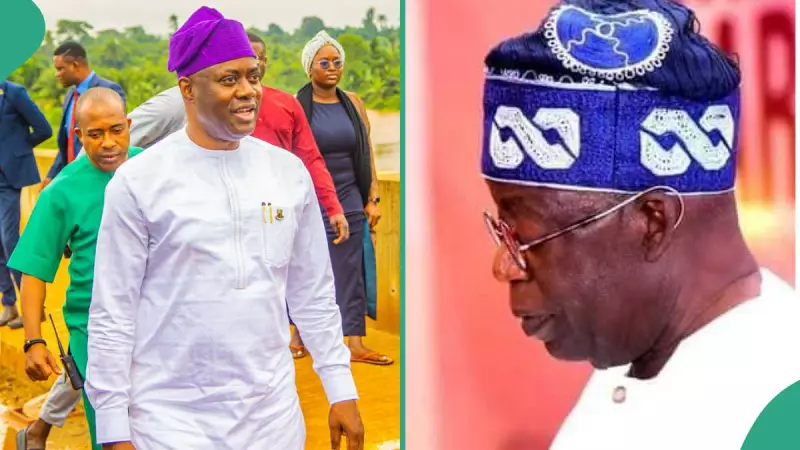
Political Realignments Intensify as Governors Meet President Tinubu
President Bola Tinubu is currently engaging in separate consultations with two prominent state governors at the presidential villa in Abuja, signaling ongoing political maneuvers ahead of the 2027 general elections. The meetings involve Governor Seyi Makinde of Oyo State, who remains with the opposition Peoples Democratic Party (PDP), and Governor Caleb Mutfwang of Plateau State, who recently defected from the PDP to the ruling All Progressives Congress (APC).
Strategic Timing and Separate Arrivals
According to reports from The Punch newspaper, the two governors arrived at the State House separately on Thursday afternoon. Governor Mutfwang was said to have arrived around 3:00 p.m., while Governor Makinde followed approximately thirty minutes later at 3:30 p.m. This marks the first official meeting between President Tinubu and Governor Mutfwang since the Plateau governor's defection to the APC.
These consultations occur against a backdrop of significant political realignments across Nigeria's political landscape, with key actors positioning themselves strategically for the upcoming electoral cycle. President Tinubu has recently held a series of meetings with governors from various political affiliations, indicating a broader strategy of engagement across party lines.
Makinde's Political Ambitions and PDP Standing
Governor Seyi Makinde, one of only four remaining PDP governors in Nigeria, continues to maintain his position within the leading opposition party despite numerous defections to the ruling APC. Political analysts widely believe that the Oyo State governor harbors presidential ambitions and is strategically positioning himself to potentially become the PDP flagbearer for the 2027 presidential election.
Makinde's meeting with President Tinubu takes on additional significance given recent allegations made by former Ekiti State Governor Ayo Fayose. Fayose publicly accused Makinde of ingratitude toward President Tinubu, specifically claiming that the Oyo governor received N50 billion in relief funds from the presidency following the Ibadan explosion incident.
The N30 Billion Fund Controversy
Governor Makinde has vehemently denied these allegations, providing clarification about the actual financial support received from the federal government. According to Makinde's statement, the Tinubu administration provided Oyo State with N30 billion, not N50 billion as alleged by Fayose. The governor further explained that only N4 billion of these funds has been expended thus far, with the remaining balance securely held in bank accounts for appropriate allocation.
This financial controversy has sparked diverse reactions among Nigerian citizens, with many expressing skepticism about the management of public funds. Several social media commentators have questioned the governor's handling of the relief funds, while others have criticized the broader political class for perceived mismanagement of resources.
Mutfwang's Defection and Political Implications
Governor Caleb Mutfwang's meeting with President Tinubu follows his recent defection from the PDP to the APC, joining a growing list of opposition leaders who have crossed over to the ruling party. This political move represents significant realignment in Plateau State politics and potentially strengthens the APC's position in the North Central region ahead of the 2027 elections.
The separate meetings with both governors suggest that President Tinubu is actively engaging with political leaders across the spectrum, regardless of their current party affiliations. This approach may indicate a strategy to build broader political consensus or potentially encourage further defections to the ruling party.
Public Reactions and Political Analysis
Nigerian citizens have expressed mixed reactions to these developments, particularly regarding the N30 billion fund controversy. Some commentators have criticized Governor Makinde's handling of the relief funds, questioning why urgent needs would remain unaddressed for extended periods if the funds were genuinely available. Others have suggested that the governor may have miscalculated his public response to the allegations.
Political observers note that these meetings and the surrounding controversies reflect the complex dynamics of Nigerian politics as the country approaches another election cycle. The interactions between President Tinubu and governors from both the ruling and opposition parties suggest ongoing negotiations and potential realignments that could significantly impact the 2027 electoral landscape.
As political activities intensify across the nation, these consultations at the highest levels of government demonstrate the continuous evolution of alliances and strategies that characterize Nigeria's democratic process. The outcomes of these meetings may influence both immediate political calculations and longer-term electoral preparations as various actors position themselves for the upcoming political contests.