Governor Makinde Launches Stinging Critique of Tinubu Administration
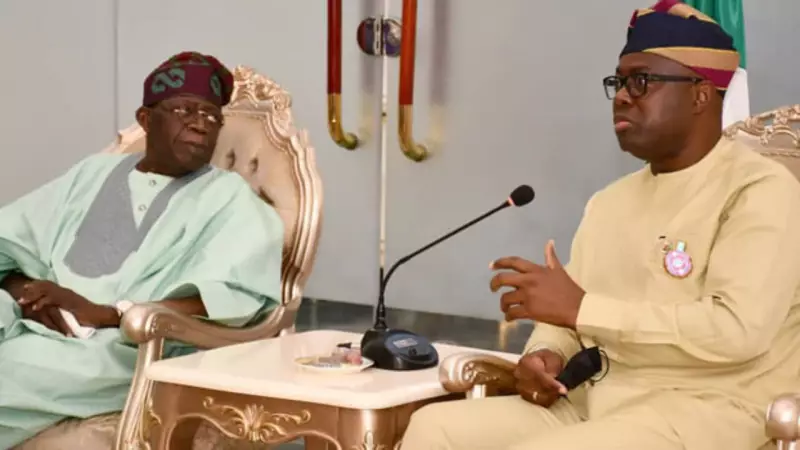
In a remarkable public address that has sent shockwaves through political circles, Oyo State Governor Seyi Makinde has delivered a scathing assessment of President Bola Tinubu's federal government. Speaking at a significant gathering in Ibadan on Saturday, the governor declared that it has become virtually impossible to speak truth to power under the current administration.
Contrasting Leadership Styles
Makinde drew a sharp contrast between the present government and what he described as the more consultative approach of the late President Muhammadu Buhari's tenure. The event attracted numerous dignitaries, including former Vice President Yemi Osinbajo, whose leadership qualities Makinde openly celebrated during his remarks.
"You cannot speak truth to power in this dispensation," Makinde stated emphatically, directly criticizing the handling of the federal government's controversial tax reform legislation. He elaborated on recent developments, noting, "We had the same situation in this dispensation; it was the tax bill, and we said, 'Look, bring the tax bill; bring it back; let us all have an opportunity to look dispassionately at it.'"
Ignored Concerns and Legislative Process
According to the governor, the legitimate concerns raised by state governors were completely disregarded by federal authorities. "They said the tax bill will go ahead. It is an affront for even the governors to be saying that what the presidency has done to send the tax bill to the National Assembly," Makinde explained. He expressed frustration about the legislative process, adding, "The tax bill, we don't know what was passed at the National Assembly, we don't also know what was signed up."
Turning his attention directly to Osinbajo, Makinde stated emotionally, "When I say I miss you, I miss you so much sir." This personal tribute highlighted the governor's clear preference for the former vice president's approach to governance.
Osinbajo's Leadership During Crisis
Makinde recalled Osinbajo's influential role as chairman of the National Economic Council (NEC), particularly during the challenging COVID-19 pandemic. "I remember I was barely seven months into the position of the governor of Oyo State, and that was my very first public service job. And we had a crisis in the country; this was February 2020," the governor recounted.
He continued with vivid detail about the critical meeting: "There was COVID, and we came in for the National Economic Council meeting. It was a hot meeting; the chairman of the council (Osinbajo) came in, and a few of my colleagues. I wasn't sure whether they held a meeting before that meeting, but they came in and said we should all go back and lock down our state."
Makinde revealed how this decision directly influenced his pandemic response strategy: "So, for Oyo State people, why I did not lock down during COVID was because of his decision." This revelation provides important context about the governor's controversial approach to pandemic management in his state.
Personal Admiration and Political Implications
Concluding his remarks, Makinde expressed deep personal admiration for Osinbajo's leadership style, stating, "Sir, I personally miss you in that position (presidency). A lot of people may not know why things are not really the same." He emphasized that his comments were not politically motivated, adding, "It's not a political talk because I'm not on that podium."
This extraordinary public critique represents one of the most direct challenges to the Tinubu administration from a sitting governor. Makinde's comments highlight growing tensions between state and federal governments regarding policy formulation and implementation. The governor's praise for Osinbajo's consultative approach suggests a preference for more collaborative federal-state relations, contrasting sharply with his experience under the current administration.
The event in Ibadan has become a significant moment in Nigeria's political discourse, with Makinde's remarks likely to fuel discussions about governance styles, federal-state relations, and the challenges of speaking truth to power in contemporary Nigerian politics.