Complete List of Ministers Who Have Exited President Tinubu's Cabinet
Since President Bola Ahmed Tinubu assumed office in 2023 following his electoral victory, his administration has experienced significant ministerial turnover. Several key figures have departed their positions, either through voluntary resignation amid controversies or forced dismissal during strategic cabinet reshuffles. These changes highlight Tinubu's ongoing efforts to enforce accountability and reshape his government's structure and performance.
Ministerial Exits Driven by Scandals and Reshuffles
The ministerial departures under President Tinubu reflect a mix of personal decisions and administrative actions aimed at maintaining governmental integrity. Some ministers stepped down following allegations of misconduct, while others were removed as part of broader cabinet reorganizations intended to enhance efficiency and public trust.
Detailed Profiles of Departed Ministers
Mohammed Badaru Abubakar
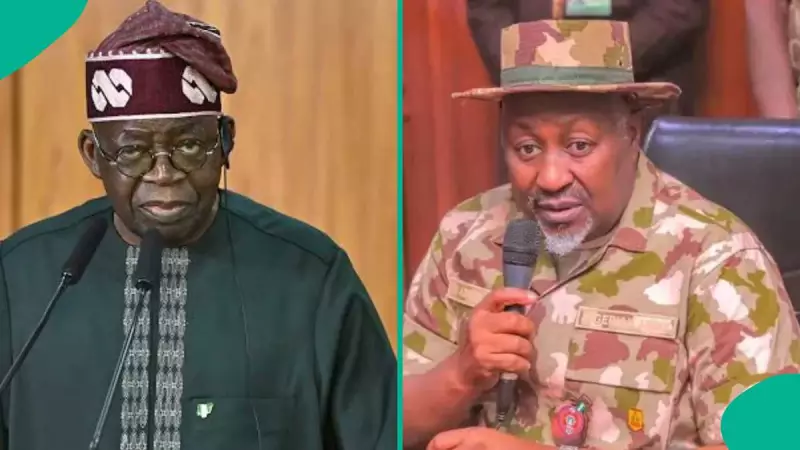
Mohammed Badaru Abubakar, who served as the Minister of Defence, resigned from his role in December 2025. His resignation letter, officially dated December 1, 2025, cited health reasons as the primary factor for his decision. President Tinubu accepted the resignation, expressing gratitude for Abubakar's service and pledging to inform the Senate about appointing a successor. Abubakar, previously the governor of Jigawa State from 2015 to 2023, had been appointed as minister on August 21, 2023.
Uche Nnaji
Uche Nnaji, the former Minister of Science, Technology, and Innovation, resigned in 2025 after facing serious accusations of certificate forgery. Investigations revealed that the University of Nigeria, Nsukka disowned the degree certificate he submitted, confirming he never completed his academic program. Additionally, the National Youth Service Corps declared his NYSC certificate to be inauthentic. Nnaji maintained that his resignation was not an admission of guilt but a principled choice to respect judicial processes and due procedure.
Betta Edu
Dr Betta Edu, Minister of Humanitarian Affairs and Poverty Alleviation, was suspended in January 2024 following allegations of financial misconduct. Reports indicated that N585.189 million intended for vulnerable citizens was improperly diverted into a private account. Presidential spokesperson Chief Ajuri Ngelale confirmed her suspension, emphasizing Tinubu's commitment to transparency. Later, presidential aide Bayo Onanuga confirmed that Edu's case was concluded, and her position was permanently filled by Dr Nentawe Yilwatda.
Professor Tahir Mamman
Professor Tahir Mamman, appointed in August 2023, was dismissed in October 2024 during a significant cabinet reshuffle. His removal followed controversies over his policies, including setting 18 as the minimum age for university admissions and prohibiting under-18 candidates from taking national examinations. His management of governing councils for tertiary institutions and the NYSC scheme for foreign-trained graduates also attracted widespread criticism.
Lola Ade-John
Lola Ade-John, who assumed office as Minister of Tourism on August 21, 2023, was dismissed in October 2024. Her removal was part of a broader cabinet reshuffle that saw several ministers lose their positions as Tinubu sought to realign his administrative team.
Abdullahi Tijjani Gwarzo
Abdullahi Tijjani Gwarzo, Minister of State for Housing and Urban Development, was also dismissed in October 2024. His exit occurred during the same reshuffle that affected other ministers, reflecting Tinubu's strategy to refresh key governmental roles.
Jamila Bio Ibrahim
Jamila Bio Ibrahim, Minister of Youth Development, was dismissed in October 2024 as well. She became one of the casualties of the major cabinet reshuffle executed by President Tinubu, underscoring the administration's dynamic approach to governance.
Implications for Tinubu's Administration
The ministerial changes under President Tinubu signal a robust commitment to accountability and effective governance. By addressing scandals promptly and reorganizing the cabinet strategically, the administration aims to bolster public confidence and operational efficiency. These moves are part of Tinubu's broader agenda to shape a responsive and transparent government as he prepares for potential re-election in 2027.