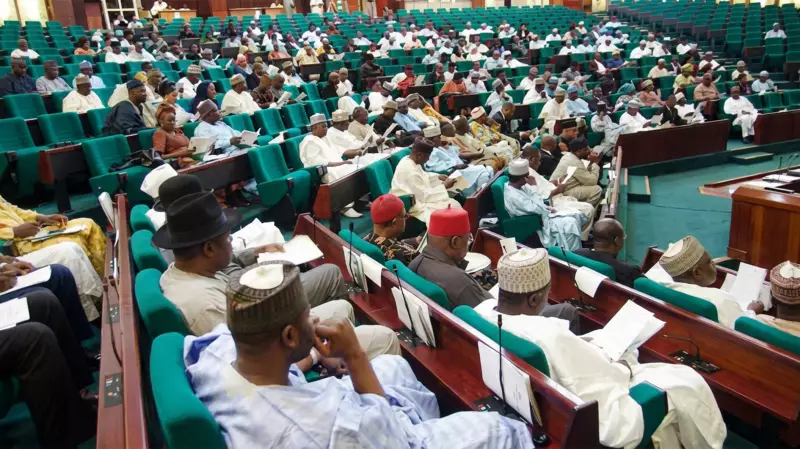
House Minority Caucus Confirms Illegal Alteration of Tax Laws After Passage
The Minority Caucus of the House of Representatives has officially confirmed that Nigeria's recently enacted tax reform laws were illegally altered after being passed by the National Assembly. The caucus has described this development as a serious violation of legislative authority and a direct threat to democratic governance in the country.
Investigation Uncovers Procedural Anomalies
This alarming revelation was disclosed on Friday in an interim report by the Minority Caucus Ad-hoc Committee on Tax Laws, which was specifically constituted to investigate allegations of illegal alterations in the gazetted versions of the tax reform Acts. The committee, led by Afam Victor Ogene, was formed following public outrage sparked by a motion raised on the House floor by member Hon. Abdulsamad Dasuki, who alerted lawmakers to discrepancies between the versions passed by the National Assembly and those subsequently circulated to the public.
Ogene recalled that the caucus had previously, on December 28, 2025, condemned any attempt to impose unauthorized laws on Nigerians, vowing to unconditionally protect the independence of the Legislature and Nigeria's democracy. To thoroughly investigate the matter, the caucus, under the leadership of Rt. Hon. Kingsley Chinda, constituted a seven-member fact-finding committee on January 2, 2026, with Ogene appointed as chairman.
Speaker's Directive Highlights Serious Concerns
The investigation gained significant momentum on January 3, 2026, when the Speaker of the House of Representatives, Rt. Hon. Abbas Tajudeen, directed the public release of the four tax reform Acts signed into law by the President. The Speaker also ordered an internal verification process and the release of Certified True Copies of the Acts to eliminate doubts, restore public confidence, and protect the sanctity of the legislature.
The Acts involved in this controversy are:
- The Nigeria Tax Act
- The Nigeria Tax Administration Act
- The National Revenue Service (Establishment) Act
- The Joint Revenue Board (Establishment) Act
All these Acts were enacted in 2025. According to the House, the Clerk of the National Assembly was further instructed to align the certified laws with the Federal Government Printing Press to ensure accuracy, conformity, and uniformity. The Minority Caucus committee noted that this directive itself underscored the existence of serious procedural anomalies.
Confirmed Alterations and Material Differences
After comparing the Certified True Copies released by the House with the gazetted versions already in circulation, the committee confirmed that alterations had indeed been made, particularly to the Nigeria Tax Administration Act, 2025. The investigation found that multiple versions of the same law were in circulation, a situation described as unprecedented and deeply troubling.
The report noted that key provisions in the gazetted version differed materially from what was passed by the National Assembly. These included:
- Changes to tax reporting thresholds that significantly lowered the income levels required for compliance
- The introduction of mandatory financial deposits as a condition for appealing tax disputes
- The expansion of enforcement powers granted to tax authorities, including arrest powers and the disposal of seized assets without court orders
The committee also observed alterations affecting the definition of federal taxes, as well as provisions mandating the use of foreign currency for certain tax computations—changes it said were never approved by lawmakers.
Specific Discrepancies Identified
One major discrepancy identified was in Section 29(1) of the Nigeria Tax Administration Act, 2025. According to the report, while the version passed by the National Assembly set reporting thresholds at ₦50 million for individuals and ₦100 million for companies, the gazetted version lowered the threshold to ₦25 million for individuals and altered the company benchmark, thereby expanding the tax net without legislative approval.
"This is a clear case of the Executive undermining legislative powers by illegally altering an already passed law," the committee stated emphatically.
Regarding appeals, the report said the gazetted version introduced new subsections 41(8) and 41(9), mandating a 20 percent deposit of disputed tax as a condition for appeal—provisions which were completely absent from the version passed by the National Assembly.
Concerns Over Expanded Powers and Oversight Removal
The committee also raised serious concerns over Section 64, alleging that the gazetted law illegally expanded enforcement powers to include arrest and sale of seized assets without a court order. Other discrepancies cited include the removal of petroleum income tax and VAT from the definition of federal taxes, which the committee described as "an affront to the exclusive powers of the National Assembly," as well as a provision mandating tax computation for petroleum operations in US dollars rather than "the currency of the transaction as approved by lawmakers."
In the National Revenue Service (Establishment) Act, the committee observed that oversight provisions empowering the National Assembly to summon officials and demand reports from the agency were deleted in the gazetted version. "This was done in total disregard and disrespect of the institution of the National Assembly and the doctrine of checks and balances," the report stated unequivocally.
Call for Comprehensive Investigation
Describing the alterations as acts of illegality and institutional overreach, the Minority Caucus committee warned that the integrity of the legislative process and public trust in law-making were at stake. The committee emphasized that the evidence gathered so far justified a more comprehensive probe to establish how the alterations occurred and to ensure accountability for what it termed an affront to the National Assembly.
The committee has requested additional time to deepen its investigation and submit a final report, indicating that this matter requires thorough examination to protect Nigeria's democratic institutions and legislative integrity.