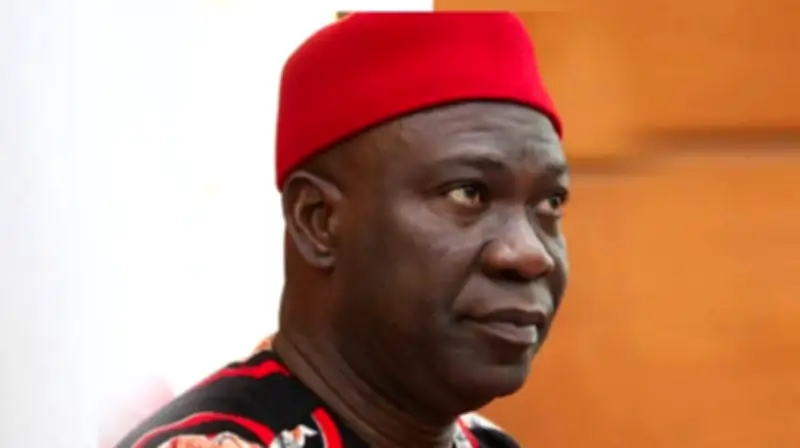
Nigeria has taken a historic step towards decentralising its policing structure, with both chambers of the National Assembly passing bills to establish state police. This move, long advocated by former Deputy President of the Senate, Senator Ike Ekweremadu, marks a significant shift in the country's security architecture, which has been centralised in Abuja for decades.
Decades of Advocacy for State Police
For over two decades, calls to decentralise policing fell on deaf ears, with legislative efforts often thwarted by executive control and sentiments that state police could serve secessionist interests or be abused by governors. However, the escalating insecurity—banditry, terrorism, and violent crimes—has forced a rethink. Senator Ekweremadu was a prophetic voice, warning as early as 2010 that banditry in the North West could spread to Kaduna, North Central, and the South without state police. His warnings were dismissed by a colleague who believed rivers like Sokoto, Rivers, and Rima would buffer the spread. Today, the reality is stark.
Tinubu's Courageous Leadership
President Bola Tinubu has shown statesmanship by initiating an executive bill to the National Assembly, loosening the presidency's grip on security. This follows his bold decisions on fuel subsidy removal, exchange rate floating, the Electricity Act, local government autonomy, and security overhaul. As Senator Ita Enang, who once opposed state police, admitted on Channels Television in 2025, 'We should not care so much about what a governor does with it so long as he uses it to manage internal security. State police is an idea whose time has come.'
Ekweremadu's Pioneering Work
Ekweremadu's bills and lectures, including the 2010 convocation lecture at FUT Minna and the 2012 Oputa Lecture at York University, consistently advocated for decentralised policing and fiscal federalism. His 2018 state police bill drew from global best practices in the US, Canada, and Brazil, addressing structure, control, funding, and abuse fears. Although the passed bills may have gaps, Nigerians await the harmonised version and consequential Act.
Funding and Implementation
Funding remains a key concern. Ekweremadu proposed that state police be a first-line charge on state accounts or deducted from the federation account. He also argued that creation should not be compulsory for states lacking resources. However, as Section 14(2)(b) of the 1999 Constitution states, 'The security and welfare of the people shall be the primary purpose of government.' Enugu State under Governor Peter Mbah exemplifies this, investing in AI-enabled surveillance, drones, DNA forensics, and a Command and Control Centre, hailed by the Inspector General of Police and the Attorney General as a boost to national security.
A New Era for Nigerian Security
The constitutional alteration to create state police is an idea whose time has come. It deserves all support to succeed, as it promises to empower states to tackle local security challenges effectively.