Nigeria's Military Coups from 1966 to 1993: A Timeline of Power Shifts
Nigeria's political narrative is deeply marked by dramatic events, with the series of successful military coups between 1966 and 1993 standing out as pivotal moments that reshaped the nation's governance. In less than three decades, the country witnessed multiple takeovers where soldiers ousted civilian administrations, often justifying their actions as necessary interventions to address political failures. These coups, driven by military frustration with perceived civilian incompetence, led to a cycle of instability and fleeting reforms, as military leaders rose and fell in rapid succession. This article delves into the key coups that succeeded in altering Nigeria's government and the military figures who orchestrated them.
The January 1966 Coup: Nigeria's First Military Takeover
On January 15, 1966, Nigeria experienced its inaugural military coup, initiated by a group of young officers disillusioned by corruption, tribal politics, and political instability. They aimed to seize control of critical government and military positions. Key figures behind this plot included Major Kaduna Nzeogwu, Lieutenant Colonel Emmanuel Ifeajuna, Major Emmanuel Nwobosi, Major Chris Anuforo, and Lieutenant Timothy Onwuatuegwu. Nzeogwu became the public face of the coup after delivering a radio broadcast that accused Nigerian politicians of corruption and ethnic favoritism.
The takeover was marked by extreme violence, resulting in the deaths of Prime Minister Abubakar Tafawa Balewa, Northern Premier Ahmadu Bello, Western Premier Samuel Akintola, and Finance Minister Festus Okotie-Eboh. Although the coup did not achieve full success, it created a significant political vacuum. Major-General Johnson Aguiyi-Ironsi emerged as Nigeria's first military head of state, but the killings intensified ethnic tensions, particularly between the North and the Southeast, setting the stage for further conflict.
The July 1966 Counter-Coup
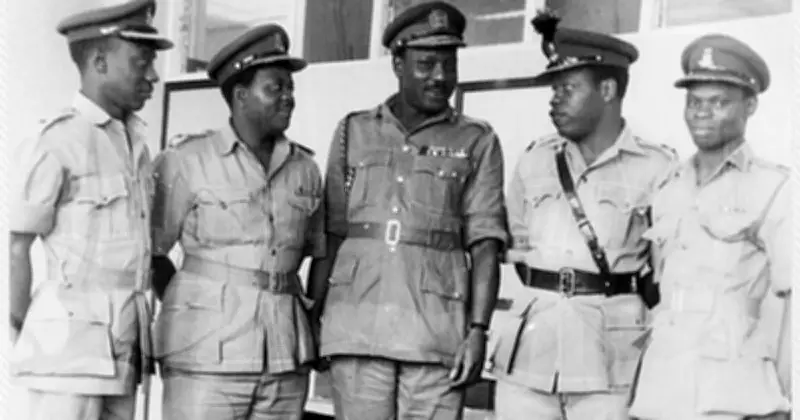
Merely six months later, on July 29, 1966, northern officers staged a counter-coup in response to the January events, which many in the North viewed as unfairly targeting their leaders. Prominent players in this coup included Colonel Murtala Mohammed, Lieutenant Colonel Theophilus Danjuma, Lieutenant Colonel Ibrahim Bako, Lieutenant Colonel Yakubu Gowon, and Lieutenant Colonel Joseph Nanven Garba. They argued that the January coup had disproportionately affected northern leaders, leading to widespread violence across military barracks.
Yakubu Gowon emerged as the new head of state, seen as a compromise figure capable of stabilizing the military hierarchy. His rule, however, was tumultuous, with escalating ethnic violence and political fragmentation that eventually culminated in the Nigerian Civil War from 1967 to 1970. Gowon remained in power until 1975, but growing frustrations over his delayed plans for a return to civilian rule paved the way for another coup.
The 1975 Coup: General Murtala Mohammed Takes Over from Gowon
On July 29, 1975, while Gowon was attending an international summit, a bloodless coup was executed by Colonel Joseph Nanven Garba, Colonel Murtala Mohammed, Brigadier Olusegun Obasanjo, Colonel Theophilus Danjuma, and Colonel Shehu Musa Yar'Adua. The takeover was swift, with Mohammed assuming the role of head of state and Obasanjo as his deputy. Mohammed's tenure, though brief, was highly impactful; he launched anti-corruption initiatives, implemented reforms, and outlined a transition to civilian rule.
Tragically, in February 1976, Lieutenant Colonel Buka Suka Dimka led a coup attempt that resulted in Mohammed's assassination during an ambush. Obasanjo subsequently took over, continuing Mohammed's reforms and ultimately overseeing Nigeria's return to civilian governance in 1979.
The 1983 Coup: General Muhammadu Buhari Takes Power
Democracy was restored in 1979 with the election of Shehu Shagari, but persistent corruption and economic challenges plagued his administration. On December 31, 1983, senior military officers, including Major General Muhammadu Buhari, Brigadier Tunde Idiagbon, Lieutenant Colonel Ibrahim Bako, Major General Sani Abacha, and Brigadier Ibrahim Babangida, overthrew Shagari's government. Buhari's regime introduced the "War Against Indiscipline," a stringent campaign aimed at combating corruption, improving public conduct, and restoring order.
While some Nigerians appreciated the discipline drive, others criticized the regime for its harsh policies, restrictions on freedoms, and militaristic governance style. This dissatisfaction eventually created an opening for yet another coup.
The 1985 Palace Coup: General Babangida Ousts General Buhari
On August 27, 1985, Major General Ibrahim Babangida, then serving as Chief of Army Staff, orchestrated a bloodless palace coup against Buhari. The takeover was rapid, with Babangida dissolving the military council, establishing the Armed Forces Ruling Council, and promising economic reforms and a return to democracy. His rule extended until 1993, making it one of the longest military governments in Nigeria's history.
The 1993 Coup: General Abacha Seizes Power from Interim President Ernest Shonekan
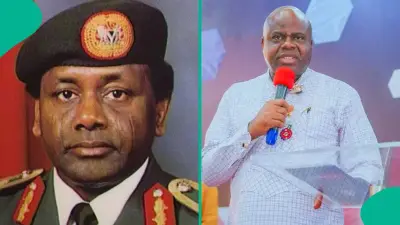
The final major coup occurred on November 17, 1993, when General Sani Abacha forced Interim President Ernest Shonekan to resign following Babangida's annulment of the controversial June 12, 1993, election. Abacha's regime became notorious for human rights abuses and political repression, though his death in 1998 facilitated Nigeria's transition back to democracy in 1999.
In Summary
Between 1966 and 1993, Nigeria endured a series of military coups that fundamentally altered its political landscape, cementing the military's central role in governance for decades. These takeovers weakened democratic institutions and perpetuated cycles of instability. Yet, they also underscored the critical need for accountable leadership, professional armed forces, and robust democratic frameworks. Civil society groups, journalists, activists, and ordinary citizens played essential roles in advocating for change, with their persistent efforts contributing significantly to the democratic transition of 1999.