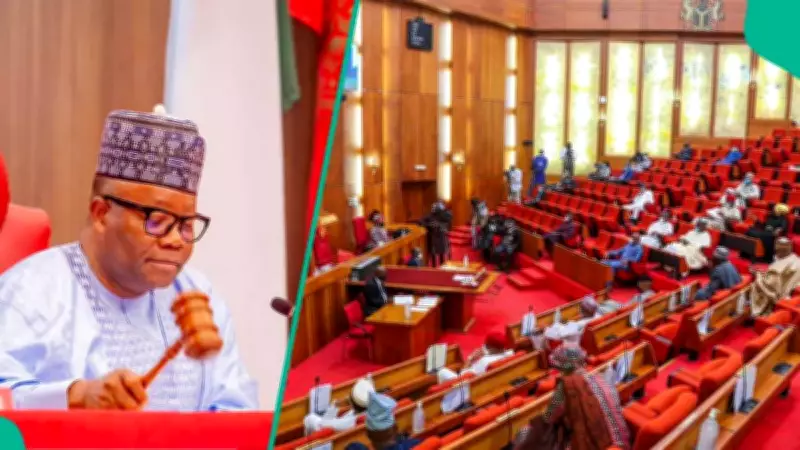
Nine Senators Formally Defect to African Democratic Congress Ahead of 2027 General Elections
The political landscape of Nigeria's Senate has undergone significant transformation as nine senators from three opposition parties have officially defected to the African Democratic Congress. This development, which occurred during Thursday's plenary session on March 12, 2026, represents a substantial shift in the chamber's composition just ahead of the crucial 2027 general elections.
Complete List of Defecting Senators and Their Previous Affiliations
The senators who announced their defection through formal letters read by Senate President Godswill Akpabio include:
- Senator Aminu Waziri Tambuwal representing Sokoto South
- Senator Enyinnaya Abaribe representing Abia South
- Senator Binos Yaroe representing Adamawa South
- Senator Victor Umeh representing Anambra Central
- Senator Tony Nwoye representing Anambra North
- Senator Lawal Adamu Usman representing Kaduna Central
- Senator Mohammed Ogoshi Onawo representing Nasarawa South
- Senator Augustine Akobundu representing Abia Central
- Senator Ireti Kingibe representing the Federal Capital Territory
Political Parties Affected by the Mass Defection
The defections have impacted three major opposition parties within the Senate. Senators Victor Umeh, Tony Nwoye, and Ireti Kingibe have all departed from the Labour Party to join the ADC. Five lawmakers—Aminu Waziri Tambuwal, Binos Yaroe, Lawal Adamu Usman, Mohammed Ogoshi Onawo, and Augustine Akobundu—have resigned their membership from the Peoples Democratic Party to align with the ADC.
Notably, Senator Enyinnaya Abaribe, who previously served as the sole representative of the All Progressives Grand Alliance in the Senate, has also announced his decision to switch allegiance to the African Democratic Congress.
Reasons Cited for Defection and Constitutional Scrutiny
In his defection letter, Senator Tony Nwoye explicitly attributed his decision to ongoing disputes within the Labour Party, stating that multiple litigations had significantly undermined the party's cohesion and stability. He emphasized that these internal crises had created an untenable political environment, necessitating his departure from the party.
However, the Senate has raised constitutional questions regarding Senator Abaribe's defection. Lawmakers have requested that he reconsider his decision within one week, arguing that his explanation—that he left APGA after allegedly being removed by the party—does not sufficiently meet the constitutional provisions governing legislative defections.
Senate President Dismisses Claims of APC Influence
Following the reading of the defection letters, Senate President Godswill Akpabio welcomed the lawmakers to their new political platform while firmly rejecting suggestions that the ruling All Progressives Congress had orchestrated the movement. Akpabio emphasized that the defections originated from three different political parties, indicating broader issues within opposition ranks rather than external manipulation.
"Deputy Senate President and Leader of the Senate, I hope you noticed that I have read defections from three different political parties now," Akpabio stated. "So, you cannot accuse the ruling party of tampering with its leadership. Here, we have APGA, Labour, and others. All of them have a problem. They've not been able to put their parties together. So, the APC cannot be blamed for this."
Updated Senate Composition and Political Implications
The latest political realignment highlights continuing shifts within the 10th Senate, where several lawmakers have changed party affiliations amid persistent internal crises within opposition parties. Following these defections, the All Progressives Congress maintains a dominant majority with 87 senators, while the Peoples Democratic Party's membership has diminished to just seven representatives.
The African Democratic Congress has significantly strengthened its position, now boasting seven senators in the chamber after gaining these new members. Other minority parties—the All Progressives Grand Alliance, the New Nigeria Peoples Party, and the National Democratic Congress—each retain one senator, bringing the Senate's total membership to 106.
This development follows previous reports of 12 members of the House of Representatives defecting to various parties, including six lawmakers who moved from the PDP to the APC and another six who transitioned from the Young Progressives Party and Labour Party to the ADC. These collective movements underscore the dynamic and evolving nature of Nigeria's political landscape as the country approaches the 2027 general elections.