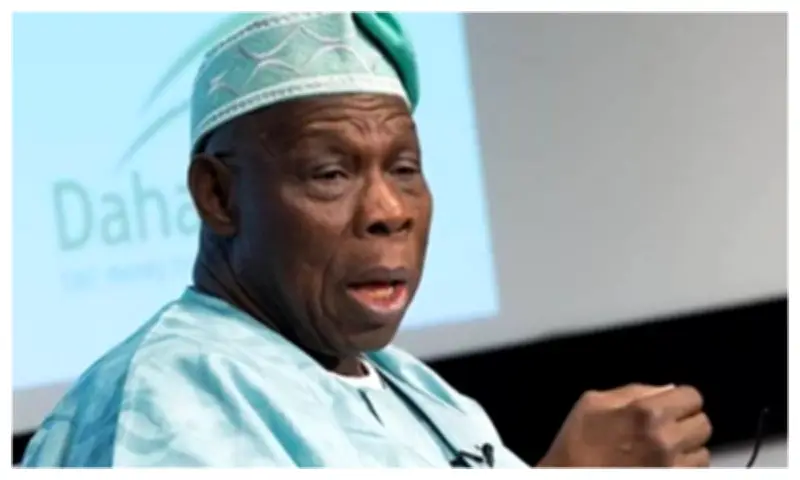
Former Nigerian President Olusegun Obasanjo has voiced serious concerns about the state of governance across Africa, asserting that imported political systems have undermined genuine self-determination. Speaking as a panelist at the Goodluck Jonathan Foundation Democracy Dialogue 2026 held in Bauchi State, Obasanjo criticized the wholesale adoption of foreign governance models, stating: “There is no democracy in Africa, but borrowed and forced liberal democracy that has caged Africans.”
Obasanjo Rejects Notion of African Democracy
Addressing the core premise of political structures on the continent, Obasanjo challenged the idea of a tailored governance model and questioned current trajectories. “Is there African democracy? Let us not deceive ourselves. There’s nothing like African democracy. We were given Western liberal democracy by our colonial masters,” he said.
He further expressed growing unease about democratic performance, noting: “For quite some time, I have been increasingly worried about the performance of democracy in Africa, and indeed, in other regions of the world.”
Shared Concerns Over Liberal Democracy
Obasanjo indicated that his concerns about governance frameworks are widely shared, referencing previous discussions hosted by the Goodluck Jonathan Foundation on systemic challenges facing liberal traditions. He clarified the scope of his critique by highlighting how alternative systems view their own stability differently compared to traditional Western frameworks.
“Let me emphasise that we are referring to Western liberal democracy because the Chinese will not agree with you that their own democracy is dying. And maybe the Swiss, who have practised some form of direct democracy, may also not agree with you that their democracy is dying,” he added.
Implications for Governance in Africa
Obasanjo’s remarks at the Democracy Dialogue 2026 underscore a growing debate about the suitability of Western democratic models in African contexts. His critique suggests that African nations may need to explore governance systems that reflect local realities rather than relying on imposed structures.
The former president’s statements come at a time when democratic institutions across the continent face challenges, including electoral disputes and constitutional crises. His call for introspection is likely to influence discussions among policymakers, academics, and civil society groups seeking alternative governance frameworks that prioritize self-determination and effective service delivery.