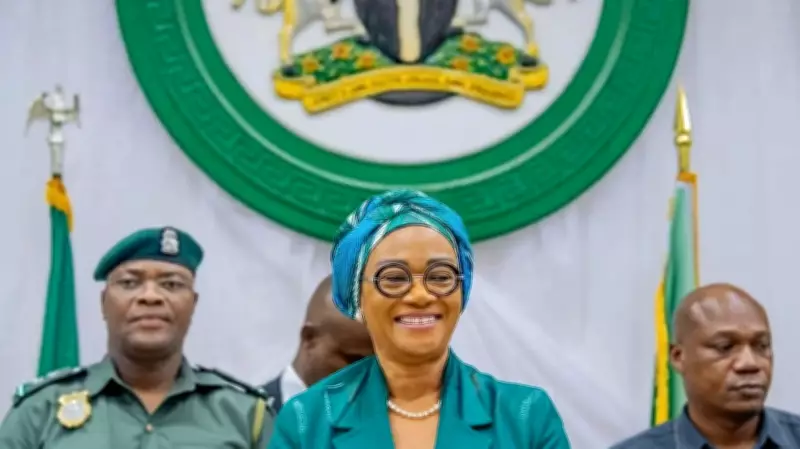
Nigeria's First Lady, Oluremi Tinubu, has called for the country's numerical strength of women to be converted into national influence, emphasizing that women represent "over 50 per cent of the population" and are uniquely positioned to drive change and contribute to national growth.
Tinubu made this statement at the National Women Mega Empowerment and Rally 2026, themed "Power of 10 Million," organized in Abuja by the Federal Ministry of Women Affairs and Social Development. During the event, she received the Women's Charter for National Development on behalf of Nigerian women.
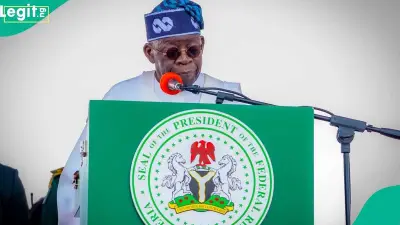
According to her, the charter will be presented to President Bola Tinubu as a reflection of women's collective aspirations for greater inclusion in governance and development. "I have received your charter, and I assure you that I will deliver it to Mr. President. This is our Charter, and we will see it to fruition," she said.
The First Lady stressed that empowering women is central to national development, noting that economic empowerment enables women to improve outcomes for families and communities. "When women are empowered, they can make informed decisions about their lives, and in turn, families and our communities thrive," she added.
Acknowledging the economic strain many Nigerians have faced under recent reforms, Tinubu commended women for enduring the hardship caused by the removal of fuel subsidy. "I want to appreciate all our womenfolk for your resilience, sacrifices, prayers, and steadfastness, particularly during the removal of the fuel subsidy. Your patience, understanding, and endurance have not gone unnoticed," she said.
Defending the administration's economic policies, she argued that the current reforms are laying the groundwork for long-term prosperity. "This first term of Mr President has been a period of laying a solid foundation through bold and necessary reforms that will usher in lasting prosperity for our dear nation," she stated.
Earlier, Minister of Women Affairs, Imaan Sulaiman-Ibrahim, described the Women's Charter as a policy framework capturing the demands of Nigerian women for political, economic, and social inclusion. "This Charter represents the collective voice, aspirations, and strategic expectations of Nigerian women. It is not merely a document; it is a social contract, a policy compass, and a bold declaration of our place in the future of this nation," the minister said.
She stated that the charter seeks "greater political inclusion, increased representation, dedicated financing for women's development, expanded economic opportunities, strengthened family systems, improved child welfare, and deeper inclusive governance." Sulaiman-Ibrahim maintained that the demands contained in the charter are fundamental to national progress, not preferential treatment. "These are not demands of privilege, but imperatives for national progress," she said.
In her remarks, Ogun State Deputy Governor, Noimot Salako-Oyedele, said the rally represents a deliberate effort to move women from informal participation to structured political and economic influence. "What we are witnessing today is not simply a large gathering. It is a deliberate step towards recognising how Nigerian women participate in our polity," she said.
According to her, Nigerian women have long contributed across sectors without commensurate institutional influence. "Women across this country have contributed significantly, whether in our homes, our markets, our farms, our offices, or in public service. Yet that contribution has not always translated into structured influence," she said. Salako-Oyedele added that women's challenge is not lack of competence but lack of coordinated structures. "The challenge has not been capacity. It has been connection," she stated.
She argued that organised mobilisation of women will reshape governance outcomes, saying: "Ten million women who are informed, aligned, and intentional will not only participate in development, they will influence its direction."
Also speaking, disability rights advocate Loud Aura demanded broader inclusion for women with disabilities in governance and public office, lamenting their exclusion from decision-making structures. "We are at a zero per cent level of participation. We need to move from exclusion to inclusion. Women and girls with disabilities can become senators, governors, and occupy any elected position in this country when support and opportunities are given to us," she said.
Auta urged implementation of constitutional and statutory provisions guaranteeing inclusion, noting that political participation remains largely inaccessible to women living with disabilities.
Female heads of federal agencies, grassroots leaders, entrepreneurs, and professional groups also pledged support for expanded women's representation and stronger coordination across sectors. Among them, female agency heads said they had mobilised in solidarity with the movement and would support efforts to sustain it beyond the rally.
The event also featured testimonials from women in agriculture, mechanics, entrepreneurship, and local government structures, underscoring demands for institutional pathways that connect grassroots female participation to policy-making and leadership.