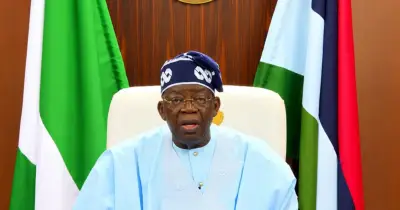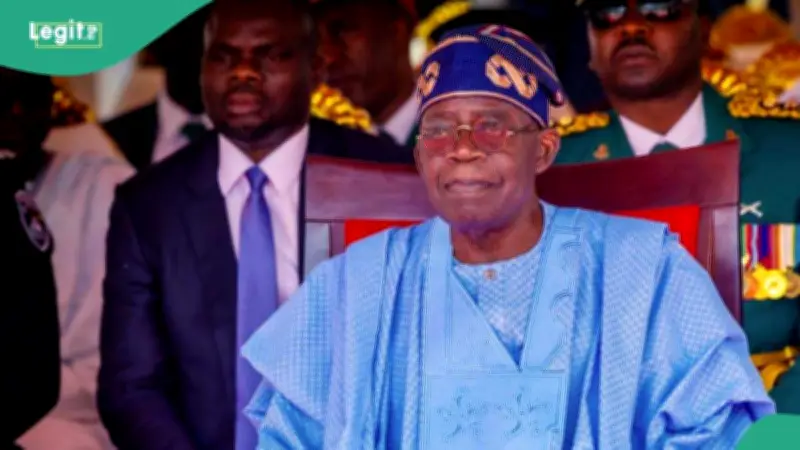
The presidency has strongly rejected international commentary suggesting that a large number of Nigerians are opposed to President Bola Ahmed Tinubu, insisting that such characterisations ignore the scale and scope of reforms implemented since the administration took office in May 2023.
Sunday Dare, Special Adviser to the President on Media and Public Communication, made the position known in a statement posted on his verified X (formerly Twitter) page on Tuesday night, October 6. Dare was responding to commentary by The Economist, which he said claimed Nigerians dislike the president. He accused certain foreign publications of analysing Nigeria through a “cracked, distorted lens,” arguing that such reports focus on economic difficulties while failing to account for the conditions the Tinubu administration inherited.
Presidency Defends Tinubu’s Reform Agenda
“President Tinubu did not inherit a functioning, well-oiled state; he inherited a broken economic ecosystem on the precipice of total sovereign bankruptcy,” Dare said. He argued that the administration took over an economy weighed down by the petrol subsidy regime, multiple foreign exchange windows, high debt-service costs, and years of underinvestment across critical sectors. Dare said these conditions made some level of transitional hardship unavoidable during the reform process.
Defending the removal of the fuel subsidy, Dare said the decision stopped a significant drain on public funds and allowed money to be redirected towards development priorities and fiscal sustainability. He also cited the rationalisation of the foreign exchange market as having reduced systemic arbitrage, attracted foreign portfolio investment, and contributed to improved trade surpluses and external reserves.
Social Interventions and Economic Evidence
Beyond the macroeconomic changes, Dare pointed to a range of social and structural interventions. He said the Nigerian Education Loan Fund (NELFUND) had helped hundreds of thousands of students from low-income backgrounds access higher education without paying tuition upfront. He also highlighted the increase in the national minimum wage, the push for financial autonomy for local governments, the deployment of Compressed Natural Gas buses, and the distribution of palliatives as measures aimed at softening the economic strain on ordinary Nigerians.
On agriculture, Dare said the government's distribution of fertilisers, agro-loans and farming equipment including tractors was building a foundation for stronger food production and rural development. He directly challenged the suggestion that millions of Nigerians oppose the president, arguing that citizens benefiting from the administration's programmes could not be described as people who "hate" him.
Dare Rejects 'Hollow Illusion' of Widespread Rejection
“The notion that millions of Nigerians harbour blind hatred for President Tinubu collapses when you meet everyday reality,” he said. Dare acknowledged that Nigeria continues to face security challenges and global economic pressures but said attempts by outside commentators to reduce the country to a story of "helpless misery" were unfair. He described the narrative of widespread presidential rejection as a "hollow illusion," and maintained that Tinubu's reforms had put Nigeria on an "irreversible path" towards sustainable growth and fiscal independence.
Earlier, Legit.ng reported that ChatGPT predicted that the All Progressives Congress (APC) would likely win Nigeria's 2027 presidential election, using the Four Horsemen framework. It cited the opposition coalition but said the APC had the edge due to possible low voter turnout and the Tinubu administration's efforts to stabilise the economy.