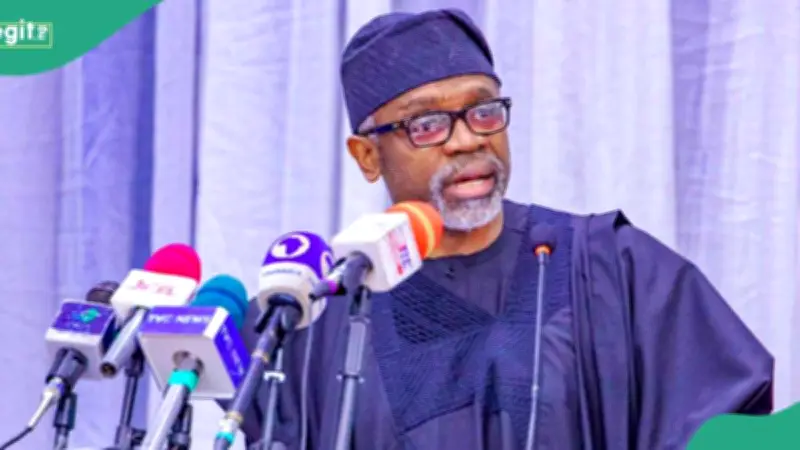
The Presidency has set a deadline of 5 pm on Thursday, August 13, 2026, for Nigerians to submit their views on the proposed National Policing Bill. Femi Gbajabiamila, Chief of Staff to the President and Chairman of the Presidential Working Group on the National Policing Bill, announced the deadline on Wednesday, August 12, 2026, as reported by The Punch.
Public Consultation Aims to Shape Legislation
Gbajabiamila said the consultation is designed to draw on the lived experiences and professional knowledge of Nigerians to shape the legislation. He outlined three specific questions that submissions should address: how police services could be shielded from political interference, who should handle serious misconduct cases, and how federal and state forces could share intelligence across state boundaries.
"For too long, the debate has been framed as a choice between effective local policing and protection from political abuse. Nigeria needs both," Gbajabiamila said. "We can bring policing closer to the people while building strong national standards, independent oversight and firm safeguards for every citizen. The time to fix policing in Nigeria is now, and we must see the work through."
Concerns About Abuse of Power
The former Speaker of the House of Representatives acknowledged that state police could improve responses to local security challenges by placing officers familiar with a community's language, geography, and crime patterns closer to the ground. However, he noted that proximity to state governments raises legitimate questions about abuse of power.
"But proximity does not guarantee justice. The concern that governors might use state police against political opponents, minority communities or dissenting voices is serious and must be answered in the design of the law," Gbajabiamila stressed. He emphasized that any new framework must make unlawful orders easier to resist, misconduct easier to investigate, and political interference harder to conceal.
Legislative Process and Constitutional Amendment
Gbajabiamila explained that Section 214 of Nigeria's constitution currently provides for only one police force, the Nigeria Police Force, meaning a constitutional amendment is required before state police can be legally established. Both chambers of the National Assembly have approved proposed changes to provide for a Federal Police Service and State Police Services, but the process is not yet complete.
The amendments must still pass the remaining legislative stages before being sent to the 36 state Houses of Assembly, where at least 24 must approve them. Only after that can the bill proceed to the President for assent. Gbajabiamila was clear that state police remains a proposal until all those steps are completed.
He also confirmed that the Presidential Working Group is preparing the National Policing Bill in parallel with the constitutional amendment process. The public consultation will not replace the role of the National Assembly, which retains full power to scrutinise, amend, reject, or pass the bill when it is eventually transmitted.
Background and Next Steps
Previously, Philip Agbese, the deputy spokesman of the House of Representatives, noted that the National Assembly initiated the state police bill before the executive introduced its own version. Agbese questioned the timing of calls by some lawmakers to suspend the recess, linking it to 2027 election interests. He also admitted that the executive had failed to pay contractors who executed constituency projects for lawmakers.
Earlier, Gbajabiamila announced a seven-week timeline for drafting the proposed state police bill after the working group's inaugural meeting. The presidential committee began administrative and technical preparations following President Bola Tinubu's inauguration of the group in July 2026. A national consultation on the draft bill is planned before it is sent to the National Assembly for consideration.