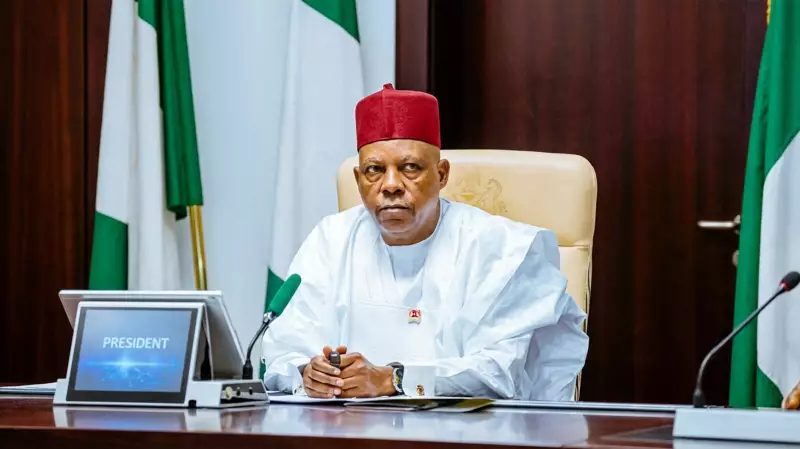
Vice President Kashim Shettima has made a triumphant return to Abuja, following an intensive week-long diplomatic and economic mission that spanned two continents. His journey took him to Guinea-Conakry and Switzerland, where he represented Nigeria on significant international platforms.
Diplomatic Engagements Strengthen Regional Ties
Shettima arrived at Nnamdi Azikiwe International Airport on Saturday, concluding a trip that began with his representation of President Bola Tinubu at the inauguration of Guinea's President, Mamadi Doumbouya. This visit was not merely ceremonial; it served to reaffirm Nigeria's leadership role within the Economic Community of West African States (ECOWAS).
The Vice President emphasized that the engagement opened new avenues for bilateral cooperation, particularly in the critical sectors of agriculture and manufacturing. This move aligns with Nigeria's renewed commitment to regional solidarity in West Africa, a cornerstone of the nation's foreign policy under the current administration.
World Economic Forum Highlights Nigeria's Economic Resurgence
From Conakry, Shettima proceeded to Switzerland, where he led Nigeria's delegation to the prestigious World Economic Forum (WEF) Annual Meeting in Davos. This forum provided a global stage to showcase Nigeria's economic transformation and investment potential.
A landmark achievement during the WEF was the commissioning of Nigeria House Davos. This sovereign pavilion on the Davos Promenade represents Nigeria's first permanent investment hub at the forum. It is strategically designed to highlight opportunities in solid minerals, agriculture, and the burgeoning digital economy.
Strategic Focus on Food Security and Industrialization
At a high-level WEF session titled "When Food Becomes Security," Shettima outlined Nigeria's new national food security framework. He described agriculture as a strategic pillar of national security and macroeconomic stability, signaling a shift in how the nation views its agricultural sector.
Furthermore, the Vice President collaborated with former President Olusegun Obasanjo, former Vice President Yemi Osinbajo, and Finance Minister Wale Edun to advance the Accra Reset Initiative. This advocacy platform champions African industrialization driven by domestic capital and regional value chains, moving away from dependency on foreign aid.
Positive Economic Indicators and Future Outlook
Addressing international investors, Shettima provided an optimistic assessment of Nigeria's economic trajectory. He cited key macroeconomic indicators that are showing signs of stabilization and growth.
The Vice President highlighted a projected GDP growth of 4.4 percent for 2026, alongside a decline in inflation to 12.94 percent. These figures point towards a recovering economy under President Tinubu's Renewed Hope Agenda.
Shettima also noted Nigeria's imminent transition into a net exporter of refined petroleum products, anchored by the operational Dangote Refinery. This development is complemented by the country's expanding export of digital talent, positioning Nigeria as a multifaceted player in the global economy.
The Vice President's diplomatic mission, which commenced on Friday, January 16, has successfully positioned Nigeria back at the forefront of global and regional policy conversations. His declarations in Abuja mark a significant moment in the nation's ongoing economic repositioning efforts.