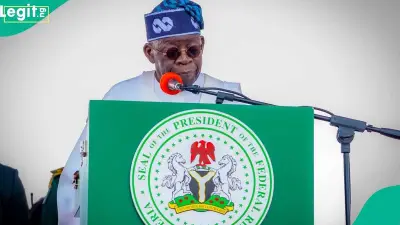
President Tinubu Calls for Constitutional Amendments to Establish State Police
President Bola Ahmed Tinubu has formally urged the leadership of the 10th Senate to initiate constitutional amendments that would provide a legal framework for the establishment of State Police across Nigeria. The President made this critical appeal during an interfaith breakfast meeting with senators at the Presidential Villa in Abuja on Wednesday.
State Police as an Urgent Security Necessity
In a statement posted on X by his Special Adviser on Information and Strategy, Bayo Onanuga, President Tinubu described the creation of State Police as an urgent necessity in response to Nigeria's evolving security threats. He emphasized that decentralizing policing would strengthen grassroots security, improve intelligence gathering, and empower states to respond swiftly to threats within their jurisdictions.
The President stressed that State Police would complement the existing federal security structure and promote community-focused law enforcement. He noted that Nigeria is currently battling terrorism, banditry, and insurgency, and the government must respond decisively to these challenges.
Tinubu's Direct Appeal to the Senate
President Tinubu urged the Senate to begin considering the necessary constitutional amendments to make room for State Police. He explained that such a move would strengthen efforts to secure the nation, reclaim forests from criminal elements, and ensure that children across the country can live without fear.
He commended the cordial working relationship between the executive and the Senate, stating that national unity is vital to defeating terrorism and banditry. "It is a good thing that we are working in harmony. We are looking forward to a country that evolves, a country that takes care of its citizens and protects all," Tinubu stated.
Appreciation for Senate Support on Economic Reforms
During the meeting, President Tinubu also expressed gratitude for the Senate's unwavering support for his administration's bold economic reforms, particularly the removal of fuel subsidy and the tax reform policy. He described these reforms as a joint effort between both arms of government.
"I have a lot of credit for bold reforms. Without your collaboration and inspiration, those reforms would not be possible. We are reformists together. What we gave up and what we stopped is monumental corruption in the subsidy system. We don't want to participate in monumental corruption and arbitrage foreign exchange," Tinubu said.
The President added that there is no longer any need for the scramble for foreign exchange, noting that current economic realities speak for themselves. He told the lawmakers to take pride in the progress recorded so far, expressing satisfaction with their support and highlighting greater economic stability with signs of prosperity ahead.
Senate President Akpabio's Response
In response, Senate President Godswill Akpabio commended President Tinubu for hosting the Senate leadership at the interfaith breaking of fast. Akpabio applauded the President's leadership during what he described as a critical period in Nigeria's history, noting that the administration's reforms have increased revenue for governors at the sub-national level, enabling them to invest more in infrastructure.
Akpabio also offered prayers for the success of the administration, as well as for peace and prosperity in the country. This exchange underscores the collaborative spirit between the executive and legislative branches on key national issues.
Background and State-Level Initiatives
The call for State Police comes amid ongoing security challenges across Nigeria. In a related development, the Nasarawa State Government, led by Governor Abdullahi Sule, has expressed readiness to establish a State Police Force. The State Commissioner for Security and Sundry Matters, CP Usman Baba (Rtd), highlighted measures taken to ensure the safety of schools, worship centers, and other vulnerable areas in the north-central state.
This move aligns with broader discussions on decentralizing security apparatus to enhance local responsiveness and effectiveness in combating crime and insurgency.