Presidential Aide Debunks Viral Claim About Tinubu Pardoning Notorious Armed Robber
Dada Olusegun, the Senior Special Adviser to President Bola Ahmed Tinubu on Social Media, has categorically denied viral claims circulating online that the president granted a posthumous pardon to the notorious armed robber Ishola Oyenusi. The clarification comes in response to widespread misinformation spreading across social media platforms regarding presidential pardons recently granted by the administration.
Social Media Misinformation Sparks Official Response
The controversy originated from a post on X (formerly Twitter) by user Obiasogu David (@afrisagacity), who suggested that President Tinubu had included the infamous 1970s criminal in recent pardon grants. The post, which included a fabricated graphic announcing a presidential pardon for Oyenusi, quickly gained traction, amassing over 54,000 views, 430 likes, 277 reposts, and 75 replies before the presidential aide intervened.
In his viral post, David expressed disbelief, writing: "Wait, Tinubu really pardoned notorious armed robber, Ishola Oyenusi, notoriously known as Dr Shola who terrorised the South West in the 1970s? I can't just believe this."
Responding decisively on Thursday morning, January 29, Olusegun shared the misleading post and wrote: "Fake news. Kindly disregard." This official denial serves to correct the record and prevent further spread of misinformation regarding presidential actions.
Actual Posthumous Pardon Recipients Revealed
While President Tinubu has indeed granted posthumous pardons, the notorious armed robber Ishola Oyenusi was not among the beneficiaries. On October 9, 2025, following recommendations from the National Council of State meeting in Abuja, President Tinubu granted presidential pardon and clemency to 175 individuals.
According to a statement from presidential spokesperson Bayo Onanuga, the posthumous pardons included:
- Herbert Macaulay: One of Nigeria's foremost nationalists and co-founder of the National Council of Nigeria and the Cameroons (NCNC), who was convicted by colonial authorities in 1913. Macaulay, who died in 1946, had the stigma of being an ex-convict removed from his records nearly eight decades after his death.
- Major General Mamman Jiya Vatsa: A former military officer executed in 1986 after being convicted of treason, who received posthumous pardon nearly four decades after his death.
- The Ogoni Nine: Including Ken Saro Wiwa, Saturday Dobee, Nordu Eawo, Daniel Gbooko, Paul Levera, Felix Nuate, Baribor Bera, Barinem Kiobel, and John Kpuine, who were formally pardoned in addition to national honors being awarded to the Ogoni Four.
Historical Context: Who Was Ishola Oyenusi?
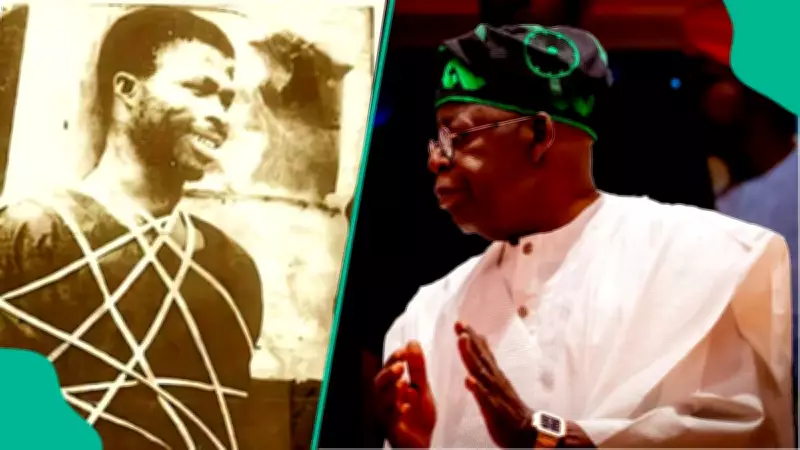
Ishola Oyenusi, popularly known as Dr. Ishola during his criminal reign, was a notorious armed robber who terrorized southwestern Nigeria during the 1970s. His criminal activities included:
- Carjackings and violent robberies
- Bank heists and organized criminal operations
- Widespread terror through armed hold-ups
His final criminal act occurred in 1971 when he and his gang stole £28,000 from the WAHUM factory in Ikeja. Following his capture, Oyenusi and six other gang members were executed on September 8, 1971, by a combined police and armed forces firing squad. His execution was notably recorded on film, serving as a stark warning to other criminals during that era.
Additional Presidential Recognition
In related developments, President Tinubu recently conferred the Grand Commander of the Order of the Niger (GCON) on Gilbert Chagoury, a longtime associate and Lebanese-Nigerian businessman. The president cited Chagoury's significant contributions to Nigeria as the basis for awarding the country's second-highest honor.
The clarification from the presidential aide underscores the administration's commitment to accurate information dissemination while highlighting the importance of verifying claims before sharing them on social media platforms.