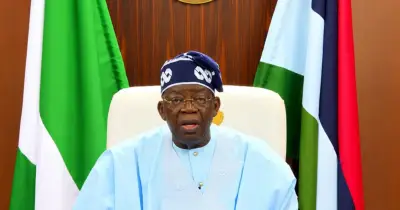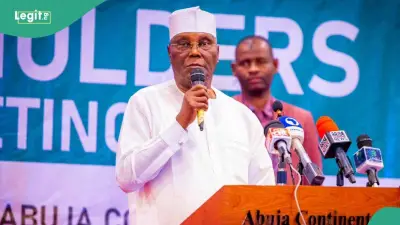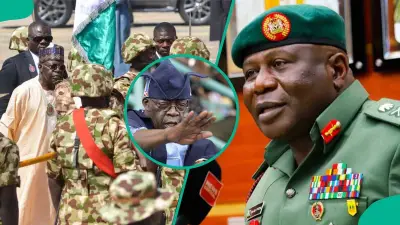
President Bola Ahmed Tinubu received a delegation from the Catholic Bishops' Conference of Nigeria (CBCN) on 28 July 2026, in a meeting that highlighted stark differences over the state of the nation. The Presidency first announced the meeting, with presidential spokesperson Bayo Onanuga issuing a statement titled “We Are Stabilising the Nation, Prosperity on the Horizon, President Tinubu Tells Catholic Bishops.”
Presidency's Optimistic Account
According to the Presidency, the President told the bishops that restructuring security operations would defeat terrorism, banditry, and kidnapping. “I have just approved the expansion of the armed forces,” Tinubu was quoted as saying. “We are getting more equipment, building new barracks. We will defeat terrorism.”
The presidential statement acknowledged that the bishops raised concerns about security, tertiary education, limited university spaces, democracy, credible elections, and poverty. It also noted their requests concerning mission schools and equal access to places of worship.
On the economy, Tinubu responded by pointing to the Nigerian Education Loan Fund (NELFund), the absence of a prolonged strike by the Academic Staff Union of Universities (ASUU), and what he described as economic recovery. “I can tell you categorically with sincerity that the country has been placed on a sound footing. The economy has recovered,” he said. “This government has stabilised, and there is prosperity on the horizon. Life is improving.”
Regarding the 2027 elections, the President defended the Independent National Electoral Commission (INEC): “The opportunities are equal. INEC is neutral. They have never intimidated anyone.”
Bishops' Address Presents Bleaker Picture
Soon after the meeting, the full text of Archbishop Matthew Man-Oso Ndagoso's address, titled “Partners in Building a Just, Peaceful and Prosperous Nigeria,” became public. It revealed a more troubling assessment than the Presidency's summary. The bishops commended NELFund, thanked the government for receiving Archbishop Paul Gallagher, the Holy See's Secretary for Relations with States, and acknowledged the rescue of kidnapped schoolchildren. However, they questioned whether these efforts had produced sufficient improvement.
The bishops expressed concern about the place of Christians following the departure from the informal Christian–Muslim balance in the presidency. They asked the President to reassure Christians of their equal rights through deliberate policies. On education, they commended the student loan programme but noted that loans could not solve the shortage of university places. They also questioned the federal moratorium on establishing new tertiary institutions.
The bishops warned about the possibility of a one-party-dominant state, asking Tinubu to ensure a level playing field and strengthen democratic institutions. They connected this to declining voter turnout and public distrust of elections, calling for easier access to permanent voter cards, adequate funding for INEC, and transparent procedures. They warned that anything short of a credible election in 2027 would be an “invitation to avoidable disaster.”
On insecurity, the bishops recognised successful rescues but argued these were isolated compared with attacks on schools, farms, homes, and highways. They declared that Nigeria was “bleeding,” presenting insecurity as a moral and humanitarian crisis. They also renewed their request for the return of mission schools and called for equal application of religious freedom, particularly for Christians facing difficulty obtaining land for churches in parts of northern Nigeria.
Cardinal Onaiyekan's Public Revelations and State House Response
The disagreement sharpened when Cardinal John Onaiyekan, a delegation member, appeared on ARISE News on 31 July 2026. “His reply is that the nation is not bleeding,” Onaiyekan said of the President. “We told him our economy is not helping our poor people. He told us the economy is doing fine.”
The Cardinal alleged that people around the President were “giving him a rosy picture of what the country is, which it is not.” He said, “When the nation is bleeding, you can't expect a polite meeting with the head of state.” Onaiyekan also attributed to the President the statement, “In politics, all is fair,” interpreting it as evidence of an excessive determination to win elections. This remark does not appear in the Presidency's original account, and no transcript independently verifies its wording or context.
On 1 August, the State House website published “Cardinal Onaiyekan's Abuse of Clerical Privilege,” a response by Temitope Ajayi, Senior Special Assistant to the President on Media and Publicity. Ajayi described Onaiyekan's decision to recount the private meeting as “fundamentally inappropriate” and “an abuse of clerical privilege.” He defended the administration, citing fiscal stability, regular payment of salaries and pensions, and gains by security forces. Ajayi wrote, “The real question is not whether they know the truth but what choices they make in response to it.”
On 3 August 2026, Catholic priest Ugochukwu Ugwoke publicly rejected Ajayi's confidentiality argument, stating that the meeting was neither a sacramental confession nor a legally protected proceeding, and no absolute obligation of secrecy had been established.
Data and Context: Measuring the Claims
The economic disagreement can be examined against published data. According to the National Bureau of Statistics' “Nigerian Gross Domestic Product Report Q1 2026,” Nigeria's real GDP grew by 3.89 per cent year-on-year in Q1 2026, compared with 3.13 per cent in Q1 2025. The NBS “June 2026 CPI Report” recorded year-on-year headline inflation of 15.91 per cent and food inflation of 17.52 per cent. While headline inflation fell marginally from May's 15.93 per cent, food inflation rose from 16.96 per cent in May. These figures indicate growth in aggregate output and lower inflation than earlier, but they do not establish that living standards have recovered.
The World Bank's October 2025 “Nigeria Development Update,” titled “From Policy to People: Bringing the Reform Gains Home,” recognised “substantial progress on macroeconomic stabilization” but observed that gains had “yet to substantially improve Nigerians' livelihoods.” This explains how both sides could present different accounts of the same economy.
On electoral participation, INEC's 2024 “Review of the 2023 General Election” recorded 93,469,008 registered voters, with approximately 26.7 per cent participating in the presidential election of 25 February 2023. Low turnout can result from voter apathy, distrust, insecurity, or logistical failures, but it establishes a serious problem of low electoral participation.
The disagreement ultimately centres on how each side measures the country. The Presidency emphasises fiscal stability and security operations; the bishops focus on household welfare and citizens' experience. Nigeria's condition will be judged by outcomes: whether people are safer, earnings buy more, electricity and roads improve, opposition parties compete fairly, confidence in INEC improves, and religious rights receive equal protection. Presidential assurances and episcopal declarations can shape the debate, but neither can settle it without credible evidence and honest public engagement.