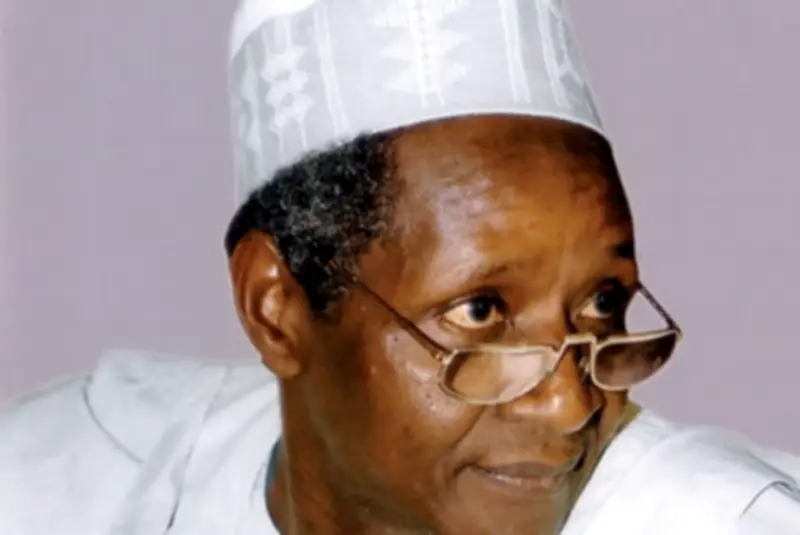
President Bola Tinubu has officially renamed the Institute of Petroleum Studies in Kaduna as the “General Shehu Musa Yar’Adua University of Geological Sciences and Engineering Technology.” The announcement was made during his Democracy Day broadcast on Friday morning.
“Among the architects of modern democratic Nigeria, we honour General Shehu Musa Yar’Adua for his vision of national partnership. In recognition of his contributions, the Federal Government has approved the revitalisation and renaming of the completed Institute of Petroleum Studies, Kaduna, as the General Shehu Musa Yar’Adua University of Geological Sciences and Engineering Technology,” Mr Tinubu stated.
Who Was Shehu Musa Yar’Adua?
Shehu Musa Yar’Adua, the younger brother of Nigeria’s late former president Umaru Yar’Adua, died in December 1997 while in detention. He had been accused of plotting a coup against the military regime of General Sani Abacha. Yar’Adua was a soldier and politician who served as de facto vice president (Chief of Staff, Supreme Headquarters) during the Olusegun Obasanjo military administration from 1976 to 1979. He later became a key figure in Nigeria’s transition to civilian rule in the late 1980s and 1990s.
Yar’Adua co-founded the People’s Front of Nigeria (PFN), whose members included prominent figures such as Babagana Kingibe, Atiku Abubakar, Bola Tinubu, Magaji Abdullahi, Ango Abdullahi, Ahmadu Rufa’i, Yahaya Kwande, Abdullahi Sumaila, Wada Abubakar, Babalola Borishade, Timothy Oguntuase Akinbode, Sabo Bakin-Zuwo, Sunday Afolabi, Rabiu Kwankwaso, Tony Anenih, Chuba Okadigbo, and Abubakar Koko. The PFN later merged into the Social Democratic Party (SDP), one of two parties created by the Ibrahim Babangida regime for the transition to the Third Republic.
Presidential Ambitions and the Abacha Era
In January 1992, Yar’Adua was briefly detained for violating a law banning certain individuals from politics. After the law was repealed, he announced his presidential bid. His campaign was well-organized, with a national directorate, state coordinators, and ward mobilisers. Key campaign members included Tony Anenih, Atiku Abubakar, Dapo Sarumi, Bola Tinubu, Abdullahi Sumaila, and Sunday Afolabi. Yar’Adua was leading the SDP presidential primary before the results were annulled. The subsequent election on June 12, 1993, was won by M.K.O. Abiola. After the annulment, Yar’Adua’s faction negotiated an interim national government, but in November 1993, Sani Abacha overthrew the interim government and dissolved all political parties.
Resistance, Imprisonment, and Death
In 1994, Yar’Adua won a seat at the National Constitutional Conference organized by Abacha. His outspokenness led to a four-day detention. In March 1995, he was arrested alongside Olusegun Obasanjo and others for allegedly plotting to overthrow Abacha. He was sentenced to death, later commuted to life imprisonment. He died in Abakaliki prisons on December 8, 1997. His death sparked outrage among human rights groups and loyalists, who suspected foul play. The government’s failure to officially announce his death fueled allegations of negligence and complicity.
Political Aftermath and Enduring Influence
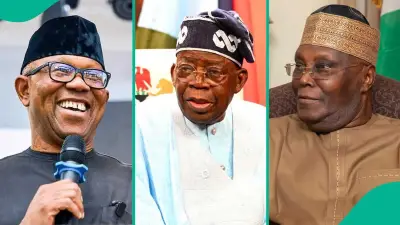
On December 14, 1997, thousands protested in Katsina demanding Abacha’s resignation. Yar’Adua’s death intensified grievances in northern Nigeria. After Abacha’s death in 1998, Yar’Adua’s political network, the People’s Democratic Movement (PDM), formed the core of the Peoples Democratic Party (PDP), which won the presidency, 21 governorships, 59 Senate seats, and 206 House seats in 1999. His associates continue to shape Nigerian politics: Obasanjo became civilian president in 1999; Umaru Yar’Adua succeeded him as president; Muhammadu Buhari served from 2015 to 2023; Atiku Abubakar served as vice president; and Bola Tinubu is the current president.
On June 12, 2025, during Democracy Day celebrations, President Tinubu posthumously awarded Yar’Adua the Grand Commander of the Order of the Federal Republic (GCFR), Nigeria’s highest national honour, cementing his legacy as a foundational figure in Nigeria’s democratic journey.