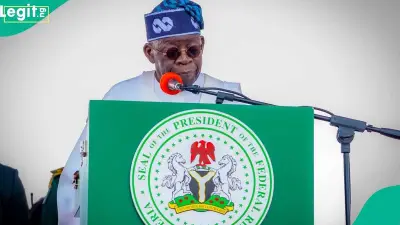
President Bola Tinubu has once again stepped into the escalating political feud in Rivers State, issuing a direct order to halt impeachment proceedings against Governor Siminalayi Fubara while demanding that Fubara show respect to his predecessor, Nyesom Wike. This intervention marks the latest attempt to resolve a conflict that has threatened governance in one of Nigeria's most politically significant states.
Presidential Intervention Amid Deepening Crisis
The political tussle between Governor Fubara and former Governor Wike, who now serves as the Federal Capital Territory Minister, reached a critical point in January when lawmakers loyal to Wike initiated impeachment proceedings against Fubara. The lawmakers cited several allegations of misconduct, including the unauthorized spending of unbudgeted funds from the state treasury. This move represented a significant escalation in a conflict that has simmered since Fubara assumed office.
Background of the Political Rift
This is not President Tinubu's first attempt to mediate between the two political heavyweights. In December 2023, the president brokered what was described as a fragile peace agreement between Fubara and Wike. However, that agreement quickly unraveled, leading to further instability. The situation deteriorated to such an extent that on March 18, 2025, President Tinubu declared a six-month emergency rule in Rivers State and suspended Governor Fubara temporarily. This historical context underscores the persistent nature of the conflict and the challenges facing any resolution efforts.
Strict Conditions for Peace
In his latest intervention, which occurred just before departing for an official trip to Türkiye on January 26, President Tinubu imposed specific conditions aimed at restoring stability. Multiple sources confirm that the president ordered an immediate suspension of any impeachment moves against Governor Fubara. However, this directive came with stringent political terms designed to address the root causes of the conflict.
Tinubu's Direct Message to Both Parties
The president delivered a blunt message to Governor Fubara, emphasizing that Nyesom Wike remains the undisputed political leader in Rivers State, regardless of party affiliation. Tinubu insisted that Fubara must respect Wike's position as the leader of both the All Progressives Congress (APC) and the Peoples Democratic Party (PDP) in the state. This recognition of Wike's dual-party influence highlights the complex political dynamics at play in Rivers State.
Simultaneously, President Tinubu clearly instructed Wike to abandon any impeachment plots against Governor Fubara and allow the administration to govern without interference. The president expressed visible displeasure at the depth of the rift, warning that continued hostilities would severely undermine governance and lead to dangerous instability. Tinubu emphasized that he would not condone any actions that threaten the peace and development of Rivers State.
Political Implications and Future Outlook
Rivers State holds critical importance for President Tinubu's political calculations, particularly as he looks toward the 2027 re-election campaign. The state's significant voter population and economic resources make its stability a national priority. The president's intervention reflects this strategic concern, as ongoing conflict could have far-reaching consequences beyond the state's borders.
The success of this latest peace initiative remains uncertain, given the previous breakdown of agreements between the parties. However, President Tinubu's direct involvement and the imposition of specific conditions represent a more forceful approach to conflict resolution. The political community will be watching closely to see whether both Wike and Fubara adhere to the president's directives or if the fragile peace will once again collapse under the weight of personal and political ambitions.