President Tinubu's Democracy Claims Face Scrutiny Amid Opposition Challenges
In 1999, Nigeria's three political parties were formidable in their respective zones, performing relatively well based on their capacities. However, by the 2003 election, conducted by civilians, the Alliance for Democracy (AD) lost five of its six states in the South-West stronghold, while the All Peoples Party (APP) also suffered significant losses. The survival of opposition parties often hinges on a president's appetite for democratic competition.
Historical Context and Current Dynamics
The People's Democratic Party (PDP) aimed to rule indefinitely without deepening democratic structures beyond personalities and egos, investing 16 years in circulating resources among themselves. They coveted the powers democracy offered but neglected the discipline to nurture processes like managing party relations. Today, the PDP has been captured, yet this has not stabilized Nigeria's democratic journey.
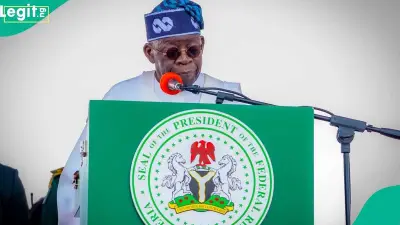
Last week, President Bola Tinubu hosted the National Working Committee of the All Progressives Congress (APC) and the Inter-Party Advisory Council (I-PAC) for an inter-faith breaking of fast at the Presidential Villa. I-PAC, the umbrella body for registered political parties interacting with the Independent National Electoral Commission (INEC), primarily consists of second-tier fringe parties with minimal electoral impact. These parties may lobby INEC or rally support for election winners, often congratulating victors even when their own candidates fail.
Tinubu's Democratic Credentials and Criticisms
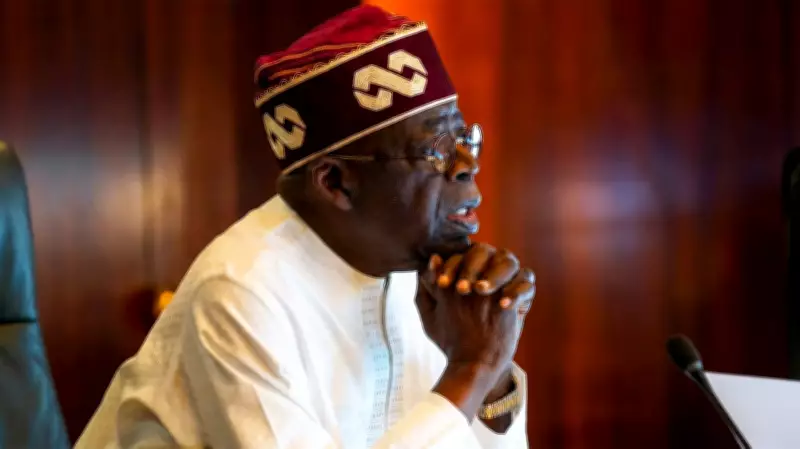
President Tinubu assured attendees of his commitment to sustaining democracy as a legacy, emphasizing that unity and stability rely on good governance. He stated, "I am a die-hard democrat... There's no threat from any democrat under my watch. The rule of law must prevail." He highlighted his involvement in anti-June 12 struggles and the formation of NADECO, though critics note he was not physically present for some events, instead providing resource support.
However, Tinubu's claim of selflessly subscribing to democracy for 26 years is disputed. Citizens see little evidence of selflessness, pointing to nepotistic appointments and his control over political and economic levers in Lagos State since 1999. Public service in Nigeria is no longer charity work, with selfless politics seemingly interred with figures like Lateef Jakande and Sam Mbakwe.
Challenges to Democracy and Opposition
Under this government, democracy has lost meaning for many Nigerians. Citizens face economic hardships, with costs of living excruciating for 130 million people, and safety concerns due to terrorism and banditry. Tinubu's bragging about democracy rings hollow when basic amenities like shelter and food are unguaranteed.
His statement, "there's no threat from any democrat under my watch," is ambiguous—does it mean no democrat will be threatened, or none can threaten him? Since 1999, opposition parties have not faced state-sponsored threats as they do today. The hurriedly signed 2026 amended Electoral Act poses risks, with provisions like mandatory electronic membership registration and requirements for National Identification Number and Permanent Voter Card in primaries seen as traps for opposition.
Electoral Act Amendments and Their Implications
The Act mandates direct primaries, requiring massive resource expenditure from aspirants, while consensus options favor incumbents. Worse, it reportedly removes certificate forgery as grounds for election petitions, a concerning move in a country with multiple forgery cases. These changes appear designed to derail multi-party participation in the 2027 elections.
Tinubu told I-PAC, "I want democracy, and since democracy is back here, there's a fundamental voluntariness that is enshrined." Yet, incidents like Zamfara State Governor Dauda Lawal's exclusion from palliative funds due to non-APC affiliation and Oyo State Governor Seyi Makinde's reduced relief package highlight partisan biases.
Threats to opposition are not limited to physical attacks; they include systemic barriers. History may remind Tinubu how he stands in the way of opposition, but he has a chance to repent and stop grandstanding in this holy month.