Presidency Clarifies Logistical Hurdles Behind Tinubu's Airport Meeting with Jos Victims
The Presidency has issued a detailed explanation for President Bola Ahmed Tinubu's decision to meet with victims of the recent Jos attack at the airport rather than traveling into the city itself. This clarification comes after widespread criticism of the President's approach, with many questioning his commitment to directly assessing the situation on the ground.
Logistical Constraints and Itinerary Adjustments
According to a statement released by Bayo Onanuga, the Special Adviser to the President on Media and Strategy, President Tinubu's original itinerary for Thursday, April 2nd, 2026, included two key engagements: receiving the President of Chad, Mahamat Idriss Déby Itno, and proceeding to Iperu in Ogun State to commission the Gateway Airport. In a show of prioritization, the Presidency cancelled the Iperu trip to accommodate the urgent visit to Jos, Plateau State, following the deadly attack on March 29th.
However, upon arrival in Jos, significant logistical challenges emerged. Onanuga explained that while the road distance from the airport to Jos township is approximately 40 minutes, the runway lacks navigational aids, making night flights impossible. The absence of electricity at the airport compounded this issue, creating a tight window of daylight for the President's visit.
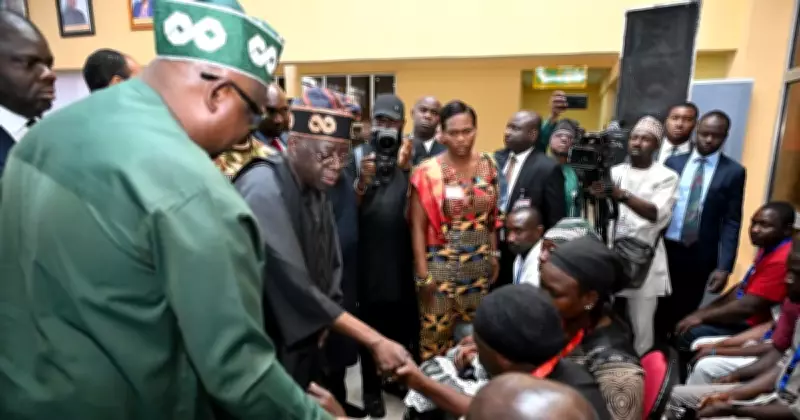
"The constraints made it unfeasible to drive into town, meet victims for on-the-spot assessment and return to the airport before dusk," the statement read. Consequently, a decision was made by state and federal officials to bring representatives of the affected Angwa Rukuba community to a hall adjoining the airport. This allowed President Tinubu to meet with them promptly while adhering to critical flight safety restrictions.
High-Level Delegation and Presidential Promises
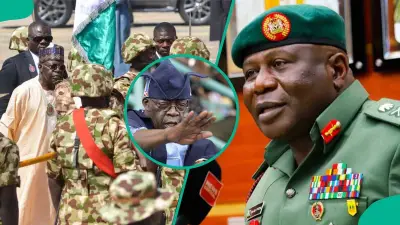
Among those present in the hall were high-ranking security officials, including the Minister of Defence, the Chief of Army Staff, and the Inspector General of Police, who had previously visited the epicenter of the conflict in Rukuba. President Tinubu deployed this high-level team, along with his Senior Special Assistant on Community Engagement, to undertake critical groundwork on security and community engagement. The goal was to stabilize the area ahead of a more comprehensive presidential assessment.
During the meeting, President Tinubu addressed stakeholders and victims, including a woman who lost her son in the violence. He expressed profound condolences, stating, "No amount of money can bring back the dead, but the Federal Government will do our best to comfort them, walk with them and provide necessary assistance." He promised that such an attack would never be repeated and tasked Plateau State Governor, Caleb Muftang, alongside other stakeholders, with finding a lasting solution to the incessant security challenges.
Background of the Attack and Subsequent Reactions
The violent assault that prompted the presidential visit occurred on the night of Sunday, March 29th, 2026. Gunmen attacked the Angwa Rukuba community in Jos North Local Government Area, killing at least 40 people, including students. The attack triggered widespread outrage, protests, and led to a government-imposed curfew in the area.
While Tinubu's visit was intended as a show of leadership and solidarity, it quickly became a subject of intense criticism, particularly after the President mentioned the ten-minute constraint and the airport's lack of electricity. Opposition figures, including Peter Obi, lambasted the move, with Obi stating, "No leadership without compassion."
Announcement of AI Security Measures and Mixed Reception
In the aftermath of the visit, the Minister of Communications and Digital Economy, Bosun Tijanni, announced plans to install 5,000 artificial intelligence-enabled CCTV cameras across Jos to enhance security. He cited similar successful initiatives in other states as a model.
However, this announcement was met with a wave of skepticism online. Critics labeled it an intangible solution to a deeply rooted problem. Prominent media personality Dr. Reuben Abati of Arise TV described the plan as "unintelligible" during a discussion analyzing the President's controversial visit, reflecting a broader public doubt about the efficacy of technological fixes without addressing underlying security and governance issues.
The Presidency's explanation underscores the complex interplay between security protocols, logistical realities, and public perception in crisis response. It highlights the challenges of executive mobility in regions with infrastructural deficits while attempting to balance immediate symbolic gestures with long-term strategic interventions.