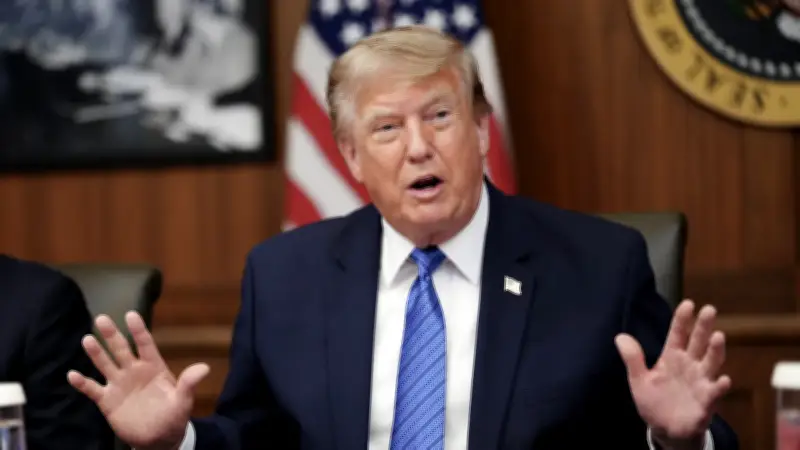
President Donald Trump has signed two executive orders aimed at restricting birthright citizenship in the United States and banning so-called birth tourism, following a Supreme Court ruling in June that struck down his earlier efforts as unconstitutional. The orders, signed on Thursday, August 6, from the Oval Office, expand definitions of non-citizens whose children are not eligible for automatic citizenship and prohibit pregnant mothers from traveling to the US to give birth for citizenship purposes.
Details of the Executive Orders
The first executive order expands existing definitions of non-citizens whose children are not eligible for birthright citizenship. It prohibits automatic citizenship for babies born in the US to two non-citizen parents if one parent is a member of a foreign terrorist group, a foreign government employee, has attempted to gain citizenship through fraudulent means, or is living in US territories where citizenship is not conferred by federal statute.
The second order bans birth tourism, the practice of pregnant mothers coming to the US to give birth so their babies will be citizens. Trump criticized the Supreme Court's rejection of his previous bid to end the 150-year-old policy, calling it "a bad decision, very unfair decision." He added, "Our country suffers because of it, and we're ending in a different way."
Government Justification and Claims
Trump stated from the Oval Office, "This should have happened years ago, but we're taking care of it now." The first executive order says, "My Administration has guarded against the risks posed by malign foreign actors who attempt to swindle American citizens by taking advantage of the generosity of our Nation."
Trump and his administration have repeatedly railed against birth tourism, accusing Russian and Chinese adversaries of exploiting birthright citizenship to infiltrate the US. During the announcement, Trump claimed that hundreds of thousands of babies have been born through birth tourism in the US.
Statistics and Expert Estimates
However, the Migration Policy Institute, a nonpartisan research group, estimates that the most expansive census-based figure accounts for about 22,000 to 26,000 babies born in the US from birth tourism every year. Government data, according to the institute, showed 9,600 births to mothers with foreign addresses in 2024.
Stephen Miller, homeland security advisor and White House deputy chief of staff for policy, stood beside the president and explained the rationale: "The idea (is) that people come here pretending to be a tourist, pretending to be a visitor. But the real reason they're here is to have a child, to make that child an automatic citizen, (to) leave our country and then have a US citizen child." He added that those children then gain access to welfare benefits, the voting booth, and "all the other rights and privileges that belong solely to Americans."
Legal Basis and Supreme Court Ruling
Miller asserted that the president has the authority to ban birth tourism under a section of the Immigration and Nationality Act, which grants the president the power to set exceptions and limitations on who can enter the country. In 2025, Trump signed an executive order trying to end birthright citizenship as guaranteed by the 14th Amendment to the US Constitution. A legal battle brought the case to the Supreme Court, which in June ruled that Trump's 2025 policies could not stand and that birthright citizenship remained the law.
The new executive orders aim to achieve similar goals through different means, focusing on specific categories of non-citizens and the practice of birth tourism, rather than attempting to overturn the 14th Amendment entirely. The administration argues that these measures are necessary to protect national security and the integrity of US citizenship.