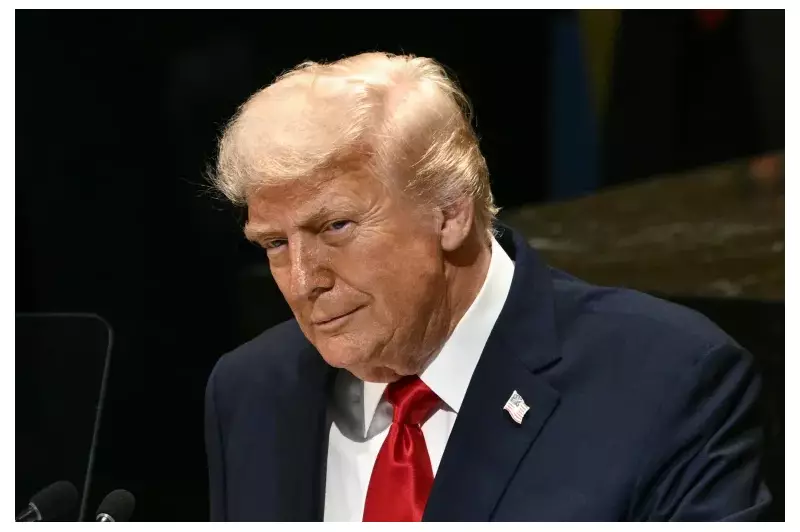
Former United States President Donald Trump has ignited a fresh political firestorm with controversial remarks about presidential term limits during a recent speaking engagement in Nashville, Tennessee.
In comments that have drawn widespread attention, Trump expressed frustration about constitutional restrictions preventing him from seeking a third term as president. "It's too bad I'm not allowed to run for a third term," the former president stated, prompting both cheers from supporters and condemnation from political opponents.
Constitutional Constraints and Political Implications
The 22nd Amendment to the US Constitution explicitly limits presidents to two elected terms, a safeguard established in 1951 following Franklin D. Roosevelt's four-term presidency. Trump's comments have raised eyebrows among constitutional scholars and political analysts who view them as challenging established democratic norms.
During his Nashville address, Trump didn't elaborate on how he might circumvent these constitutional barriers, but his remarks have nonetheless sparked intense debate about the durability of American democratic institutions.
Mixed Reactions from Political Circles
The former president's statements have generated polarized responses across the political spectrum:
- Supporters: Many Trump loyalists have embraced the sentiment, viewing it as evidence of his continued popularity and desire to lead
- Opponents: Critics have characterized the remarks as dangerous to democratic principles and indicative of authoritarian tendencies
- Legal Experts: Constitutional scholars have emphasized the amendment's clear language and the difficulty of altering such fundamental provisions
Historical Context and Precedents
While previous presidents have occasionally expressed similar sentiments privately, Trump's public articulation of this desire breaks with conventional political discourse. The comments come as the former president faces multiple legal challenges while simultaneously positioning himself as the frontrunner for the Republican presidential nomination in 2024.
Political observers note that such statements, while unlikely to result in actual constitutional changes, may serve to energize Trump's base and reinforce his image as a political outsider willing to challenge established norms.
The controversy underscores ongoing tensions within American democracy and raises questions about how traditional political guardrails might fare in an increasingly polarized political environment.