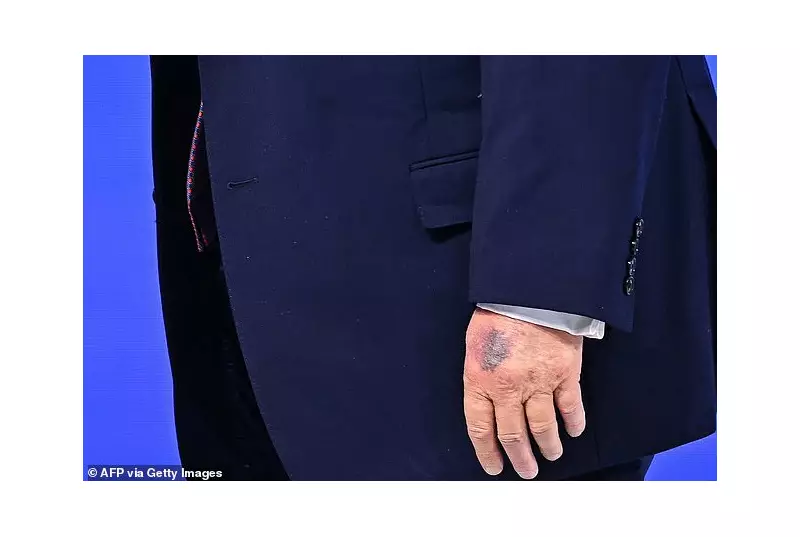
During a recent address at the World Economic Forum in Davos, Switzerland, President Donald Trump drew public attention due to a prominent bruise visible on his left hand. The incident occurred as he delivered a speech concerning his Gaza "board of peace" initiative, with the bruise sparking immediate health-related inquiries and speculation among observers and media outlets.
Origin of the Bruise and Official Explanations
According to statements from the White House, the bruise resulted from a minor accident during a signing ceremony for the peace board on Thursday. President Trump reportedly struck his hand against the corner of the signing table, leading to the noticeable discoloration. White House press secretary Karoline Leavitt confirmed this in an official statement, noting that the impact caused the bruise to develop rapidly.
Trump's Personal Account and Aspirin Connection
While en route to Washington, D.C., aboard Air Force One, President Trump provided further details to reporters. He explained that he had "clipped it on the table" and applied a topical cream to alleviate the discomfort. However, he also linked the bruise to his daily aspirin intake, which he described as a "big aspirin" dose. Trump advised, "I would say take aspirin if you like your heart, don't take aspirin if you don't want to have a little bruising," highlighting a known side effect of the medication.
He elaborated that his physician, Dr. Sean Barbabella, had cautioned him about the bruising propensity associated with his aspirin regimen. Despite medical advice suggesting he could reduce or discontinue the dose due to his overall health, Trump stated, "I'm not taking any chances," emphasizing his commitment to the preventive measure for cardiovascular health.
Medical Context and Aspirin Dosage Insights
Medical experts, including sources from the Mayo Clinic, indicate that aspirin therapy is commonly used to prevent heart attacks or strokes, with typical low doses ranging from 75 to 100 milligrams. The clinic notes that daily doses for such therapy can vary between 75 and 325 milligrams. In Trump's case, Dr. Barbabella revealed that the president consumes 325 milligrams of aspirin daily, a dosage at the higher end of the spectrum, which aligns with his reported tendency to bruise easily.
This revelation follows a recent interview with the Wall Street Journal, where Trump discussed his aspirin use, asserting that "aspirin is good for thinning out the blood." The combination of the physical injury and his medication regimen has fueled broader conversations about health management and preventive care practices among public figures.
Public and Media Reaction
The incident has garnered significant media coverage, with analysts and health professionals weighing in on the implications of high-dose aspirin use and its visible effects. While the bruise itself appears minor and attributed to a straightforward accident, it has inadvertently spotlighted Trump's health routines and sparked debates on the balance between preventive measures and potential side effects.
As the story unfolds, it underscores how even minor physical markers can prompt widespread discussion in the political and health spheres, reflecting the heightened scrutiny often faced by world leaders during public engagements.