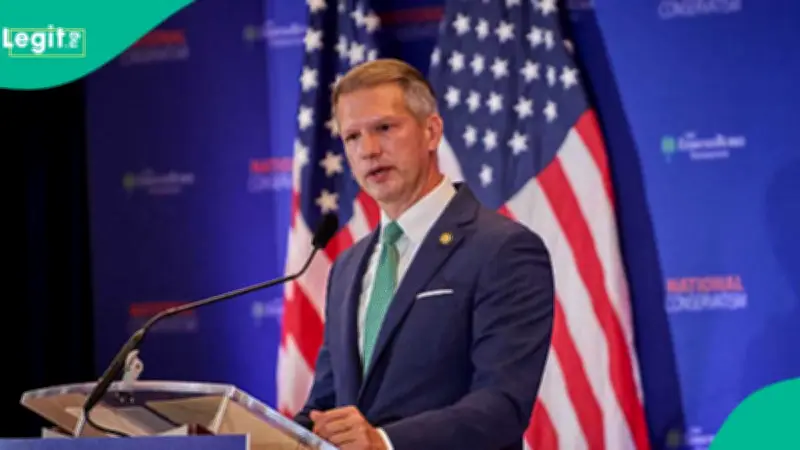
United States Congressman Riley Moore has intensified his campaign to eliminate the H-1B visa programme, branding it a "scam" that displaces American workers. In a post on his verified X (formerly Twitter) account on Saturday, August 8, 2026, Moore wrote: "My proposal: End the H1-B Visa program NOW." The lawmaker, who represents West Virginia's 2nd District, argues that the programme fundamentally undermines domestic employment opportunities.
Regulatory Move Threatens Worker Protections
Moore's renewed call comes just days after the Department of Homeland Security (DHS) advanced a proposed rule (RIN: 1615-AD22) to the White House Office of Information and Regulatory Affairs on Thursday, August 6, 2026. According to Bloomberg Law, this rule would eliminate the 60-day grace period currently granted to H-1B workers who lose their jobs. Under existing provisions, such workers have two months to find a new employer sponsor or adjust their immigration status before their legal stay expires. The DHS first introduced this grace period in 2017, and its removal would leave affected employees with immediate legal status consequences upon layoff.
H-1B Programme: A Double-Edged Sword
The H-1B visa is designed as a temporary work authorisation for foreign nationals in specialised fields where domestic talent is allegedly scarce. However, critics point out that employers are not required to prove they searched for qualified American candidates before hiring abroad. This loophole, they argue, enables companies to outsource jobs that could otherwise be filled by citizens, effectively undercutting local wages and employment prospects.
The debate gained fresh urgency in July 2026 when Microsoft's Xbox division laid off 1,600 workers, even as the company received approval for 2,273 H-1B visas in the same year. This stark contrast drew widespread criticism and highlighted the perceived disconnect between corporate hiring practices and workforce reductions. Other major beneficiaries of the programme include Amazon, IBM, Infosys, and IT consulting firm Cognizant, all of which regularly utilise H-1B visas to fill technical roles.
Impact on Immigrant Workers and the Economy
The standard H-1B visa is valid for three years, extendable to six years, and allows foreign nationals to pursue permanent residency while working in the United States. Data from US Citizenship and Immigration Services indicates that 80% of H-1B holders who achieve permanent residency do so through employment-based green cards, a pathway that can eventually lead to citizenship. This underscores the visa's role as a critical stepping stone for skilled immigrants seeking long-term settlement in the US.
However, Moore remains adamant that no amount of reform can salvage the programme. He insists that the H-1B visa system inherently exploits American labour and should be abolished outright. His stance reflects a broader sentiment among some policymakers who view the programme as a vehicle for corporate cost-cutting at the expense of domestic workers.
Political and Public Response
The proposed DHS rule has sparked intense debate among lawmakers, business leaders, and immigration advocates. Proponents of the rule argue that it restores fairness to the labour market, while opponents warn that removing the grace period could lead to mass deportations and disrupt the tech industry, which relies heavily on foreign talent. The issue is likely to become a focal point in upcoming political campaigns, as candidates grapple with balancing economic competitiveness and worker protection.
In related news, the United Kingdom recently expanded its Global Talent visa to include over 100 research-intensive private companies, allowing them to sponsor skilled scientists and engineers. This move signals a contrasting approach to attracting global talent, as the UK seeks to bolster its research and innovation sectors.
Broader Implications for Immigration Policy
The H-1B controversy is part of a larger conversation about immigration reform in the US. With the 2026 midterm elections approaching, lawmakers are under pressure to address voter concerns about jobs and economic security. Moore's proposal to end the H-1B programme resonates with a segment of the electorate that feels left behind by globalisation and technological change.
As the DHS rule progresses through the regulatory review process, its outcome will have significant ramifications for thousands of H-1B workers currently in the US, as well as for companies that depend on their skills. The coming months will likely see intense lobbying from both sides, with the final decision shaping the future of skilled immigration in America.