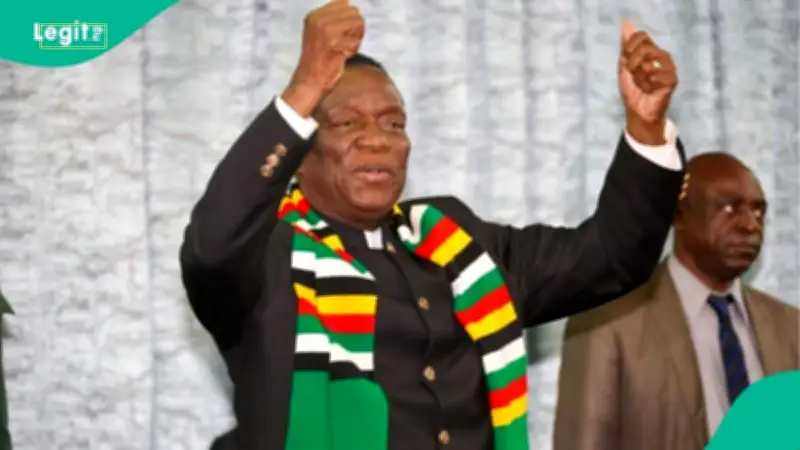
President Mnangagwa Signs Constitutional Amendment Extending Tenure
Zimbabwe's President Emmerson Mnangagwa has signed a new constitutional amendment that extends his tenure by two years, effectively allowing him to remain in office until 2030. The law eliminates direct presidential elections, transferring the power to choose the president to Parliament. This move has sparked widespread public outcry and concerns about democracy and accountability in the southern African nation.
The confirmation came from Nick Mangwana, the spokesperson for the Zimbabwean government, on Tuesday, July 7. Mangwana announced on social media that the law is "signed, sealed and delivered," attaching a copy of the new legislation to his post.
Details of the Constitutional Amendment
According to the BBC, the new law cancels direct presidential elections and stipulates that only Parliament will be able to select the president in the future. This means that instead of President Mnangagwa's tenure ending in 2028, he will now rule the country until 2030. The development effectively ends the presidential ambitions of Vice President General Constantino Chiwenga through the electoral process, as only Parliament will choose the future leader of the country.
The Senate and House of Representatives of Zimbabwe had passed the bill to extend the presidential term from five to seven years in June. The bill allows President Mnangagwa to remain in office until 2030. It was reported that over 200 lawmakers voted in support of the bill to amend the constitution.
Public Reactions to the Tenure Extension
The news has generated mixed reactions on social media. Jackson commented on the quest for change in the country: "The biggest advantage Zimbabwe's politicians have isn't money or power. It's knowing that many of the people who want change have already left, while those who remain rarely force accountability. A government that fears no consequences has no reason to change."
Phathizwe decried poor consciousness in the country: "He is unopposed, by opposition, young people, civil society.....no one challenged him.... Instead, they are all in the UK, Thembisa, Alex, Hillbrow in South Africa. Instead of changing the lives of millions of unborn Zimbabweans by FIXING their country!"
Moketle Mokoene decried abuse of power in Zimbabwe: "Power has a way of changing people's minds. Politicians fear being irrelevant after experiencing so much attention. There will come a time when such leaders are no longer leading Africans. Democracy is being used to change the rules, and it is all legal according to the colonial laws British people left behind. Prosperity to Zimbabwe, regardless of your path."
Shenge decried the poor politics in the country: "The plot was lost when the late president felt like no one was deserving of ruling the country, and fell into dictatorship. Dr Nkomo is turning in his grave! They use forceful intimidation to rule over and over again. This isn't right. AU is always quiet on issues that really matter."
Context and Broader Implications
The constitutional amendment has raised alarm among critics who view it as a step back for democracy in Zimbabwe. The shift of power from the electorate to Parliament has been seen as a consolidation of authority by the ruling party. The African Union has remained silent on the matter, drawing criticism from observers who believe the continental body should speak out on issues of democratic governance.
This development comes amid ongoing political and economic challenges in Zimbabwe, including high unemployment, inflation, and a disputed electoral process. The extension of President Mnangagwa's term is likely to further polarize the political landscape and could have implications for the country's relations with international partners.