The new Nigeria Revenue Service (NRS) headquarters represents more than just a building; it is a test of national discipline. For over two decades, the NRS headquarters remained a dream delayed. Twenty-two years after its conception, the building is finally a reality. While this achievement deserves commendation, the bigger question is not how long it took to build; it is whether Nigeria can properly maintain it for the next twenty-two years.
Nigeria's Maintenance Culture Problem
Historically, Nigerians celebrate commissioning ceremonies with enthusiasm but pay little attention to preservation. We are excellent at cutting ribbons but often poor at protecting what those ribbons represent. Across the country, many public edifices that once symbolized progress have gradually become monuments of neglect due to poor maintenance culture.
Maintenance is not merely about repairing broken elevators, replacing damaged furniture, or repainting faded walls. It is a mindset that recognises public infrastructure as a collective national asset rather than government property without owners. The moment we stop seeing these structures as “government buildings” and start seeing them as “our buildings,” our attitude towards preservation will begin to change.
A Model for National Change
The new NRS headquarters should become a model for a different national conversation. A world-class facility deserves world-class maintenance standards. This means preventive maintenance schedules, dedicated facility management teams, annual maintenance budgets, technology-driven monitoring systems, and strict accountability for misuse or vandalism.
The responsibility, however, does not rest solely with the management of the NRS. Every employee, contractor, visitor, and stakeholder who passes through the building has a role to play. A single act of negligence repeated daily by hundreds of people can undo years of investment.
The Cost of Neglect
Nigeria spends billions of naira constructing roads, schools, hospitals, airports, and office complexes, yet we often hesitate to allocate sufficient resources for their upkeep. This cycle has become expensive. Building from scratch repeatedly is far costlier than preserving what already exists.
Countries that have successfully developed sustainable infrastructure understand one simple principle: maintenance is an investment, not an expense. They do not wait for systems to collapse before taking action. They maintain proactively because they understand that deterioration is inevitable, but decay is preventable.
An Opportunity to Break Old Habits
The NRS headquarters presents an opportunity to break an old habit and establish a new standard. Imagine a scenario where, twenty-two years from now, Nigerians walk into the building and find it operating at the same world-class standard as the day it was commissioned by President Bola Ahmed Tinubu GCFR. That would be a far greater achievement than completing the building itself.
Ultimately, the true legacy of any public edifice is not how impressive it looked on commissioning day, but how functional it remains decades later. Perhaps this is the question every Nigerian should ask: Twenty-two years from now, will we still be proud of the NRS headquarters, or will it become another symbol of our national struggle with maintenance culture? The answer will not depend on architecture or engineering. It will depend on us.
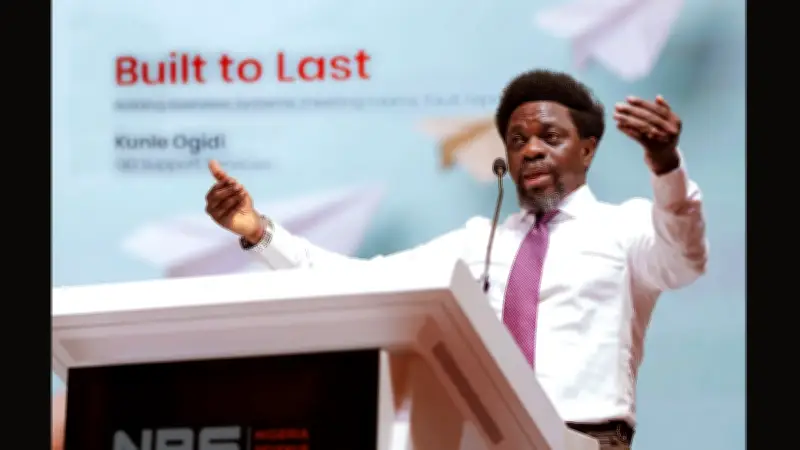
Kunle Ogidi, Group Director, Support Services, Nigeria Revenue Service