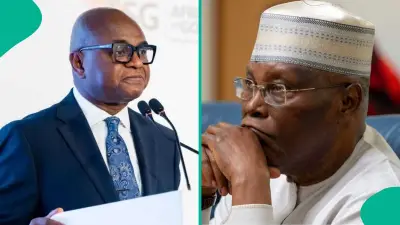
Former Vice President Yemi Osinbajo has called for the adoption of innovative mechanisms to finance healthcare systems in Nigeria, emphasizing that traditional funding models are no longer sufficient to meet the growing health needs of the population. Speaking at the launch of a health financing report in Abuja, Osinbajo stressed the urgency of diversifying funding sources to ensure sustainable healthcare delivery.
Current Healthcare Financing Challenges
Osinbajo highlighted that Nigeria's healthcare system faces significant funding gaps, with government expenditure on health accounting for less than 5% of the national budget, far below the 15% target set by the Abuja Declaration. This underfunding has led to inadequate infrastructure, shortage of medical personnel, and poor health outcomes, including high maternal and child mortality rates.
According to the former vice president, the COVID-19 pandemic exposed the fragility of health systems worldwide, and Nigeria was no exception. "We cannot continue to rely solely on government allocations and donor funding," he said. "We need innovative mechanisms that leverage private capital, technology, and community participation."
Proposed Innovative Financing Models
Osinbajo proposed several innovative financing mechanisms, including health insurance expansion, social impact bonds, and public-private partnerships. He noted that Nigeria's National Health Insurance Scheme (NHIS) covers less than 5% of the population, leaving the majority vulnerable to catastrophic health expenditures.
"We must scale up health insurance coverage, especially for the informal sector, through micro-insurance and community-based schemes," he recommended. Additionally, he called for the use of diaspora bonds and health taxes on products like tobacco and sugar to generate dedicated revenue streams for health.
Role of Technology and Data
The former VP also emphasized the role of technology and data in improving healthcare financing. He advocated for the use of digital platforms to track health expenditures, reduce leakages, and enhance accountability. "With proper data, we can identify gaps, allocate resources efficiently, and measure impact," Osinbajo stated.
He cited examples from other countries, such as Rwanda's use of drones for medical supply delivery and India's telemedicine initiatives, as models that Nigeria could adapt. "Technology can reduce costs and improve access, but it requires investment and political will," he added.
Call for Collaboration
Osinbajo urged the federal and state governments, private sector, development partners, and civil society to work together in designing and implementing these innovative financing mechanisms. "The health of our people is not just a social issue; it is an economic imperative," he said. "A healthy population is more productive and contributes to national development."
The report, titled "Innovative Health Financing in Nigeria: Opportunities and Challenges," was produced by a coalition of health policy experts and development organizations. It recommends a mix of fiscal, regulatory, and institutional reforms to unlock new funding sources.
Expert Reactions
Health economists present at the event welcomed Osinbajo's call, noting that Nigeria spends less than $100 per capita on health, compared to the World Health Organization's recommendation of $86 per capita for basic health services. Dr. Amina Ibrahim, a health policy analyst, said: "The time for business as usual is over. We need bold, innovative approaches to mobilize resources for health."
However, some stakeholders cautioned that innovative financing alone cannot solve the systemic issues in Nigeria's health sector. Professor Chidi Okeke, a public health expert, argued: "Without addressing corruption, inefficiency, and poor governance, additional funds will not translate into better health outcomes."
Osinbajo acknowledged these challenges but remained optimistic, stating that with the right policies and partnerships, Nigeria can achieve universal health coverage. "Let us commit to making health a priority, not just in words but in concrete actions and investments," he concluded.