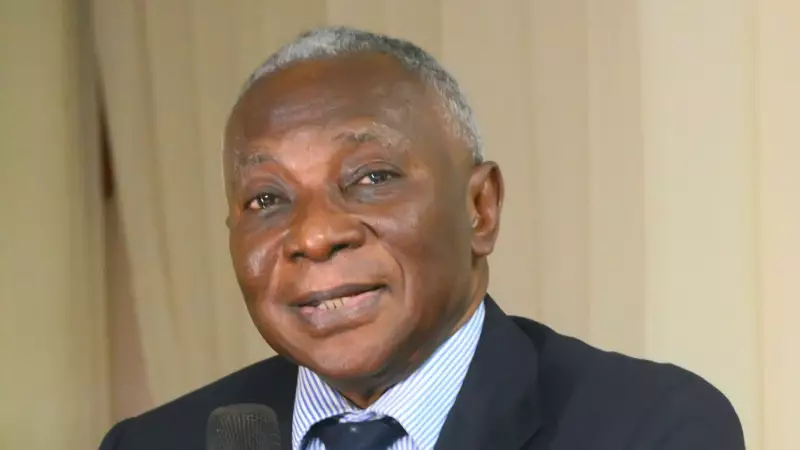
The story of Philip Chikwuedo Asiodu, a titan of Nigeria's civil service, is a powerful testament to the virtues of dedication, integrity, and the often difficult courage required to speak truth to those in authority. A recent review of his legacy, Philip Asiodu – A Legacy of Dedication and Service, compiled by Chief Patricia Otuedon-Arawore in the Hallmarks of Labour Series, reveals a career marked by exceptional talent that was sometimes sidelined due to his unwavering principles.
The Cost of Speaking Truth to Power
Philip Asiodu's forced early retirement in 1975 was not an isolated incident. His confidence and capacity for frank advice repeatedly became a hurdle in the full deployment of his talents for national development. A revealing anecdote from the administration of President Olusegun Obasanjo illustrates this pattern. Following the 1999 elections, Asiodu was initially the South-South candidate for the powerful position of Secretary to the Government of the Federation (SGF).
However, as recounted by former SGF Chief Ufot Ekaette, many politicians felt Asiodu would be "too strong" in the role. This concern led then Governor Victor Attah of Akwa Ibom State to propose an alternative: Ufot Ekaette himself, described as someone with requisite experience but also "very meek." President-elect Obasanjo immediately agreed, recalling Ekaette's effective service as Principal Private Secretary to General Yakubu Gowon.
Asiodu was instead appointed Chief Economic Adviser to the President and Vice Chairman/CEO of the National Planning Commission. Yet, even this role proved uncomfortable, leading to his exit from the administration midway through 2001 under circumstances reminiscent of the 1975 episode. This pattern underscores a recurring irony in the public service: a strong, principled character can make political principals uneasy.
CORFEPS: Continuing Service Beyond Retirement
True to his lifelong commitment, Philip Asiodu's leadership did not end with his formal retirement. He channeled his passion for national planning and development into founding the Committee of Retired Federal Permanent Secretaries (CORFEPS). The organization's motto, "Continuing Service," was crafted by Asiodu himself, who served as its foundation Chairman.
CORFEPS was established to provide a viable, joint platform for retired top civil servants to offer non-partisan, sound, and patriotic advice to the government on issues of national importance. Under Asiodu's guidance, the executive was composed of individuals known for high integrity and incorruptibility from his era, including Mrs. Francesca Yetunde Emanuel and Chief Tugbobo as Vice Chairmen.
Today, the legacy continues with leaders like Mahmud Yayale Ahmed as Chairman, and Engr. Ebele Okeke and Akin Arikawe as Vice Chairmen. CORFEPS maintains a deliberate policy of endorsing for election only individuals with unblemished records and distinguished careers, ensuring the group remains a beacon of inspiration for serving officers and a credible voice of counsel to the government.
A Tree of Public Service Excellence
The concept of Family Trees of Public Service Excellence aptly describes Asiodu's influence. He is a central trunk from which many branches of exemplary public servants have emerged. Others locate their lineage on trees like those of Allison Ayida, Abdul Aziz Attah, Ahmed Joda, and Francesca Yetunde Emanuel. The collective goal is to grow a forest of public service excellence that can smother the "rogue trees" of corruption and inefficiency that have tarnished the service's image in recent decades.
One poignant reflection from his life concerns the enduring pain he feels not from his premature retirements, but from the abandonment of the 1975-1980 National Development Plan by the Murtala/Obasanjo administration. For Asiodu, the greater loss was the jettisoning of the planning process itself and the discipline it entails.
Unanswered Questions and National Reflection
The review also touches on a profound national issue highlighted by Asiodu's personal history: the question of state indigeneship. Philip Asiodu was born in Lagos, attended Kings College, married a Lagosian, worked, raised his family, and has lived most of his 91 years in Lagos. Yet, the book does not address whether he is considered a Lagosian.
This omission prompts crucial introspection about the stereotypes and primordial sentiments that hinder national unity. It challenges Nigerians to consider how they would react if one of Asiodu's children sought an elective position in Lagos as an indigene. This issue remains a silent, potent force that continues to undermine the labours of the nation's past heroes.
In conclusion, Philip Asiodu – A Legacy of Dedication and Service serves as an invaluable compendium and treasure trove for career civil servants, public administration practitioners, and researchers. It compiles his perspectives from 2001 to 2022, a fraction of a career that began in 1957. The book stands as a mirror, urging current leaders in elected and appointive offices—Permanent Secretaries, Ministers, Special Advisers, and Heads of Service—to ask themselves: What are the hallmarks of our own labour? Asiodu's life stirs the conscience towards self-introspection, a necessary step to redirect the path of Nigeria's public service before it is too late.