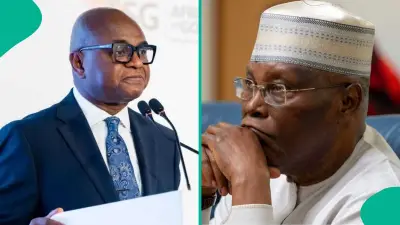
The Senate has initiated a comprehensive investigation into the financial operations of the South East Development Commission (SEDC), uncovering what lawmakers have described as troubling expenditure patterns and opaque financial disclosures in the agency's early months. The probe focuses on the management of N16.6 billion released to the commission from its 2025 budget allocation, raising concerns about transparency, fiscal discipline, and accountability in public institutions tasked with regional development.
Oversight Hearing Reveals Questionable Expenditures
During a tense oversight session in Abuja on Tuesday, members of the Senate Committee on the South East Development Commission scrutinized several expenditure items in the agency's financial report. These included N153 million reportedly spent on a liaison office in the Federal Capital Territory and N2.5 billion listed under headings that lawmakers said lacked adequate justification. The hearing evolved into a broader examination of the commission's financial management, with senators expressing concern that billions of naira meant for the economic transformation of the South-East may have been committed without sufficient public accountability.
Committee Chairman Senator Orji Uzor Kalu revealed that records showed the commission received N16.6 billion in December 2025 but currently has only about N13 billion in its accounts, indicating that approximately N3.6 billion had already been spent. Kalu criticized the financial statement presented by the commission, calling it grossly inadequate for legislative scrutiny and incapable of providing a clear picture of how public funds were utilized. "This committee is disappointed with the financial report given, which is completely unacceptable," Kalu declared, warning that every kobo released to the commission must be properly accounted for.
Lawmakers Demand Detailed Documentation
Senators Enyinnaya Abaribe, Victor Umeh, and Austin Akobundu reinforced the committee's concerns, questioning the rationale behind some expenditures and insisting that the agency provide detailed documentation for every transaction since receiving federal allocations. For lawmakers, the issue extends beyond disputed figures and accounting procedures to the credibility of an institution created to spearhead infrastructure renewal, stimulate economic growth, and address decades of developmental deficits across the South-East. The commission was established as a major intervention vehicle for the region, making the emerging financial questions particularly significant as communities await visible projects and measurable impact.
Commission Defends Spending Practices
Defending the commission, Managing Director Mark Okoye rejected suggestions of financial impropriety, insisting that all expenditures were undertaken within approved guidelines and based on actual cash releases. He explained that the agency had deliberately adopted a cautious spending framework to avoid accumulating unfunded contractual obligations, a common challenge facing many public institutions. According to Okoye, budgetary provisions should not automatically be interpreted as cash available for immediate expenditure. "Our approach has been to ensure that available resources are directed towards priority projects. We want allocations to guide the procurement process so that contracts awarded can be backed by available funding," he told lawmakers. He argued that committing the commission to projects without corresponding cash backing would expose it to future liabilities and undermine its long-term financial sustainability.
However, the explanation failed to satisfy the committee, which maintained that public institutions handling development funds must operate with the highest standards of transparency and provide documentary evidence for all expenditures. Consequently, lawmakers directed the commission to submit comprehensive financial records, including details of all contracts awarded, procurement processes, payment schedules, approvals, and supporting documents relating to expenditures made from the funds released. The committee gave the agency until June 23 to furnish the documents, warning that the next phase of the investigation would be determined by the quality and completeness of the information submitted.
Broader Implications for Intervention Agencies
The unfolding probe has intensified scrutiny of the South East Development Commission at a critical stage of its existence and raised fresh questions about whether Nigeria's intervention agencies are sufficiently insulated from governance failures that have undermined similar institutions in the past. As the deadline approaches, attention is now focused on whether the commission can convincingly account for billions already spent and reassure stakeholders that resources intended for the development of the South-East are managed with transparency, prudence, and accountability. For many observers, the Senate's intervention represents more than a routine oversight exercise; it is an early test of whether a commission created to drive regional development can earn public trust by demonstrating that every naira allocated for the South-East reaches its intended purpose.