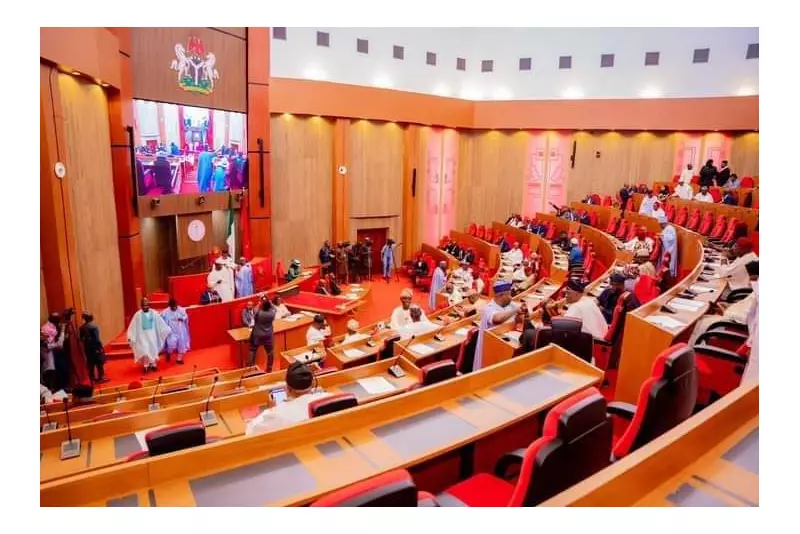
In a significant move to address one of Nigeria's most pressing issues, the Senate has taken a decisive legislative step aimed at curbing extreme poverty across the nation. On Thursday, December 5, 2025, the upper legislative chamber passed for second reading a bill seeking to establish a National Social Welfare Service.
A Centralised Framework for Welfare Programmes
The proposed legislation, championed by Senator Orji Uzor Kalu (APC, Abia North), is designed to overhaul how social protection initiatives are managed in Nigeria. Senator Kalu, while presenting the bill, highlighted the persistent challenge of extreme poverty, which has endured despite various government efforts over the years. He lamented the current lack of a unified institution capable of coordinating these programmes with efficiency and transparency.
The core of the bill proposes the creation of a Social Welfare Service Department under the Federal Ministry of Humanitarian Affairs. This new department would have operational offices in all 36 states and the Federal Capital Territory (FCT). Its mandate would be to provide a structured, data-driven, and centralised approach to managing all social welfare interventions.
Key Functions and Target Beneficiaries
The envisioned agency would be responsible for designing and implementing a wide array of support programmes. These include:
- Direct food and cash transfers to vulnerable households.
- Education stipends for children from low-income families.
- Housing support schemes.
- Subsidies and support for marginal and subsistence farmers.
- Special credit schemes.
- Allowances for the elderly and persons living with disabilities.
A critical component of the bill is the establishment of safety centres nationwide. These centres would be tasked with identifying eligible households, delivering targeted support, and meticulously monitoring outcomes to ensure effectiveness.
To prevent the politicisation and arbitrary selection that have plagued past schemes, Senator Kalu outlined clear eligibility criteria. Beneficiaries would include:
- Households with a monthly income below N5,000.
- Day labourers paid less than N3,000 per job.
- Low-income artisans and subsistence farmers.
- Residents of identified slum communities.
The bill also mandates the creation and maintenance of a national register of beneficiaries. This registry is intended to improve transparency, track the long-term impact of interventions, and create a list of "graduates" who have successfully moved out of poverty.
Senate Backing and Referral to Committee
The bill received widespread support from senators across party lines during the plenary session. Deputy Senate Leader, Senator Lola Ashiru (APC, Kwara South), emphasised that the success of any social programme hinges on reliable data, a gap this bill aims to fill.
Senator Tahir Monguno (APC, Borno North), the Chief Whip, noted that the proposed framework aligns with scientifically driven models, such as those successfully employed by countries like China to lift millions out of poverty.
Echoing the need for better coordination, Senator Solomon Adeola (APC, Ogun West) observed that many past social intervention programmes failed because they did not reach their intended beneficiaries. He described the plan for safety centres as a "right step in the right direction." Similarly, Senator Osita Ngwu (APC, Enugu West) stressed the necessity of a centralised system for tracking beneficiaries, which Nigeria currently lacks.
Presiding over the session, the Deputy President of the Senate, Senator Jibrin Barau, subsequently referred the bill to the Committee on Public Service Matters for further legislative work. The committee has been given four weeks to review the bill and report back to the full Senate.
This legislative action marks a pivotal attempt to institutionalise and streamline Nigeria's social welfare architecture, moving from fragmented interventions to a coordinated, data-centric national service.