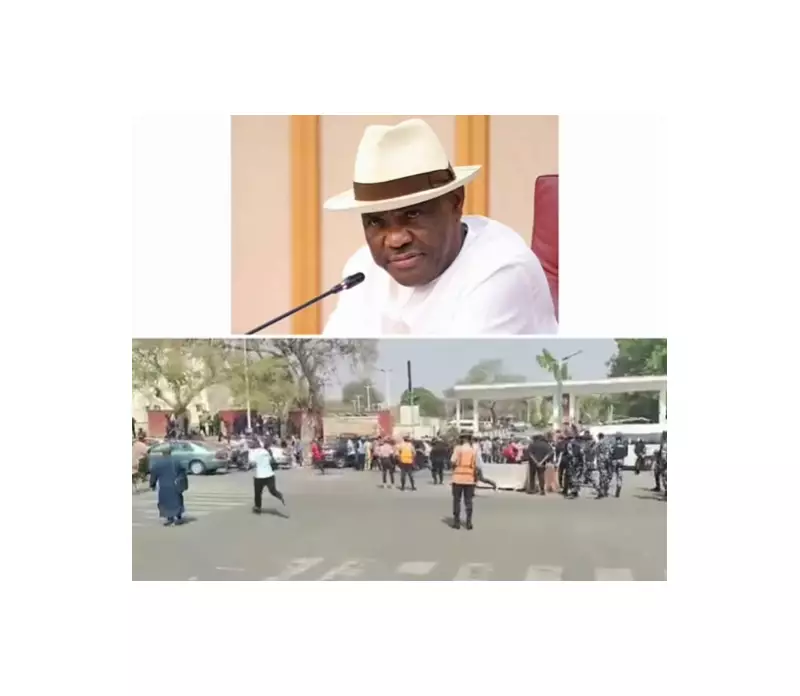
Tensions flared dramatically in Nigeria's capital city on Monday, January 26, when a group of visibly angry and striking workers pursued the official motorcade of the Federal Capital Territory (FCT) Minister, Nyesom Wike. The incident occurred during a heated protest organized by employees demanding immediate resolution to long-standing welfare and salary grievances that have plagued the FCT administration.
Chaotic Scenes as Protesters Confront Ministerial Convoy
Viral videos circulating on social media platforms captured the chaotic moment when aggrieved workers were seen chasing a vehicle believed to be carrying Minister Wike through the streets of Abuja. The protesters, energized by frustration, could be heard chanting loudly and moving aggressively toward the ministerial vehicles while vociferously calling for attention to their pressing concerns. This direct confrontation marked a significant escalation in the ongoing labor dispute that has gripped the FCT.
National Industrial Court Picketed by NLC-Backed Workers
Earlier on the same day, the striking workers, with full backing from the Nigeria Labour Congress (NLC), organized a mass picketing at the National Industrial Court in Abuja. This action formed a crucial part of their indefinite strike declaration, with participants presenting two core demands: the immediate removal of FCT Minister Nyesom Wike from office and the prompt payment of all outstanding financial entitlements owed to workers.
Witness accounts and photographic evidence from the scene revealed protesters carrying an array of placards with powerful messages including:
- "Wike must go!!"
- "Abuja no be Rivers"
- "Pay promotion arrears"
- "Enough is Enough"
- "No working tools"
The demonstrators gathered in substantial numbers at the court entrance, creating a formidable presence that highlighted the depth of their discontent with the current administration's handling of worker welfare.
Root Causes of the Indefinite Strike Action
The workers initiated this indefinite strike in response to what they describe as systematically unresolved welfare issues that have persisted under Minister Wike's leadership. Key grievances driving the industrial action include:
- Five consecutive months of unpaid salaries for numerous employees
- Long-outstanding promotion arrears that have remained unsettled for extended periods
- Consistently poor working conditions that compromise both productivity and employee wellbeing
These fundamental issues have created an atmosphere of financial insecurity and professional dissatisfaction among FCT workers, ultimately culminating in the dramatic protests witnessed across Abuja.
Legal Dimensions of the Labor Dispute
In a significant legal development, Minister Nyesom Wike has formally dragged the striking unions before the National Industrial Court, seeking judicial intervention to halt the ongoing strike action. The minister's legal move represents an attempt to use the judicial system to curb the protest movement, setting the stage for a potential courtroom battle between the FCT administration and organized labor representatives.
This confrontation between government authority and worker mobilization continues to unfold in Nigeria's capital, with both sides demonstrating firm positions regarding the welfare and administrative issues at the heart of the conflict. The chasing of the ministerial motorcade symbolizes the intensity of worker frustration and the growing urgency for resolution in this high-stakes labor dispute affecting Abuja's administrative operations.