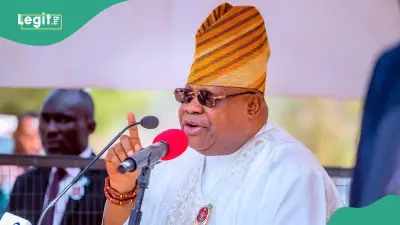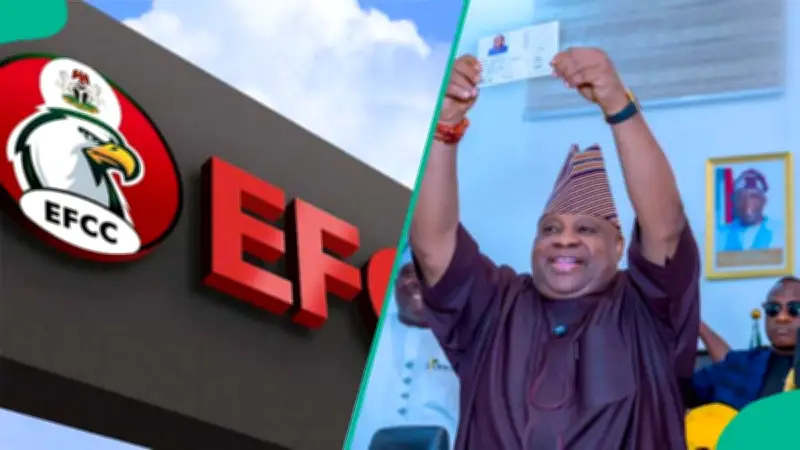
Osun State Governor Ademola Adeleke has publicly condemned the freezing of the Osun State Government's bank account by the Economic and Financial Crimes Commission (EFCC), describing the action as an illegal move that violates constitutional principles. The governor made this known during a press conference on Wednesday, August 5, after receiving a bank letter that forwarded an EFCC directive to freeze the state's account.
Adeleke Calls Freeze an Attack on Democracy
Governor Adeleke stated that the EFCC's action was carried out without a court order, which he described as an attack on the constitutional rights of subnational governments. He warned that allowing federal agencies to override state governments without judicial oversight would gradually erode Nigeria's democracy.
"All I ask is for the EFCC chairman to explain to the good people of Osun State and to Nigerians in general, why he froze Osun State Government Account, and show proof to support whatever reason he presents," Adeleke said.
Legal Challenge Filed
In response, the governor has directed the Osun State Attorney General to challenge the freeze at the Federal High Court in Osogbo. He emphasized that his administration would not back down, stating, "As for me, we are pushing ahead with our campaign."
The governor also listed a series of what he described as coordinated attacks against his administration and members of the Accord Party, including the arrest of 60 Accord members who were taken to Abuja without charges, alleged killings of party members, and warrantless police raids on party leaders. Adeleke attributed these incidents to former Governor Gboyega Oyetola, citing political motivations tied to the recent election.
Political Tensions Ahead of Election
The account freeze comes just 10 days before the Osun State governorship election, raising concerns about political interference. Adeleke's legal challenge aims to restore the state's financial autonomy and ensure the election proceeds without undue federal influence.
This development has sparked reactions from observers who view it as a test of Nigeria's federalism and the independence of state governments. The EFCC has not yet issued a public response to the governor's allegations.