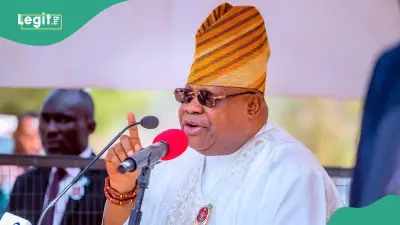
Governor Dapo Abiodun's Housing Revolution: A Blueprint for Nigeria's Development
As Nelson Mandela profoundly stated in his autobiography Long Walk to Freedom, a man is not truly a man until he possesses a home of his own. This sentiment resonates deeply in Nigeria, where housing represents not just shelter but fundamental human dignity and societal progress. The nation faces a severe housing crisis, with the Federal Ministry of Housing and Urban Development estimating a deficit exceeding 20 million units. This translates to millions of families—fathers, mothers, children, and elderly citizens—either homeless or teetering on the brink of homelessness.
The crisis manifests in daily struggles, as highlighted recently when social media creator @darksinned.ella went viral for illustrating how Nigerians wake before 5 AM to commute long distances for work. This phenomenon is particularly evident in Lagos, where many workers seek affordable housing in neighboring Ogun State, traveling nearly 78 kilometers daily. This raises a critical question: how has Ogun State, known as the Gateway State, emerged as a hub for affordable housing despite bordering Lagos? The answer lies in intentional leadership, people-centered governance, and strategic investment in housing as a tool for welfare and economic development.
The Visionary Leadership of Governor Dapo Abiodun
Upon assuming office in 2019 under the All Progressives Congress (APC), Governor Adedapo Olusegun Abiodun established five developmental pillars encapsulated in the acronym I.S.E.Y.A: Infrastructure, Social Wellbeing and Welfare, Education, Youth Empowerment, and Agriculture. Housing occupies a central position within the social welfare component, reflecting its importance to his administration. Unlike many political leaders, Governor Abiodun set a clear, measurable objective: to deliver 10,000 housing units across Ogun State by 2027. As of early 2026, his administration has made significant strides, with over 5,000 units either completed or in advanced construction stages across Ogun Central, Ogun East, and Ogun West senatorial districts.
Comprehensive Housing Projects Across Senatorial Districts
The housing initiative demonstrates a strategic blend of medium to high-income programs tailored to diverse community needs. A detailed breakdown reveals the scale and scope of these projects:
Ogun Central Achievements:
- 750 completed housing units in Kobape Estate Phases 1 & 2
- 750 ongoing units in Kobape Estate Phase 3
- 750 completed units in Prince Court Estate Phase 1
- 750 ongoing units in Prince Court Estate Phases 2 & 3
- 750 ongoing units in President Muhammadu Buhari Estate
- 300 units in Old GRA regeneration project
- 200 completed units in King’s Court Estate Phase 1
- 200 ongoing units in King’s Court Estate Phases 2 & 3
Ogun East Developments:
- 100 completed units in Gateway Aviation Village Phase 1
- 200 ongoing units in Gateway Aviation Village Phase 2
- 200 completed units in Prince Court Estate, Sagamu
Ogun West Progress:
- 100 completed units in Ilaro Housing Scheme
Transformative Impact on Ogun State Residents
The housing reforms have garnered praise from community leaders and beneficiaries alike. High Chief Bode Mustapha, the Osi of Egbaland, commended Governor Abiodun's efforts, noting that the previously dilapidated Ibara GRA has been transformed into a standard befitting Abeokuta's status as a capital city. Mrs. Yetunde Koleoso, a retired civil servant and beneficiary of the yellow-roof housing scheme, shared her experience: "We obtained the form, filled it out, and were contacted via phone call. We really did not expect to get the house. And the price—as a retired civil servant, we were able to afford it. It is very affordable to us."
According to Housing Commissioner Mr. Jagunmolu Akande Omoniyi, two-bedroom apartments at Kobape and Kempta were initially sold to civil servants for ₦4.95 million and to the general public for ₦5 million. Today, these properties are valued at a minimum of ₦25 million on the open market, representing significant savings compared to prevailing rates. For retirees and low-income earners, this pricing is not merely convenient—it is life-changing.
Flagship Projects: From Vision to Reality
Kobape Housing Scheme, Abeokuta: This flagship social housing project offers low-cost two- and three-bedroom bungalows equipped with paved roads, drainage systems, and water supply. Remarkably, Phase 1 was completed within 100 days of Governor Abiodun's swearing-in, demonstrating administrative efficiency.
King’s Court Estate, Abeokuta: Designed for medium to high-income earners, this estate features 31 villas with five-bedroom apartments and living quarters for workers. Amenities include uninterrupted power supply, walkways, portable water, CCTV security, gated fencing, and proper drainage.
Gateway Aviation Village, Iperu-Remo: Perhaps the most strategic project, located near the Ogun Agro-Cargo Airport, caters to professionals in aviation, logistics, and agriculture. This development aligns housing with economic infrastructure, reducing commute times and enhancing workforce stability.
Urban Regeneration: Old GRA, Abeokuta: Beyond new construction, the administration revitalized the Old GRA through road rehabilitation, drainage improvements, street lighting, and housing unit renovations, restoring dignity to a historically significant district.
Broader Economic and Social Implications
Economic Impact: The construction of 10,000 homes has generated employment across value chains, including masons, carpenters, electricians, engineers, and material suppliers. Local economies around new estates have expanded, supporting retail, transport, and entrepreneurship. Increased property ownership has also boosted internally generated revenue through documentation and land administration services.
Social Impact: Homeownership enhances household stability, reduces tenancy-related stress, and improves educational continuity for children. Communities grow stronger, and elderly residents gain peace of mind in retirement. By providing viable housing alternatives within Ogun State, the administration has alleviated extreme commuting patterns for workers tied to Lagos-based employment, significantly improving quality of life.
A Legacy of Measurable Progress
As Governor Dapo Abiodun advances toward his 2027 target, his administration has redefined effective public leadership in a landscape often marked by unmet promises. Through a focus on measurable impact, he has created a blueprint for human-centered governance. By delivering more medium to low-income housing units than previous administrations combined, he demonstrates that housing can be both people-centered and structurally sound. The result extends beyond homes to encompass stability, dignity, security, and growth opportunities.
Consequently, workers from Lagos and neighboring states increasingly view Ogun as a viable place to live and establish long-term roots. While the work of providing adequate housing is perpetual, the future appears promising. Ogun State is no longer merely absorbing housing pressure from elsewhere; it is actively shaping a future where affordable housing and sustainable growth coexist harmoniously.