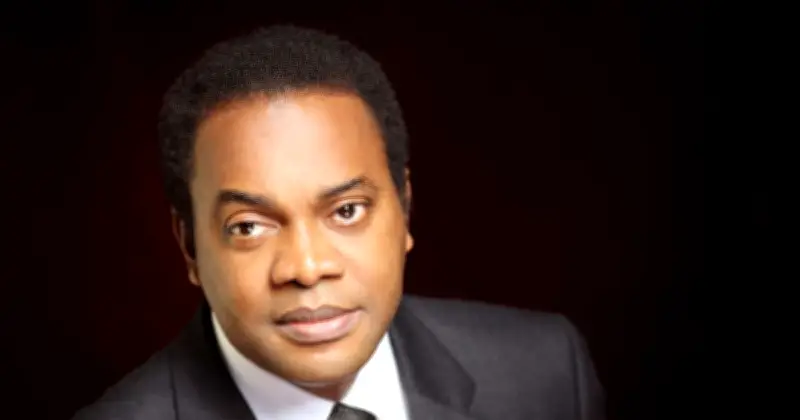
Former Cross River State Governor Donald Duke has cast doubt on the feasibility of the Lagos-Calabar Coastal Highway, asserting that the Nigerian government lacks the financial capacity to complete the project. Speaking on Arise TV on Tuesday night, August 4, Duke, who is the presidential candidate of the Peoples Redemption Party (PRP), argued that the road will not extend beyond Epe in Lagos State.
Duke's Critical Assessment of the Highway Project
Duke, a seasoned politician and former governor, expressed skepticism about the project's scope and purpose. He stated, "Nigeria cannot afford the Lagos-Calabar Coastal Highway. I don't think the road will go beyond Epe. And I think the road serves other purposes because I drove once on the road, and all I saw was land reclamation and all that." His remarks highlight concerns over the project's viability and the government's spending priorities.
The former governor emphasized that an alternative route already exists between Lagos and Calabar, which could be improved at a lower cost. "There is already a road from Lagos to Calabar. I've driven from Lagos to Calabar several times. If the road is poor, fix it," he added, suggesting that the government should focus on maintaining existing infrastructure rather than embarking on new, costly ventures.
Call for Better Spending Priorities
Duke criticized the allocation of resources toward the highway project, arguing that it does not reflect the country's pressing needs. "There are some expenditures we make that do not reflect the realities of our circumstances," he said. He proposed that the funds earmarked for the highway could be more effectively utilized in critical sectors such as electricity and healthcare.
"The amount spent on that road could be better spent providing electricity or upgrading the healthcare system," Duke stated, underscoring the need for the government to prioritize projects that directly improve the lives of citizens. His comments come amid ongoing debates about infrastructure spending and economic management in Nigeria.
Background on the Lagos-Calabar Coastal Highway
The Lagos-Calabar Coastal Highway is a major infrastructure project initiated by the federal government, intended to connect Lagos to Calabar, traversing several states. The project has been touted as a catalyst for economic development, but critics like Duke question its cost-effectiveness and environmental impact. The highway is part of a broader plan to improve coastal connectivity and boost trade, but the estimated costs have raised concerns among analysts and opposition figures.
Duke's remarks reflect a broader skepticism about large-scale projects that may not yield immediate benefits. He pointed to his personal experience driving on the road, noting that it seemed more focused on land reclamation than on providing a functional transport corridor. This observation aligns with environmental concerns raised by experts about potential ecological damage along the coastal route.
Political Reactions and Implications
As the PRP presidential candidate, Duke's statements carry political weight, especially in the lead-up to elections. His critique of the highway project is likely to resonate with voters who are concerned about government spending and infrastructure development. The project has been a flagship initiative of the current administration, and Duke's comments could fuel opposition narratives about fiscal mismanagement.
Observers note that Duke's stance may influence public opinion and policy discussions, particularly if the project faces delays or cost overruns. The highway's future remains uncertain, with questions about funding and execution. Duke's insistence that the road will not go beyond Epe suggests a lack of confidence in the government's ability to deliver on its promises.
Way Forward: Balancing Development and Fiscal Reality
Duke's call for redirecting funds to electricity and healthcare underscores a broader debate about Nigeria's development priorities. While infrastructure is crucial for economic growth, critics argue that social services and utilities must not be neglected. The challenge lies in balancing ambitious projects with the immediate needs of the population.
As discussions continue, stakeholders will be watching to see how the government responds to such criticisms. The Lagos-Calabar Coastal Highway remains a contentious issue, with proponents highlighting its long-term benefits and detractors pointing to immediate costs and alternative uses of resources. Duke's intervention adds a prominent voice to the conversation, urging a reassessment of national spending strategies.