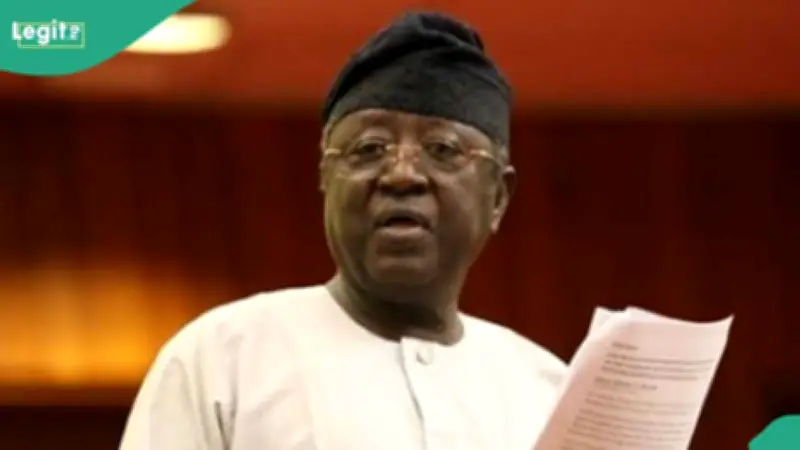
Former Plateau State Governor Jonah David Jang has publicly attributed the prolonged violent crisis in the state to leadership failures, unresolved identity questions, and deeply rooted governance gaps. In his newly launched autobiography, From Airman to Politics: My Life, Jang argues that the violence which has persisted for over two decades stems from systemic issues that were allowed to fester.
Leadership Failures and Unaddressed Grievances at the Core
Speaking at the book unveiling in Jos on August 1, 2026, Jang pointed to a history of poor governance as a primary driver of the conflict. He stated that the crisis did not begin with weapons but with long-ignored grievances that eventually hardened into violent confrontation.
"The Plateau crisis is about identity, land, justice and belonging. Long before the bombs, machetes and the mass burials, there were subtle signs: grievances left unaddressed, tensions ignored, rights denied and injustice institutionalised," Jang said, as quoted by Daily Trust.
The former governor, who also served as military governor of Benue and Gongola states, emphasized that the central question of belonging—who has the right to land, who can contest elections, and who is considered a true indigene—has been a persistent source of tension. "These questions festered in silence until they erupted into bloodshed," he added.
Identity, Land, and the Politics of Belonging
Jang described the crisis as both a historical and man-made tragedy, built over decades but allowed to spiral due to repeated leadership failures at various levels of government. He stressed that the violence has claimed hundreds of lives and destroyed property worth millions of naira across Plateau communities since 2001.
The book, which features a foreword by former President Goodluck Jonathan, chronicles Jang's journey from the Nigerian Air Force to public service. It offers a personal account of the conflict, which remains one of the most persistent security challenges in Nigeria's north-central region.
Beyond Security: The Need for Healing and Reconciliation
While acknowledging the role of security forces in managing the crisis, Jang insisted that force alone cannot end it. He called on authorities to revisit fundamental questions about Plateau citizenship and how land, power, and opportunity can be shared fairly among all communities.
"What Plateau needs and still needs is not just security but healing as well. Not just reconstruction, but reconciliation as well," Jang asserted. He also criticized subsequent administrations for what he described as insufficiently decisive responses to the violence.
The book's release comes as Plateau communities continue to face recurring attacks and displacement. Between 2023 and 2024, UNICEF recorded hundreds of deaths, including children, and over 15,000 people displaced into camps and host communities, according to Legit.ng reports.
Patterns of Sustained Insecurity
Violence in Jos and across Plateau has become a recurrent pattern rather than isolated incidents. Major General MA Etsy-Ndagi, Chief of Civil-Military Relations for the Nigerian Army, commented on the crisis, noting that the conflict between farming and herding communities is a cycle of violence.
Jang's autobiography aims to provide insight into the governance challenges that have shaped Plateau's trajectory, offering a personal perspective on a crisis that has defied simple solutions. The former governor's call for reconciliation over security alone signals a shift in discourse toward addressing root causes.