American Threats Against Nigeria Driven by Self-Interest, Not Religion Says Governor
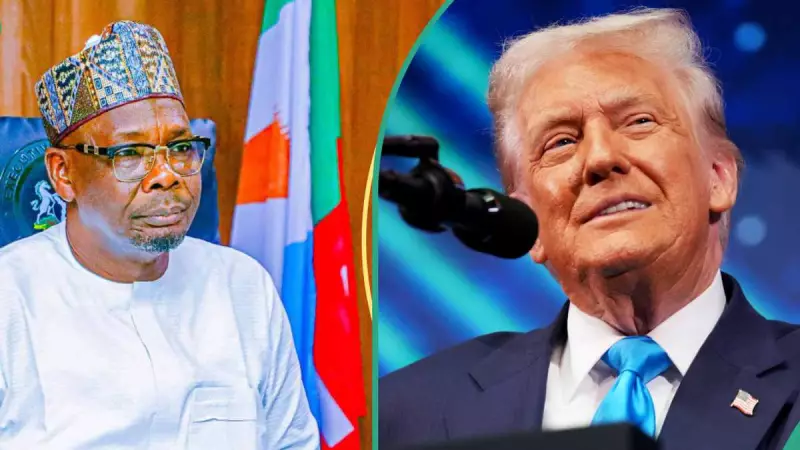
Nasarawa State Governor Abdullahi Sule has provided crucial insights into the real motivations behind former US President Donald Trump's recent threats of military action against Nigeria. Speaking at a major Christian gathering in Lafia, the governor with extensive American experience dismissed religious persecution claims as mere pretext for strategic interests.
The governor made these revelations during the opening ceremony of the 30th National Choral Convention organized by the Non-Denominational Christian Choir Association of Nigeria. His comments came as direct response to Trump's alarming statements about potential military intervention in Nigeria.
Firsthand American Experience Informs Perspective
Governor Sule emphasized his deep understanding of American mentality, having lived, studied, and worked extensively in the United States. His personal experience provides unique credibility to his analysis of US foreign policy motivations.
"I lived in America. I went to school in America. I worked in America. I know what America is," Governor Sule stated authoritatively. "America is only interested in American interest. Whenever there is an American interest that is being challenged, America will react."
The governor stressed that America's actions are consistently guided by self-interest rather than religious or humanitarian concerns. This perspective challenges the narrative that potential US intervention stems from genuine concern about Christian persecution in Nigeria.
Support for Diplomatic Approach
Governor Sule strongly endorsed President Bola Tinubu's diplomatic handling of the situation, warning that confrontation could lead to severe consequences for Nigeria. He pointed to the ongoing conflict between Russia and Ukraine as a sobering example of the devastating human and material costs of military engagements.
The governor's stance aligns with Nigeria's Foreign Ministry position that Trump's claims about widespread Christian killings do not reflect the actual situation on ground. This unified response demonstrates Nigeria's commitment to presenting factual counter-narratives to international allegations.
Condemnation of Religious Manipulation in Politics
Governor Sule delivered a powerful critique of Nigerian politicians who exploit religion for electoral advantage. He exposed the cynical timing of religious rhetoric, noting that politicians only emphasize religious differences when seeking votes rather than during resource distribution.
"It is only when we are interested in election that is when we introduce religion," he observed. "Don't be misled. Leave politicians alone. When they are sharing money, they don't discuss religion. When they are sharing other things, they don't discuss religion. They only discuss religion when they want votes."
This frank assessment highlights the manipulative tactics used by political actors to divide Nigerians along religious lines for personal gain.
Nasarawa's Model of Interfaith Harmony
The governor proudly highlighted Nasarawa State's successful model of religious coexistence, describing tolerance between Christians and Muslims as the foundation of the state's peace and stability. He commended the Christian Association of Nigeria for selecting Nasarawa as host of their national convention, seeing this as recognition of the state's inclusive environment.
"Indeed, in Nasarawa State, we are peaceful because we are accommodating. We are peaceful because we love each other," Governor Sule affirmed. "It is not only the Muslims that have been tolerant. The Christians in Nasarawa State have also been tolerant."
The governor articulated his philosophy of inclusive leadership, stating that governing a diverse state like Nasarawa requires fairness to all religious groups. "If you want to be the governor of Nasarawa State, for a state so mixed, you must be the governor of the Christians, Muslims, Jews, Buddhist, and everybody," he declared.
This commitment to inclusive governance offers a template for other Nigerian states grappling with religious tensions, demonstrating that peaceful coexistence is achievable through deliberate policy and leadership commitment.