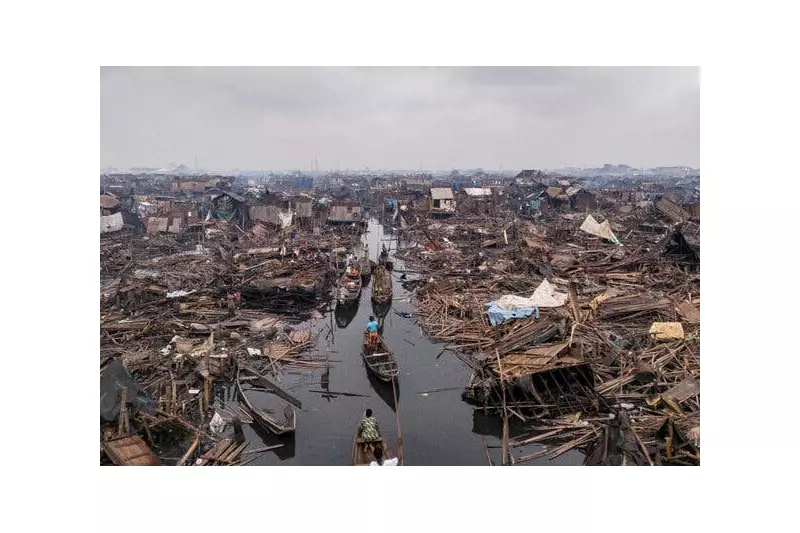
Lagos Government Denies Targeting Poor Residents in Makoko Demolition Defense
The Lagos State Government has strongly defended its recent demolition of structures in Makoko and other waterfront communities, categorically rejecting allegations that the actions specifically target impoverished residents. During the weekly Ask Lagos X-space discussion designed to engage citizens on governance matters, senior officials presented the demolitions as essential safety measures rather than punitive actions against vulnerable populations.
Government Officials Present Safety Justification
Commissioner for Information and Strategy Gbenga Omotoso and Special Adviser to the Governor on e-GIS and Urban Development Olajide Abiodun Babatunde participated in the public session, addressing widespread criticism from residents and civil society organizations. They emphasized that the demolition exercises were conducted primarily for security, environmental protection, and public safety reasons, forming part of broader initiatives to transform Lagos into a safer and more sustainable megacity.
"No responsible government anywhere in the world can allow people to live directly under high-tension cables or obstruct vital waterways," Commissioner Omotoso declared during the discussion. "These actions are not punitive. They are preventive, to protect lives, avert disasters, and secure the future of Lagos."
Addressing Controversy and Community Engagement
The officials responded directly to allegations that the government had failed to provide adequate notice before carrying out the demolitions. Omotoso revealed that authorities had engaged with affected communities for over five years, explaining that existing legislation requires buildings to maintain a minimum distance of 250 metres from power lines. Many of the demolished structures were constructed directly beneath these high-tension cables, creating potentially catastrophic safety hazards.
"The government has been engaging them for over five years," Omotoso stated. "The law stipulates that buildings must be 250 metres away from power lines, but they are built under the power lines, and no government will accept that. Imagine one line dropping into the lagoon. The disaster will be incredible."
According to the commissioner, some residents had previously appealed for the setback requirement to be reduced from 100 metres to just 50 metres, demonstrating ongoing dialogue between communities and government authorities.
Urban Planning Perspective and Long-Term Strategy
Special Adviser Babatunde provided additional context from urban planning and electronic Geographic Information System (e-GIS) mapping perspectives. He explained that the demolitions form part of a comprehensive urban regeneration strategy aimed at developing Lagos into a resilient, investment-friendly city that meets modern safety and environmental standards.
Babatunde cited previous successful relocation initiatives, including the movement of residents from Oko Baba to purpose-built housing estates equipped with contemporary facilities. "Hundreds of housing units have been provided by the state, ensuring that those affected aren't left without options," he emphasized, noting that government actions follow established master plans, safety protocols, and environmental benchmarks rather than arbitrary decisions.
The special adviser urged both residents and developers to comply with planning regulations to prevent similar conflicts in the future. "We must follow regulations to avoid these situations; urban development is about building sustainably for the future," Babatunde advised.
Community Concerns and Government Responses
During the interactive session, participants raised multiple concerns regarding the demolition operations, including:
- Alleged casualties during the demolition exercises
- Use of force by security personnel
- Inadequate compensation for displaced residents
- Unclear timelines for relocation programs
- Emotional and psychological impact on affected families
In response to these concerns, Commissioner Omotoso acknowledged the difficult circumstances while calling for factual discussions. "We understand the pain this causes, but speculation only fuels division. Let's focus on facts and collaborative solutions," he stated.
Babatunde highlighted technological solutions available to residents, noting that the e-GIS platform enables citizens to verify zoning requirements and setback regulations before construction, potentially preventing similar disputes in coming years.
Substantial Impact on Makoko Community
Makoko, a historic waterfront settlement estimated to house more than 100,000 residents, has experienced significant disruption from the demolition activities. Since December 2025, reports indicate that over 3,000 homes have been destroyed, displacing approximately 10,000 inhabitants from their communities.
Residents have described operations involving armed security personnel, tear gas deployment, and bulldozers, resulting in alleged deaths, injuries, and destruction of essential community infrastructure including schools, medical clinics, and places of worship. Some community members and non-governmental organizations have characterized the demolitions as "class cleansing," suggesting that safety regulations serve as pretext for land acquisition benefiting private development interests.
Government officials maintain that failure to address the dangerous living conditions would expose residents to potential disasters far more devastating than temporary displacement. The Lagos State Government continues to emphasize its commitment to balanced urban development that prioritizes citizen safety while acknowledging the complex challenges of implementing such policies in densely populated informal settlements.