Makoko Demolition Sparks Controversy as Thought Leader Addresses Narrative
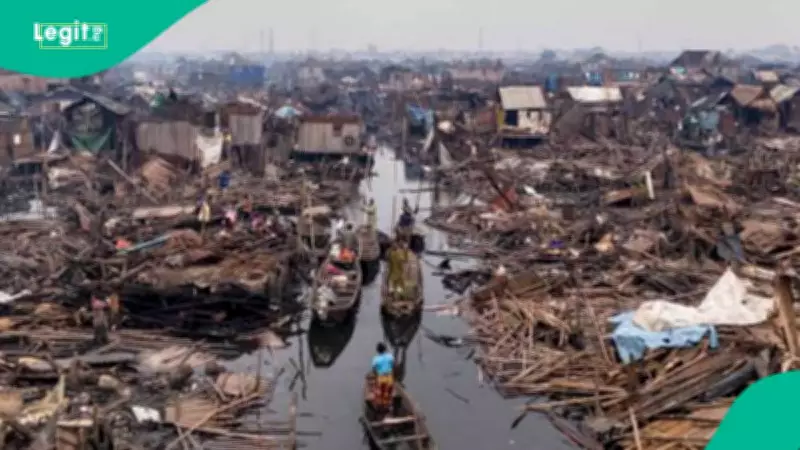
In the heart of Lagos, the historic waterfront community of Makoko has become the center of a heated controversy following extensive demolition exercises that began in December 2025. For generations, tens of thousands of residents have called this unique settlement home, living in distinctive stilt houses above the lagoon waters. Now, a coalition of local advocacy groups reports that more than 3,000 homes have been destroyed, displacing approximately 10,000 people from one of Africa's oldest and most significant waterfront communities.
Residents' Painful Experiences Amid Demolition Chaos
The demolition has created scenes of profound distress throughout Makoko, with charred wooden planks floating in the water marking where homes once stood. Residents describe how fear has brought daily life to a virtual standstill, with many reporting that the sudden demolitions began without adequate warning and have already resulted in tragic fatalities. The fishing community, which has existed for over a century, now faces an uncertain future as families struggle to find shelter and rebuild their lives.
Lagos State Governor Babajide Sanwo-Olu has vigorously defended the eviction actions, emphasizing safety risks as the primary motivation. The government maintains that makeshift homes in Makoko present significant dangers and must be removed to ensure proper sanitation and security for all residents. Officials specifically point to high-voltage power lines running through the densely packed community, where a single electrical fault could potentially trigger a catastrophic disaster affecting thousands.
Thought Leader Examines Nine Key Claims
Prominent journalist and thought leader Sola Onamodu has entered the controversy with a detailed examination of what he describes as misleading claims circulating about the Makoko demolition. In an exclusive statement obtained by media outlets, Onamodu acknowledges the genuine hardship caused by the demolitions while arguing that much of the public conversation has been shaped by emotion-driven narratives that overlook critical legal, environmental, and safety considerations.
Onamodu systematically addresses nine major claims:
- "Makoko was completely demolished" - Multiple sources confirm this claim is false. Only structures directly under power lines and those encroaching toward the Third Mainland Bridge were removed, with Makoko as a community remaining largely intact.
- "No compensation or resettlement was planned" - While structures built illegally on state-owned waterways typically don't qualify for compensation under existing laws, Governor Sanwo-Olu has declared that affected residents would receive palliatives and relocation stipends on compassionate grounds.
- "Residents were evicted overnight without warning" - Officials insist that notices were issued over time, particularly to occupants of structures built directly on waterways marked as unsafe or illegal. The governor disclosed that the exercise, initially scheduled for December 2024, was repeatedly delayed throughout 2025 to allow for voluntary compliance.
- "The demolition targeted the poor" - Data contradicts this claim, showing that similar demolitions have occurred in both low-income areas like Makoko and Oworonshoki, as well as higher-income neighborhoods such as Ikeja GRA and areas connected to Ikoyi/Banana Island when regulations were violated.
- "Makoko residents legally own the land and water" - This position conflicts with constitutional provisions. Under Section 44 of the 1999 Nigerian Constitution and the Land Use Act (1978), all land in Lagos, including waterways and lagoons, vests in the Governor in trust for the public.
- "The governor personally ordered the demolition" - Officials state the exercise followed standing urban planning, environmental, and safety regulations carried out by relevant agencies rather than representing a personal directive from the governor.
- "Children were abandoned with no support" - Authorities counter that many viral images used to push this narrative lacked proper context, and that some community groups and NGOs may have self-serving motivations in portraying the situation.
- "There was no safety or environmental reason" - Urban safety experts describe Makoko as a dense human ecosystem where high-tension power lines running through tightly packed waterfront homes create significant risks. Government cites fire hazards, flooding risks, blocked navigation routes, pollution, and security concerns as key reasons for clearing waterfront structures.
- "The land is being cleared for luxury development" - Government has denied any approved private development plans for the cleared zones, describing them strictly as "buffer areas" meant for environmental and maritime safety purposes.
Conflicting Perspectives on Buffer Zones
A particularly contentious aspect of the demolition involves changing regulations regarding buffer zones. Residents report that in 2025, they were initially told homes could not be within 100 feet of power lines, only to have that distance increased to 300 feet days later. Civic organizations have stated that demolitions have extended far beyond these limits, in some cases reaching as much as 1,600 feet from the designated areas.
Governor Sanwo-Olu addressed these concerns directly, stating: "I have instructed both local governments and the various ministries concerned to see how they also can give additional succour, palliatives, and relocation stipends to some of the people just to show compassion. And to say, you have done wrong, but the government can still show compassion and be compassionate about it. It is to ensure that we all can live in a safe and secure environment."
Broader Context of Urban Development in Lagos
The Makoko demolition occurs within a broader pattern of urban development enforcement in Lagos State. Earlier reports indicated that 22 "illegal structures" under the Iddo Bridge in Lagos were demolished by the federal government, with Federal Minister of Works Engineer Dave Umahi inspecting the bridge alongside structural engineers and representatives from Julius Berger Nigeria.
As the controversy continues to unfold, the situation in Makoko represents a complex intersection of urban planning, safety concerns, humanitarian considerations, and the rights of longstanding communities. Both government officials and affected residents await a resolution that balances these competing priorities while addressing the immediate needs of displaced families.