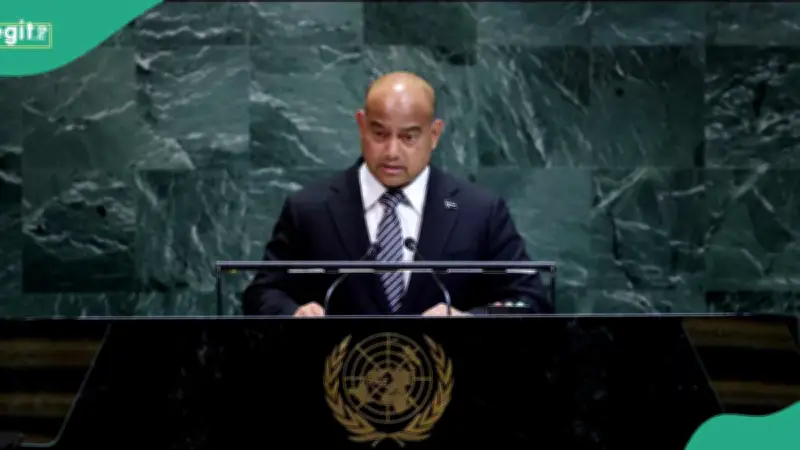
The Pacific island nation of Nauru has officially changed its name to the Republic of Naoero, reverting to its traditional spelling and pronunciation. President David Adeang announced the change in a government statement, marking a significant step in reclaiming the country's pre-colonial identity.
President Adeang Announces Name Change
President David Adeang said the name change marks the beginning of renewed national pride and a return to the country's pre-colonial identity. The name Naoero reflects the correct pronunciation in the national language, spoken as "Now-ero" rather than the internationally common "Now-roo."
A prior government statement explained that Nauru had only become the standard international name because foreigners found the original difficult to pronounce, describing its adoption as a matter of convenience rather than a deliberate choice, as reported by The Guardian.
Why the Country Changed Its Name
When Adeang first put the proposal to parliament in January, he said it was meant to "more faithfully honour our nation's heritage, our language, and our identity." The constitutional amendment passed after two rounds of parliamentary approval, though it was not immediately confirmed whether the document had been formally amended at the time of the announcement.
The government had initially planned a public referendum to ratify the decision following a parliamentary vote in May. However, after what the government described as "extensive discussions," lawmakers concluded that a public vote was unnecessary. Their reasoning was that the name Naoero had never truly disappeared; it appears on the national coat of arms and remains in everyday use in the community.
What the Change Means in Practice
Beyond the name itself, the shift will trigger a series of practical updates. The country's international code changes from NRU to NRO, and national aircraft and ships will need to be renamed. The government said it was already working to have foreign governments and international institutions recognise the new designation.
Several countries have already made the switch. The United Nations website lists the country under its new name following a government request submitted in June. Australia, New Zealand, the United States, and China have all updated their official foreign ministry and embassy websites accordingly.
Background on Naoero
Naoero is a remote coral limestone atoll with roughly 12,000 residents, making it the world's third-smallest country by population, after Tuvalu and Vatican City. It was colonised by Germany and later placed under Australian administration before becoming an independent republic in 1968.
Phosphate mining generated significant wealth in the 1970s before the industry collapsed, pushing the country close to economic ruin in the 1990s. The island now faces an existential threat from rising sea levels driven by climate change, prompting the government to launch a paid citizenship programme aimed at funding the relocation of people and infrastructure.
Five Top Countries That Changed Their Names
Earlier, Legit.ng reported that several nations across the world have in recent years changed their official names to better reflect their cultural identity, history, and political realities. From Africa to Europe, these name changes often carry deep national significance and are part of broader efforts to redefine how countries are represented globally.